





















Reallocation of road space can be a sensitive subject. The mere suggestion of reducing the usable extent of that for cars can be a political hot potato, and it should come as little surprise that the introduction of a congestion charge in Oxford last year was (and continues to be) met with emotive language from media outlets. The latest headlines are scrutinising the revenue being generated — the BBC reported on 25 February that £1.7 million has so far been raised from the scheme.
Highlighted less are the benefits that traffic reduction in Oxford has brought for public transport use and the schemes that the revenue generated has brought to passengers.
On 13 February, Oxford Bus Company (OBC) and Thames Travel announced a number of service improvements in response to the reduction in congestion in the city, building on further improvements already introduced from 9 November. Timetable improvements include faster journey times on Abingdon Road, which has seen reduced traffic, and reallocation of resource around the network, such as on the 700 service between Blackbird Leys and Kidlington, where traffic conditions have not improved so much.
A congestion charge has obvious appeal to the bus sector and operators. But for such schemes to be successful it is not enough to have operator buy-in; councillors and the travelling public must be on board as well, particularly if traffic curtailment schemes need to go further.
routeone spoke with Luke Marion, Managing Director of Oxford Bus Company, on why the key to success now is in delivering more targeted benefits from the scheme back to passengers.
A temporary charge
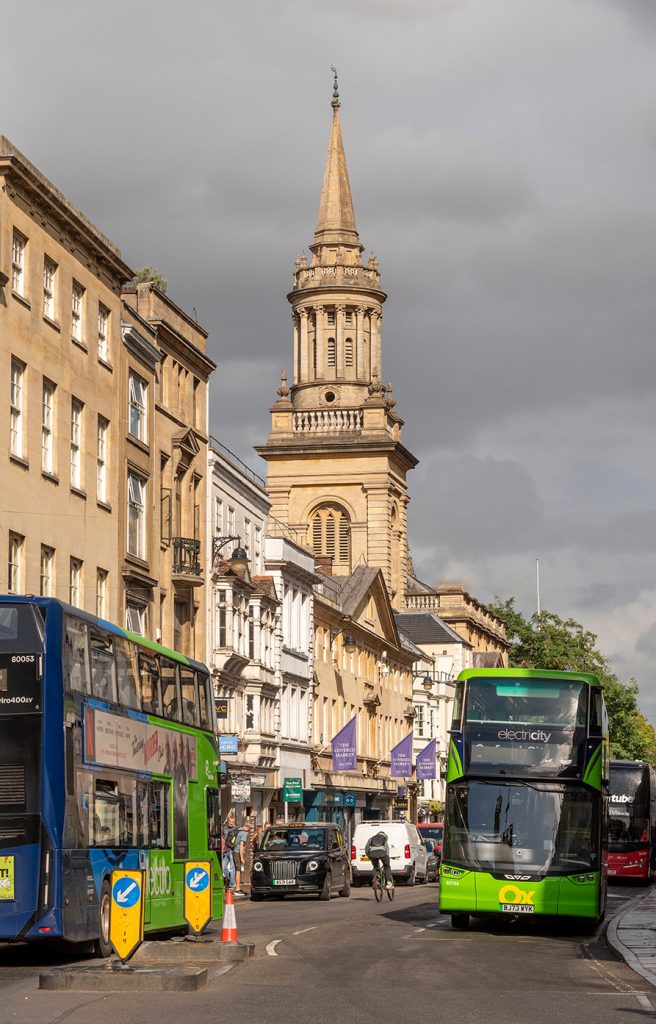
The congestion charge currently applies to cars and motorhomes and is £5 per day. Oxfordshire County Council says it is a temporary scheme designed to reduce congestion in Oxford amid the closure of Botley Road, and ahead of the traffic filters trial, both scheduled for completion and introduction in August.
Much engagement with OBC took place prior to the charge’s introduction, as Luke reveals. The operator’s services were reregistered from 9 November based on modelling data that took into account behavioural change expected from the scheme – data that, at times, turned out to be contradictory, but which generally suggested a reduction of traffic in the city centre and an increase on the ring road.
Services were tightened, peak time gaps were closed, and resource was reinvested into new areas. Luke says the idea was to run the same number of buses, but to recycle resource into more mileage.
Where revenue from the charge is concerned, one goal was to direct that into fares discount schemes to offset the congestion charge. Free park-and-ride has been a major component. The goal was to generate modal shift, rather than having the congestion charge directly fund network changes.
Part of a wider electric project
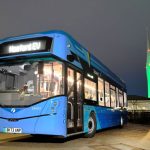
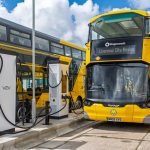
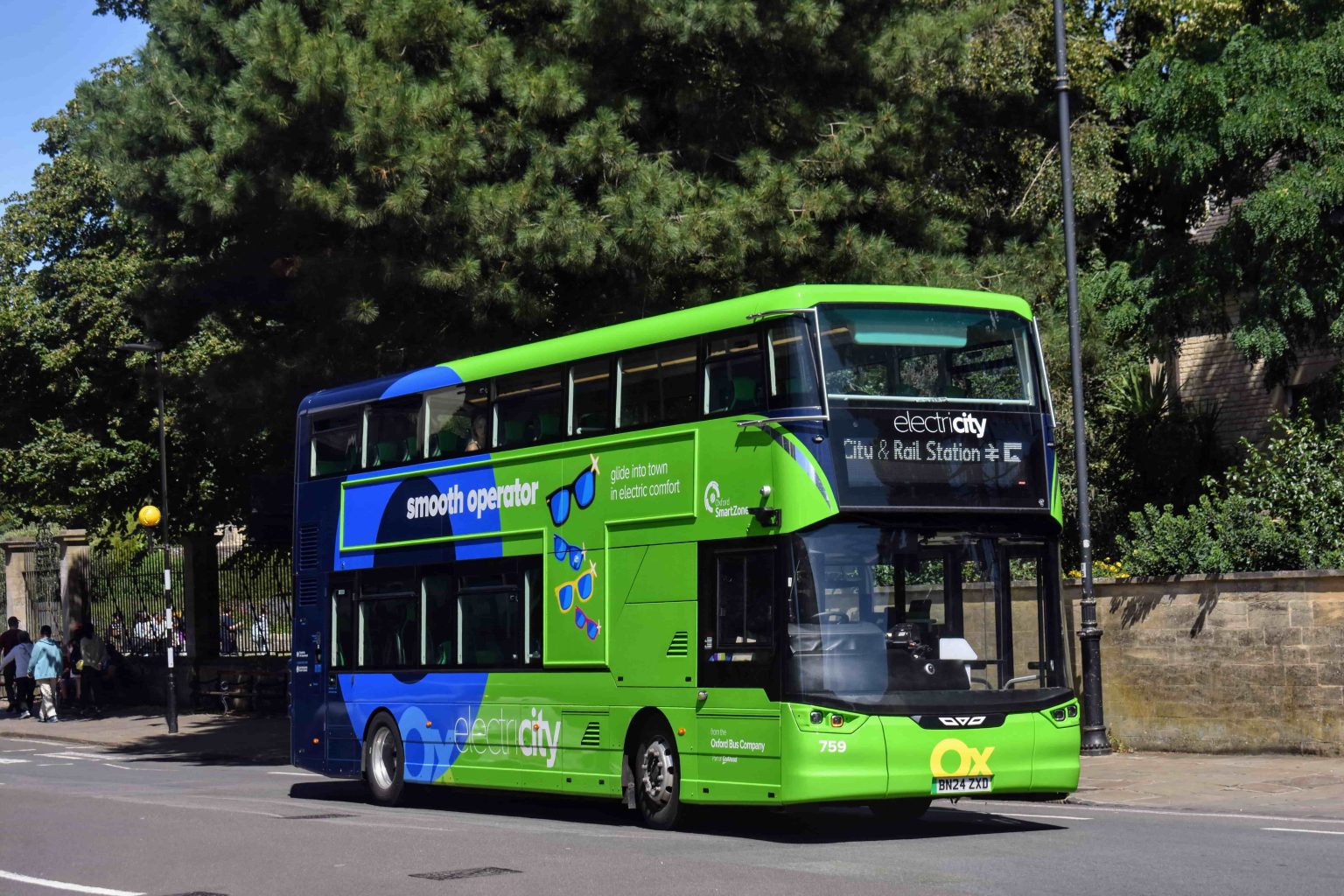
Schemes such as these rarely come in isolation, and the network changes tie in with a previous partnership between Oxfordshire County Council and the city’s bus operators to launch one of the biggest UK electric bus fleets outside London.
“Oxford had been selected as a candidate as a zero-emission city,” explains Luke. “We were asked if we would be up for the transition. While it was exciting, congestion at that time had reached a point of it being unviable. Buses were moving slower and slower. Investing into half-million-pound electric buses might look good for ‘Oxfordshire PLC’, but it wouldn’t deliver positive outcomes for residents. This is a business that we operate that is important to the local economy. Buses need to be healthy and functional.”
Luke says a 10% improvement in run times in the city* was a caveat to the council’s ambitions, and commitment from the authority to reduce congestion would be reciprocated by investment into electric buses from the operators.
The 10% commitment was written into the city’s Enhanced Partnership (EP) as an improvement target, over a 2019 baseline. A rule was also written into the EP that any service registered would need to be operated by zero-emission vehicles and any tender contracts specified zero-emission. That gave OBC further confidence in investing. An initial period of running through November and December 2025 evidences that things are looking positive.
“We can see a path,” says Luke. “And buses are getting faster. Though we haven’t yet achieved the 10% target (initially set for 31 December 2025), we have seen enough progress to see things are going in the right direction. If it was easy, everybody would be doing it! But we are patient, and this is challenging stuff.”
Run times were not the only thing verified through modelling data. Consulting work also explored what levers would be available to Oxfordshire County Council in case the scheme needed a nudge. That includes exemptions, charging rates, how carers and blue badge holders are accommodated, and how far the scheme is opened to certain other groups. An interesting learning was that prohibiting delivery vehicles would have resulted in circuitous journeys, causing more congestion. That led to a decision to exempt delivery vehicles, as charging them would be counterintuitive.
“Politically, it is difficult,” Luke acknowledges. “Traffic filters and bus gates draw out pressure groups. Some concerns are legitimate. Carers and people with disabilities need to travel easily. It’s important to listen and weave the valid arguments into exemptions. As an operator, we’re relaxed about it. It’s up to the highways authority as to how it achieves that 10% improvement. But every exemption risks a need for more improvement and a need for more draconian measures. It’s a balancing act.”
Reinvesting into passengers
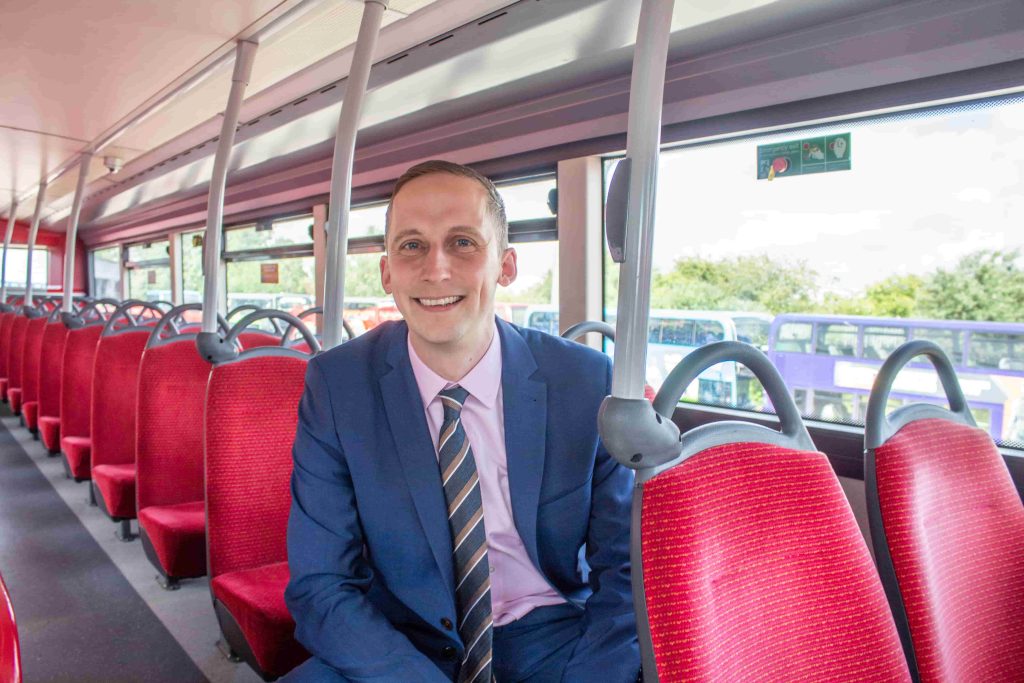
The congestion charge is expected to raise £3.7 million of net revenue per year, and the council must decide where to spend it. Luke notes a reticence to spend the full amount due to uncertainty and the risk of a legal challenge being brought by business owners in the city centre.
“The county has been reluctant to reinvest all the money so far, as it still has one eye on the fact that that legal challenge is going ahead and in the worst-case scenario, the charge could be found to have been unlawful if – for example – the equalities assessment was not done robustly,” he says.
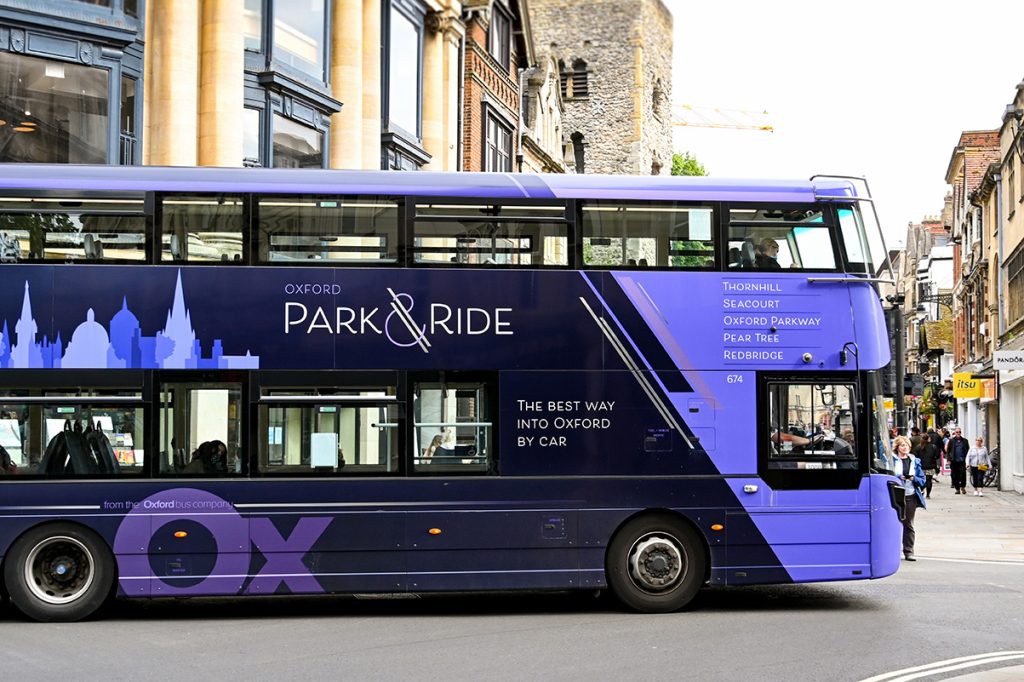
Still, one of the biggest measurable interventions has been the introduction of free park-and-ride bus travel. That has seen an uplift of 30-40% in usage as a result, outperforming predictions of between 10-20% growth.
Revenue can be pushed further?
Overall, modal shift and behaviour change has been a mixed feast. Noteworthy is that more users are paying the congestion charge than expected. Luke suggests behaviour change is limited by the fact that so far, only around 50% of the scheme’s income is being spent. “The rest is being determined by the council. That’s probably the right thing to do. It’s a case now of where we can spend the rest of the income to deliver targeted benefit – to shift more people.”
OBC has been trying to influence those conversations. Suggestions include discounted fares, free travel schemes, and expanded free travel for key worker groups, such as NHS workers. One of the worst areas for bus modal share are Oxford’s three hospitals. Many staff members commute long distances and bus scores low on the convenience scale, even with fare discounts, for staff with unpredictable shifts. A proposed Bus Service Improvement Plan scheme to subsidise NHS workers was not able to be funded. But Luke is determined. Another group being targeted are those working in education.
“We could be providing more carrots to encourage bus use more,” he says. “Some of the bigger underrepresented groups could move the needle. We’ve focused a lot on trying to make the services to the hospital sites a lot better. It is a political football, and we need carrots to make it work for people’s pockets. The proposed introduction of a workplace parking levy could be our friend and with the right incentives, we could get the NHS included on the levy. Again, this is one of the worst areas of bus usage and any improvements we must go after, as it would be one of the biggest wins.”
The elephant in the room is that the scheme remains temporary; that brings with it the fear of withdrawal. Park-and-ride alone accounts for around half of the improvements being seen, according to Luke, so removing free travel there would risk undoing improvements the operator has achieved.
“It’s a particularly challenging message, so we’ve been lobbying the council,” he adds. “Giving money to park-and-ride is seen as niche in some quarters, and therefore we have to show how it is benefitting residents affected by the charge. What’s harder is getting people to understand how park-and-ride is supporting the entire network. I have been doing educational pieces explaining how we have tightened up the wider city bus routes as a result of the traffic reductions that the free park-and-ride has enabled.”
The council has to make a decision now whether to extend free park-and-ride beyond the end of March. The congestion charge scheme has a two-year maximum life, but it’s envisioned that changes will come when Botley Road reopens. The official position then is that the congestion charge will be replaced by the traffic filter scheme. Arguably a more draconian measure, in which the current congestion charging locations become a hard bus gate, enforced with a penalty charge notice.
Modelling suggests that will deliver more improvement than the congestion charge, but Luke says it’s important to listen to what retailers, tourism and hospitality groups are saying. “If we get to a point that the congestion charge is working, is it not worth holding on to that revenue stream and using it for more schemes moving forward?” he argues. “My mind isn’t made up… but I feel that the congestion charge still has more benefits to deliver than it has done so far.”
*That 10% figure emerged during the COVID lockdowns, where it was revealed a 20% reduction in traffic delivered a 10% improvement in bus speeds.