




















The Scottish Government has awarded £45 million under the third round of its Scottish Zero Emission Bus Challenge Fund (ScotZEB3), supporting the introduction of 334 zero-emission vehicles — including both coaches and buses — alongside associated charging infrastructure.
The latest tranche comprises funding for 227 buses and 107 coaches.
The funding marks what Transport Scotland says is the final phase of large-scale capital support for operators transitioning to zero-emission fleets under the ScotZEB programme, which since 2020 has committed (alongside the Scottish Ultra Low Emission Bus Scheme) over £154 million and supported the deployment of around 800 vehicles.
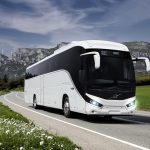
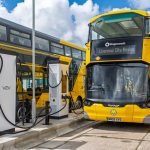
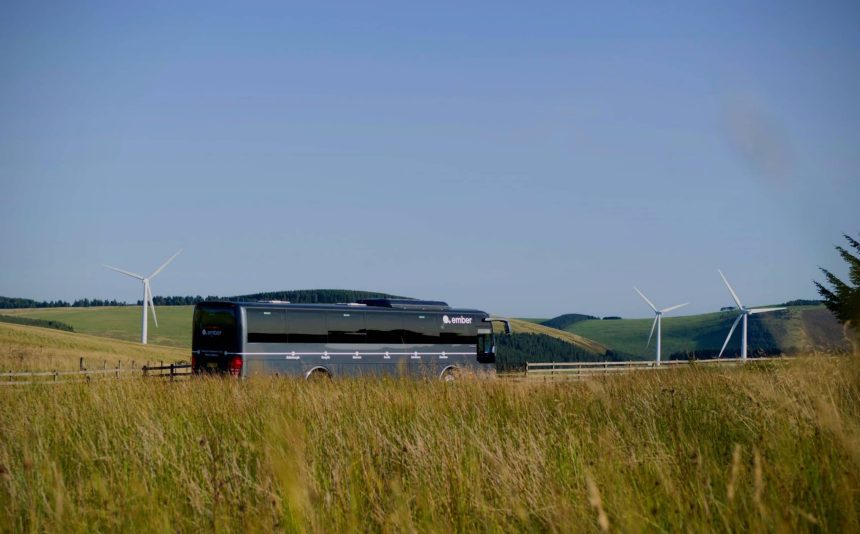
Among the recipients, Ember will procure 100 Yutong coaches, while Stagecoach will add a mixed fleet of seven Yutong coaches and 37 single- and double-deck buses. Lothian is investing in 60 double-deck buses from Volvo/Alexander Dennis and Wrightbus, while First Bus will both repower existing vehicles and introduce 22 new double-deckers from Yutong. Rock Road will purchase 14 Alexander Dennis double‑deck buses, along with 69 Alexander Dennis and 10 Wrightbus single‑deck vehicles.
Total project costs across the five successful bidders exceed £160 million, with public funding leveraging private investment in line with previous rounds. A full breakdown of the funding amounts are on the Transport Scotland website.
Alongside the funding, the Scottish Government is continuing to explore a regulatory approach under the UK Bus Services Act 2025 that could support the phased uptake of zero-emission vehicles on local services from no earlier than 2030.
The funding amounts are as follows:
| Applicant | Subsidy awarded | Number of vehicles | Number of chargers | Vehicle breakdown |
|---|---|---|---|---|
| Ember | £13,174,147 | 100 | 43 | 100 coaches (Yutong) |
| Stagecoach | £4,568,280.40 | 44 | 25 | Seven coaches (Yutong)
21 single-deck buses (Yutong) 16 double-deck buses (Yutong) |
| Rock Road | £11,500,317.08 | 93 | 101 | 69 single-deck buses (Alexander Dennis)
10 single-deck buses (Wrightbus) 14 double-deck buses (Alexander Dennis) |
| Lothian | £9,567,260 | 60 | 88 | 40 double-deck buses (Alexander Dennis/Volvo)
20 double-deck buses (Wrightbus) |
| First Bus | £5,989,966 | 37 | 38 | 15 repowered buses
22 double-deck buses (Yutong) |
Cabinet Secretary for Transport Fiona Hyslop comments: “This final investment of £45 million from the Scottish Government through ScotZEB3 signals our commitment to a zero-emission future for Scotland’s bus sector.
“Since 2020, we have invested over £154 million in zero emission buses and infrastructure. This additional £45 million will support the ambition and leadership of operators that seek to decarbonise their operations as quickly as possible. It also helps ensure that the bus sector can access the benefits of Scotland’s investment in secure, renewable sources of electricity.
“With every £1 of public funding leveraging over £2.50 of private investment, ScotZEB3 has demonstrated that government and industry can work together to deliver transformative climate action.”
Responding to the award, Ember has already announced that the funding will allow a major expansion of its network, eventually delivering “the largest intercity and regional coach network” in Scotland.
“We’re grateful to the Scottish Government for the support,” the company says. “We genuinely believe ScotZEB has helped make Scotland a global leader in zero-emission coaches and buses. It means Scotland is now the only country in the world with a fully electric national coach network and is seeing the benefits, with quieter roads, lower emissions and improved air quality.”
Stagecoach meanwhile has said it will use its funding support to electrify its Arbroath and Ardrossan depots by 2027. The £4.5 million win will build on its own £13 million investment, with 23 of the 44 vehicles being allocated to Arbroath in Angus and 21 to Ardrossan in Ayreshire. The vehicles will be joined by charging infrastructure and an upskilling of the local engineering and operations teams.
The ScotZEB3 announcement follows publication of Scotland’s final Climate Change Plan, which sets out more than 150 actions across key sectors. Ministers say the transition to zero-emission transport will play a central role in reducing heavy vehicle emissions while supporting economic growth and improved public health.