




















The coach sector continues to undergo a period of change as consolidation develops at pace, with the latest round facilitated by the recently incorporated Coach Connect Group (CCG).
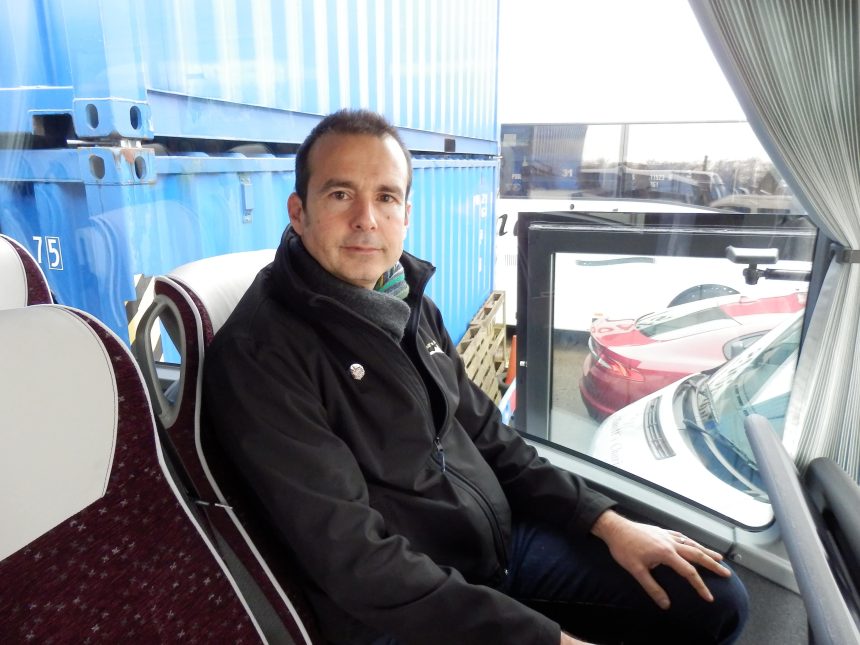
Leading the endeavour is Anthony Marett, Managing Director of Marett’s Chariots and coach operator sales advisory company Anthony Marett Consultants. In addition to CCG, a consolidation vehicle currently being marketed to private equity, Anthony is working with a second venture he soon plans to take to market: the Coach Co-operative, a proposed collective for smaller independents.
Together, they will act as a dual vehicle for succession planning within the sector. Speaking to routeone, Anthony says the two initiatives have been born from the same conclusion: that the coach sector is a fragmented industry, primed and ready for consolidation.
Project Boudicca goes to market
CCG, originally codenamed Project Boudicca, has now been incorporated and is undergoing due diligence. It is being marketed as a standalone entity to potential private equity buyers.
The concept was sparked during Anthony’s conversations with Alliance Group Holdings, a bespoke private equity firm. “Alliance Group approached us in lockdown about buying Don’t Travel Empty (DTE),” he recalls. “DTE was a great business, but Alliance Group was looking for profits of at least half a million. That’s when it came into my mind that consolidation of coach operators would be a good idea. If I had been a bit younger, I would have even liked to turn Marett’s Chariots into the Eddie Stobart of the coaching world.”
That idea of bringing coach operators together under a single ownership structure came to life in August 2024 when Anthony and his business partner James Howells returned to Alliance Group with the suggestion of forming a group of coach companies. Asked if it was interested, Alliance Group said yes.
Eight operators from across England and Wales now form the nucleus of CCG — but interest has come from as many as 50 companies. The eight anchor operators are primarily in the schools and private hire markets. There is no geographical plan in mind, but all companies share scale and profitability sufficient to interest private equity investors. “They are all of a certain size,” Anthony explains. “As standalone businesses they would be attractive. Plimsoll industry data suggests there are about 60 operators in the UK that fall into that size bracket as of today — companies that would appeal to a private equity company or a large group such as FirstGroup or Go-Ahead.”
The sale process is already live and Anthony is hopeful that it can be concluded by the end of the year. If the current buyer doesn’t materialise, a list of private equity companies is being compiled and CCG will go “full bore” into the private equity market.

Honest brokerage
Anthony says that his future role will not be to run the group long-term, but to act as an intermediary, adviser, and broker. “Running a big coach company is not my forte,” he admits. “My job post-sale is to continue advising operators and potentially placing a business with CCG, other private equity companies, or any other interested buyer — or even advising them when they are not in a position to sell.”
That advisory role is grounded in transparency. Anthony says there has been brutal honesty involved in how difficult the journey to consolidation is likely to be — including the emotional impact of selling a business. Feedback leads him to believe that as many as half of coach operators in the UK are considering an exit. The reasons are clear: lack of succession among family businesses, the sheer difficulty of running a coach company, and the realisation that businesses have tangible asset value. “We’re sometimes now on third or fourth generation owners,” he adds. “Grandfather may have started it, father took it to another level, but grandchildren have gone to university. They don’t want to run a coach company. There’s no clear succession anymore.
“We want to make it crystal clear: the whys and the wherefores, the pros, cons, costs, and time implications. When a business owner makes their decision, whether it be to sell with us, sell to a different entity, or even decide not to sell at all, it has to be the right thing for them.”
Anthony’s team also share what they have learned from Project Boudicca and advise in a personal capacity. “What a coach operator probably shouldn’t do is go to an agent to be sold and pay thousands to learn how much their business is worth only to have nothing delivered,” he says. “We don’t charge a penny. We value a business in black and white and tell the owners how it is. Some come with us on the journey, some don’t, and some go along the employee ownership trust route. That’s fine, but it has to be the right thing for them.”
While Anthony sees CCG as a vehicle to give operators the ability to exit their business at a far greater value than they could otherwise, not all of those are likely to attract investors. That’s where the Coach Co-operative comes in.
An option for smaller independents
For operators that fall beneath the radar of private equity, the second initiative Anthony is working on is the Coach Co-operative (working title Project Iceni). It is aimed at creating scale among smaller firms by centralising purchasing and back-office functions.
“In a lot of cases, these companies are too small and the profits not big enough to attract attention from a potential buyer, even if they joined forces with larger opposites,” explains Anthony. The collective model is based on his earlier career in convenience retail where, prior to working in coaches, he spent time with Misselbrook and Weston, an early convenience store company. “My job was to travel up and down the country buying shops. We were consolidating the corner shop market and creating a convenience store industry, When I started, the company had 90 shops. When I left, it had 200. Each shop was relatively small, with small profit and turnover, but with 200, the ultimate profit was huge. That’s the model we want to replicate with the Coach Co-operative.”
Under the plan, 30-40 small operators would share a common management system, accountancy package, payroll, and group purchasing power. As well as offering efficiencies, it offers a future exit strategy. “We will centralise a lot of the systems. Each individual operator will have the strength of the co-operative, the buying power, and the ability to be part of a future third group of consolidation which — because of its size and profit — would then be of interest to a private equity buyer.”
Anthony says the aim is to have the Co-operative formally established by early 2026. “Our next steps are to approach the operators we have spoken to and moot the idea to them. We’re targeting other operators as well. James’ job will be to engage the suppliers and services that group will use. Each operator will remain independently owned but will have access to the privileges of being part of a bigger group.”

Technology as the lever
Both these ventures hinge on technology. DTE, the booking and yield-management platform, is slated to be the management system of choice on which the consolidation ventures are built.
Anthony believes technology is where the greatest profit opportunity lies — tech can increase profitability through better use of data, systems, and marketing. “If you take any coach operator and walk into its office right now, does it maximise the selling opportunity for each coach, every single day?” he asks. “Part of our plan is a bespoke management system that will allow yield management pricing the same as airlines and hotels.”
Fleet utilisation is another priority. “Through DTE we know that most coach companies only spend 9% of the day with people on board. The rest of the time, vehicles are in the yard, in the workshop, waiting, or empty. Using technology to squeeze every last penny out of every last mile of every last vehicle is critical. The profits are there. You don’t need to go out and generate a huge amount more income — you just need to be cleverer with the income you have.”
Anthony is equally passionate about digital marketing, noting how the number of coach operators that genuinely market themselves is still low. “Online is the new high street,” he argues. “If you’re not online, you’re not on the high street. You don’t have a shop window. People aren’t going to walk past. There is obviously more to it than simply having a good website and great ranking. But there are few sectors of industry in the UK still so far behind with website optimisation. I’m passionate about it because it’s cheap, it’s effective, and if we don’t do it ourselves, there are rival companies and brokers that will.
“Tech-based businesses tend to get a one-time higher multiple of business value to EBITDA than other businesses. The private equity company we’re working with sees it the same way.”
Independents still matter
Despite his focus on consolidation, Anthony stresses that independents will continue to play a vital role alongside the likes of CCG. “My gut feeling is that there will always be, and there should always be, a place for a family-run business that offers an individual service because it’s their business and they’re involved in it,” he says. “We have had that feedback. People love this industry and have great plans. And that’s brilliant.”
But the future is already shaping up to be a mix, and decisions must be made sooner rather than later. “While the coach industry won’t go along the route of the bus industry, I do think we will end up with four or five bigger groups of coach operators accounting for perhaps a third to a half of vehicle capacity. The rest will still be family-run or independent businesses.”
The future of CCG ultimately lies in the hands of its eventual purchaser, but Anthony, while focused on bringing both that and the Co-operative into fruition, sees an opportunity not just for investors but also for operators. Regardless of what route they choose, it is a decision they will likely have to face. “It’s a service I think they need,” he says. “Whether an operator sells to us, or individually, whether they are thinking about selling or not, they need to be prepared. Crucially, we can help them get there.”