




















Every vehicle workshop needs some form of brake testing equipment but not all brake testers deliver the same level of accuracy, reliability, or compliance. If you’re serious about professional brake testing, or you’re planning ahead for MOT approval, it’s essential to understand the different systems available and how they align with DVSA expectations.
There are three main types of brake testing equipment commonly found in workshops: decelerometers, roller brake testers, and plate brake testers. Each has its place, but they’re not interchangeable.
Decelerometers are the most basic option and are best suited to very specific situations. They’re typically used when a roller brake test isn’t possible, as a temporary backup if your main brake tester is out of action, or for quick field tests on smaller or specialist vehicles. A decelerometer works by measuring how quickly a vehicle slows down during real-world braking, meaning the test involves actual driving.
However, despite this real-world approach, decelerometers provide limited data. They only measure overall vehicle deceleration, which means they can’t show braking performance per axle, identify left-to-right imbalance, or provide consistent, repeatable test conditions. For this reason, the DVSA only permits decelerometers in restricted circumstances or as a last resort. They may be necessary for vehicles that exceed brake tester weight limits, have unusual designs, or feature parking brakes (such as some hybrids and EVs) that can’t be disengaged for static testing. As a primary brake testing solution, though, a decelerometer simply isn’t sufficient for most commercial workshops.
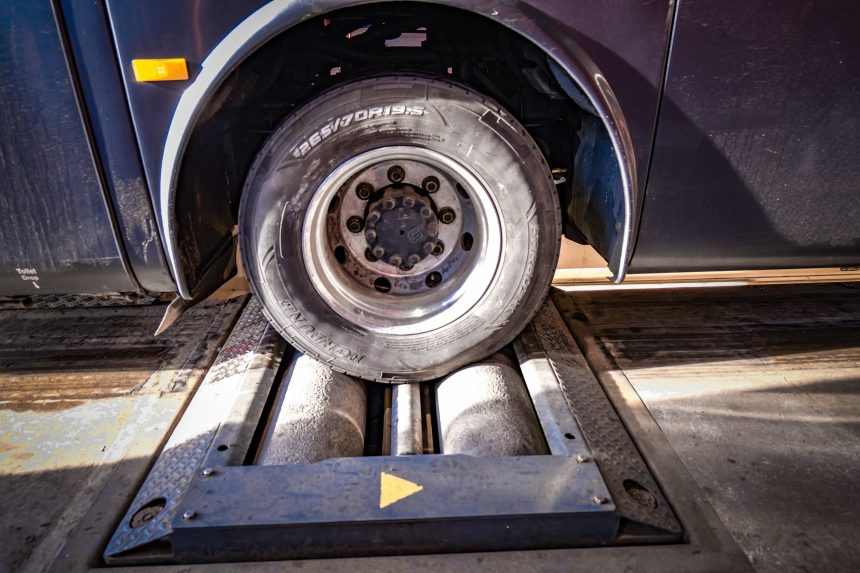
Roller brake testers are widely regarded as the gold standard and for good reason. DVSA-recommended for MOT testing, they offer the highest levels of accuracy, reliability, and consistency. Unlike decelerometers, roller brake testers keep the vehicle stationary while rotating the wheels to simulate road movement. This controlled environment eliminates variables such as driver behaviour, road conditions, speed fluctuations, and tyre contamination.
Roller brake testers allow for detailed analysis of each axle and wheel, making it easy to detect imbalance issues and assess service, parking, and emergency brakes individually. While they require a greater investment and, in the case of in-ground systems, some structural installation work, they provide the depth of data and repeatability that serious workshops depend on. For businesses focused on MOT readiness and professional diagnostics, a roller brake tester is almost always the best long-term choice.
Plate brake testers sit between the two. During testing, the vehicle drives slowly over pressure-sensitive plates that measure braking forces from each wheel. Like decelerometers, plate testers involve a moving vehicle, but they also provide wheel-by-wheel data similar to roller systems. This makes them far more informative than a decelerometer, though still less consistent than a roller brake tester due to sensitivity to surface conditions, moisture, and debris.
On the plus side, plate brake testers have fewer moving parts, which can mean lower maintenance costs, and they’re often more portable than in-ground roller systems. They’re well suited to fast routine checks where speed and simplicity are priorities.