




















The ROSCO Safe Driver Awards scheme is being brought up to date as fresh faces on the board look to reinvigorate the well-established initiative
After 70 years promoting road safety in the coach and bus industry, the Road Operators Safety Council (ROSCO) is looking to evolve and spread its influence across both sectors.
The organisation has a new Chair and Deputy Chair in the shape of John Burch and James Carney respectively, who are keen to modernise it and expand the membership.
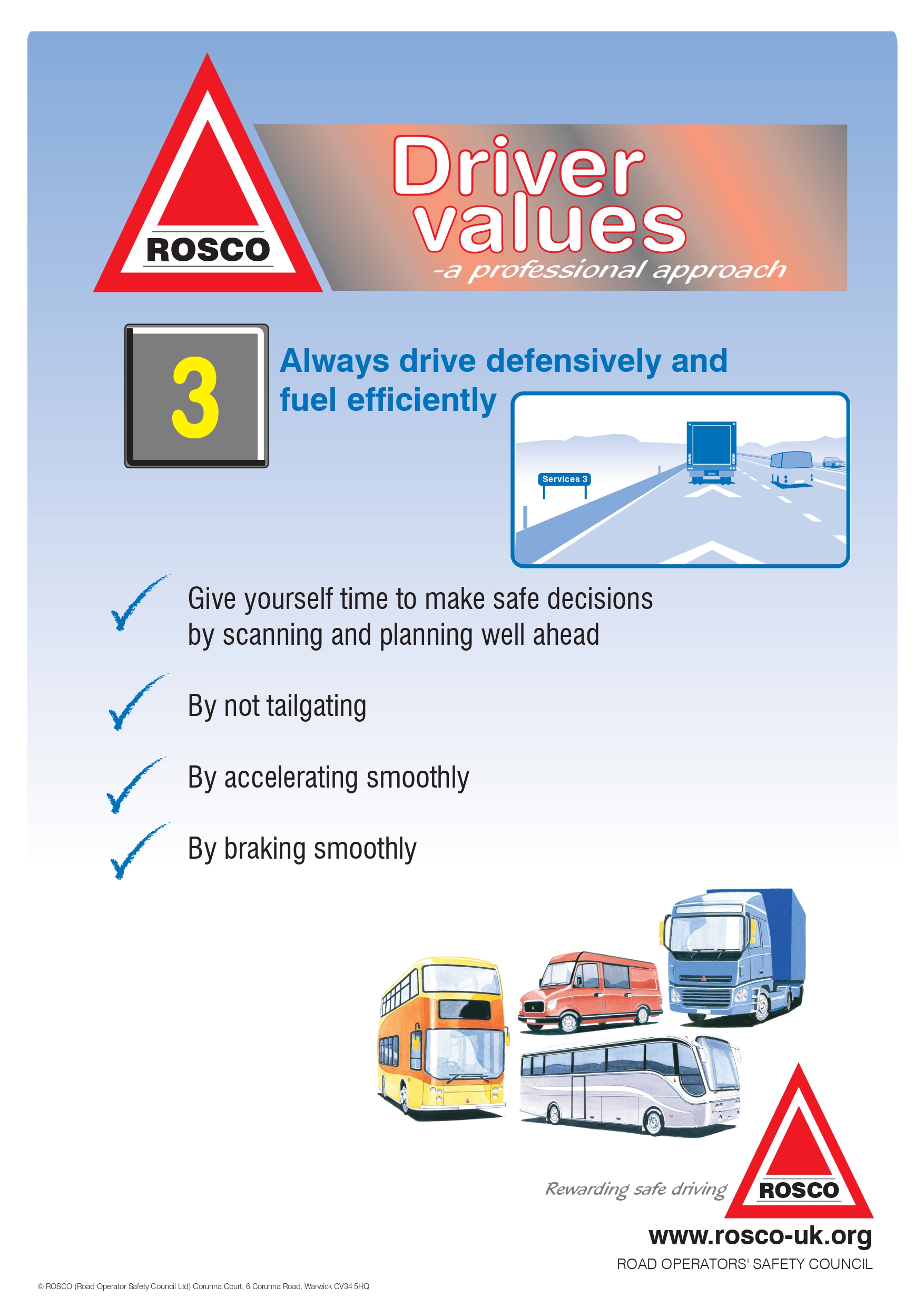
ROSCO’s Safe Driver Awards scheme will remain at its core. The initiative, which has around 30,000 drivers enrolled, aims to reward safe and fuel-efficient driving.
Around 15,000 certificates are awarded each year to drivers who avoid blameworthy collisions and traffic prosecutions over that entire period. In addition, numbered year badges are awarded after they maintain a clean record for five years. Enhanced certificates and badges are given out after 25, 30, 35, and 40 years of safe driving.
It’s probably true to say that, in the last 70 years, the organisation has become a little complacent about communication with its members
ROSCO says it is a cost-effective scheme because the avoidance of accidents more than compensates for the membership fee.
In addition, member operators receive a range of printed material regarding safety that can be used in driver areas at depots.
According to ROSCO’s own survey, 87% of members said the scheme “added value to the company’s commitment to reduce collisions and improve fuel efficiency”.
New board, new approach for ROSCO
Aside from the introduction of James, additions to the board during the organisation’s 70th year in 2025 include Jane Cole, former Blackpool Transport Managing Director, and Ruth Graham, DWF Law Partner.
John, who is owner of Jaybee Training and a former General Manager at coach operator Hookways and First Red Bus, says: “We’re looking at different initiatives going forward – not instead of the Safe Driving Awards, but to complement what that scheme does.”
ROSCO is working on the delivery of a phone app for drivers. In addition, it is trying to use digital technology to make it easier for operators to take part in the scheme.
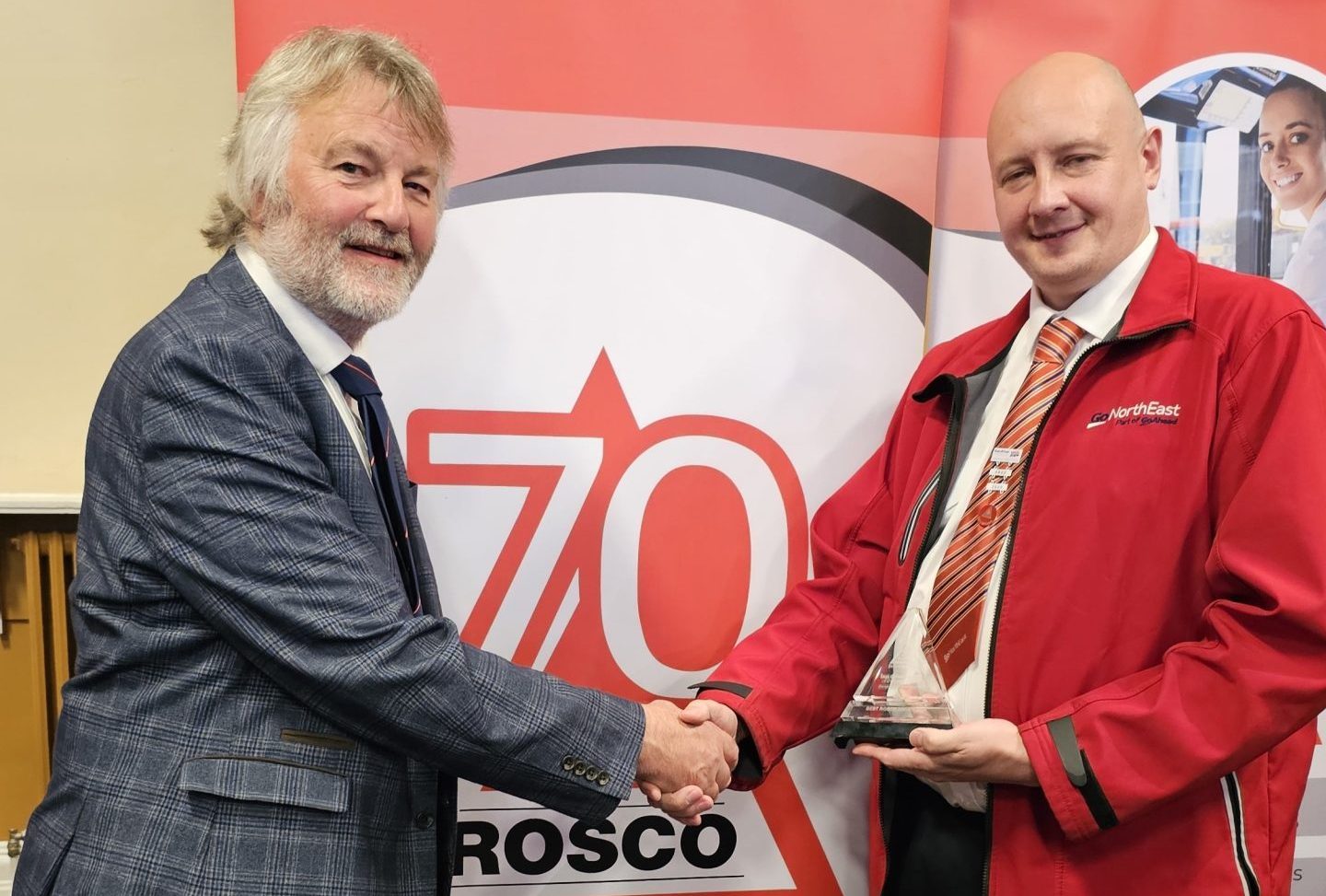
“It’s generally in the past been administratively top-heavy,” says John, formerly Deputy Director of Operations at Confederation of Passenger Transport.
“It requires teams within the organisations to look after the records, to keep records on their drivers…
“But we have an administrative team who are looking to simplify the work that the operators need to undertake to provide the records that we need in order to generate the certificates and the badges.”
ROSCO wants to appeal to coach
That should help the scheme appeal to more coach operators, which tend to have less resource than their bus counterparts for such administration. That is one of the reasons, John says, that bus accounts for most of its present membership.
“We want to see more coach operators come on board and join up. And we’re working on ways in which we can encourage them to do that,” he says.
We have an administrative team who are looking to simplify the work that the operators need to undertake
“Coach drivers typically are very proud drivers and get involved in a lot of quite detailed work. So they’re a very important part of the passenger transport sector, and we’re very keen to bring them on board.”
ROSCO is also looking to move into the community transport sector and is in talks with the Community Transport Association to that effect.
John explains: “It’s a not-for-profit sector, so that will be a different sort of scheme, and we’re still working through the way that might go.”
Seeking growth
Expansion of the membership base is planned in part via enhanced communications, with an improved strategy across social media platforms and the website.
When it comes to drivers, ROSCO is also keen to use digital communication modes, which are increasingly replacing posters on depot walls. It also already promotes itself through its association with the annual Bus Driver of the Year competition.
That aim also extends to internal engagement. “It’s probably true to say that, in the last 70 years, the organisation has become a little complacent about communication with its members…,” admits John.
“The whole structure of the industry is quite different to how it was in the mid-1950s when we were conceived.
“And so it’s important that we keep in touch with our members and are abreast of their concerns and their thoughts about the scheme going forward.” That will include a member newsletter.
Having this year announced that Go North West, Diamond Bus North West and Preston Bus had joined up, ROSCO is in talks with many other operators, including larger ones, who are interested, with potentially around 8,000 more drivers being brought on.
Authority involvement
The trend towards bus franchising across the country may present another opportunity for expansion. ROSCO is liaising with combined authorities which are proceeding down that route in the hope that membership of the safety scheme could be made a condition when it comes to contract awards.
That includes Transport for London, which via its Vision Zero approach is mandating safety standards. John says: “[London Mayor] Sadiq Khan comes from a bus driver’s family and was very aware of the ROSCO scheme and he’s very keen to expand that. So we’ve been talking there.”
When it comes to their responsibilities towards road safety, combined authorities are interested in signing up to an existing scheme rather than having to “reinvent the wheel”, believes ROSCO.
“It is a scheme which does work. It’s a scheme which is a clear indicator of the reduction in accidents and, of course, coupled with that comes the economics of savings in the cost of accidents as well,” he reasons.
“So, both the local transport authorities and the operators themselves are very keen to see a reduction [in accidents] and the safe driving scheme is evidence that that’s actually happening.”
Proposed awards change
ROSCO is consulting members on a proposal to change the awards so that service is measured on an aggregate rather than consecutive basis.
If approved, drivers would retain their accrued years instead of having their record reset following a blameworthy incident. A questionnaire on this is available on its website.
Safety and CPC
Aside from the award scheme, ROSCO acts more widely in promoting road safety, working with the government and transport bodies. With his Jaybee Training hat on, John is pushing for reform of the content of Driver CPC modules.
“Things like health and safety, healthy living, for example, are very important, but there are so many other areas of our industry which it would be useful to be incorporated within the Driver CPC scheme,” he says.

“Although it has become more flexible in recent years… I think there’s a lot more that we could do and I’d like to see more areas brought into the syllabus to increase what we actually train drivers within the statutory training.
“Some operators do it very well with mentoring and internal training within their organisations, but there are others that don’t really have that in place, and they are using the existing Driver CPC schemes because they have to.
“There’s so much more that we could build in that they could use and which could become part of their requirement when drivers come on board. I think it would lead to much better retention of drivers if [operators] understand better what they’re up against when they’re out there on the road.”