



















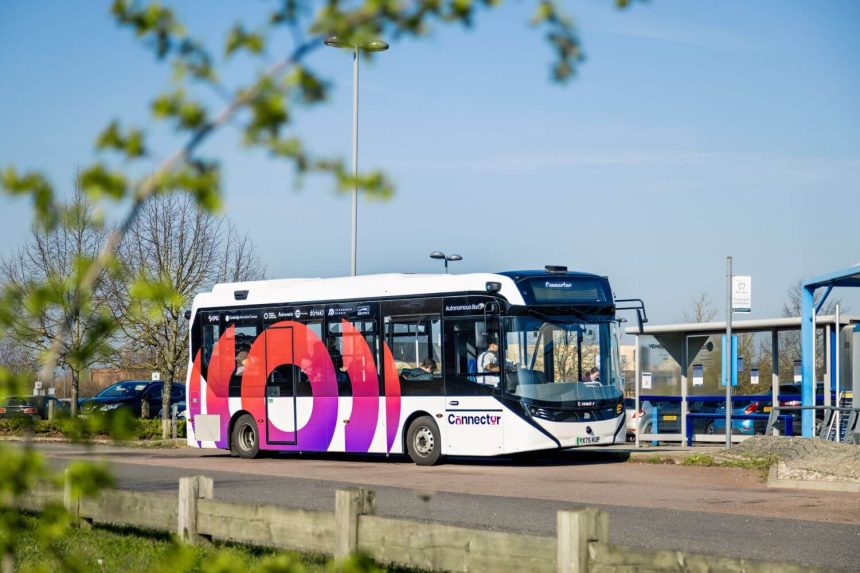
The Connector project in Cambridge is providing a glimpse of how autonomous technology could be applied in the bus sector
The usefulness of autonomous buses has been questioned by some in the industry, owing to discussion around the part that some form of onboard staffing would need to play.
However, the ongoing Connector project in Cambridge could be crucial in deciding what role autonomous technology will have in the bus sector. A media day on 25 March allowed those behind it to relate progress and give an insight into the buses of the future.
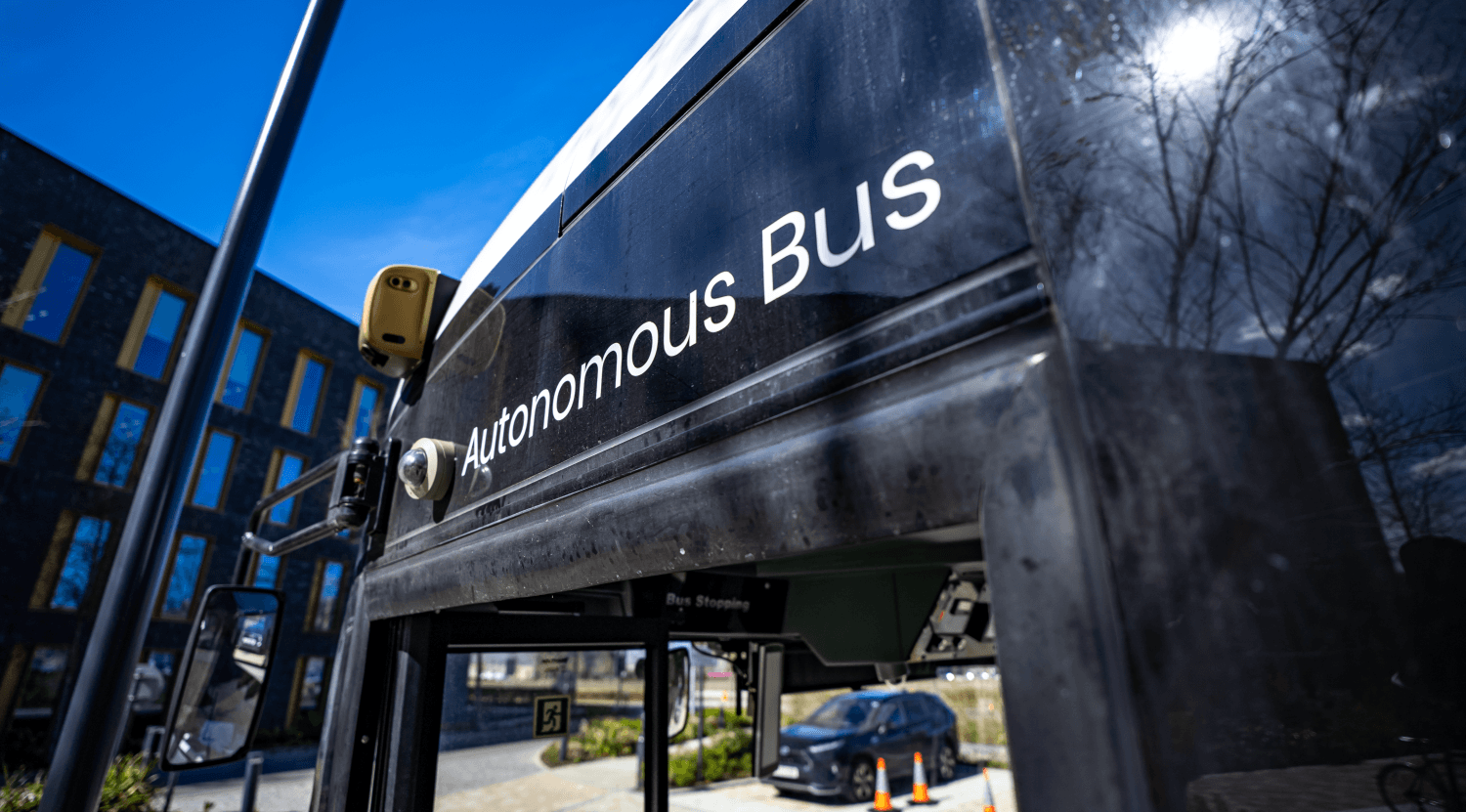
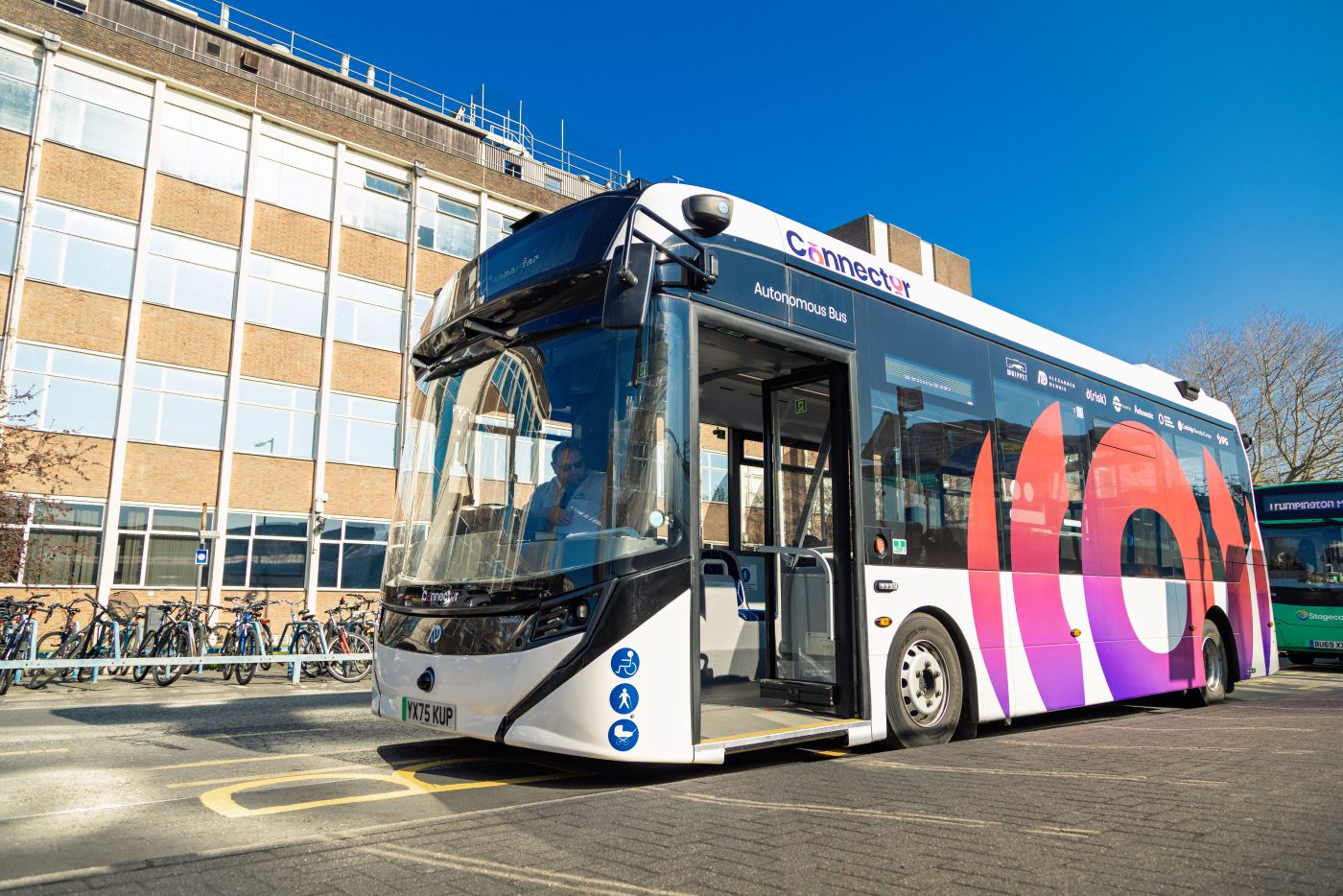
Connector is led by the Greater Cambridge Partnership (GCP), with Fusion Processing providing the driverless technology, Alexander Dennis as the vehicle consortium member, and Whippet the service operator.
With funding from the Centre for Connected and Autonomous Vehicles, free passenger trials began in June 2025 via a 15-seater Mellor Orion E. Since December 2025, two Alexander Dennis Enviro 100AEV full-size single-deckers have been added for a further route (Connector 2).
The consortium is awaiting news of whether a third stage of the project from September onwards will be funded to allow for commercialisation of the service.
Connector’s remit
After a 15-minute journey on board the autonomous Alexander Dennis bus from Trumpington Park and Ride, Dan Clarke, GCP Head of Technology and Innovation, outlined the aims of Connector.
“There are three different areas we’re interested in. The first is: does the technology work and how do we get from where we are to 100% autonomous running?” he says, before alluding to Cambridgeshire’s commitment to bus franchising.
“What’s the business case that sits behind that? Because, with franchising, we may be commissioning services. Then, also, the human factor: how we make sure the vehicles are suitable for customers to get on and off, things like ticketing and having equity in the transport system.”
Expanding on potential uses, he says such technology may allow buses to run overnight or on extended hours to create services that would not otherwise have been viable.
There is also the possibility of new busways being given the go-ahead and these, unlike much of the current guided busway system, would not have the restrictions associated with kerb guidance.
It opens up the possibility of new busways without the need for kerb-guidance technology with all its drawbacks – Stefan Baguette
Stefan Baguette, Alexander Dennis Group Marketing Communications Manager, adds that, while guided busways have advantages, they come with “severe limitations” around the type of vehicles that can be used on them.
“There is the potential with automated technology to enable a bus to be controlled to follow a very exact path, far more exactly than manual driving would allow,” he says.
“It opens up the possibility of new busways without the need for kerb-guidance technology with all its drawbacks, without increasing the land space required, making it an easier sell.” The guidance may instead take the form of painted lines.
Remote drivers
Jim Hutchinson, CEO of Fusion, believes his business will have a “very wide operational design domain that will enable us to do most city routes” without an onboard safety driver by the end of 2027.
That coincides with the government’s timeline for the passing of secondary legislation that would allow for such vehicles to be on public roads without a safety driver.
He expands: “There will be services where you still have a driver and that’s fine. There will be services where you don’t have a driver, but maybe you have a member of staff onboard and they might have a different set of skills that are more about passenger care.
My team are working really hard to get it so it can do 100% of the route and we can get it to a point where it could start to demonstrate the remote safety-driver option – Jim Hutchinson
“Then there will be services where it’s perfectly fine to run them with no staff on board. In those [staff-less] scenarios, though, we do envisage that there would always be a link with the control centre, so there is always someone monitoring what is going on onboard and someone the passengers can communicate with, if they choose to.
“I think that will work fine in some places and that will enable services to run that just aren’t viable at the moment due to driver shortages or other commercial reasons.”
Safety and efficiency
Jamie Wilson, Alexander Dennis Head of Concepts and Advanced Engineering, explains the manufacturer’s continued involvement in driverless technology, following the CAVForth public service across the Forth Road Bridge, which ran from 2023 to 2025, and the off-road CAVForth2.
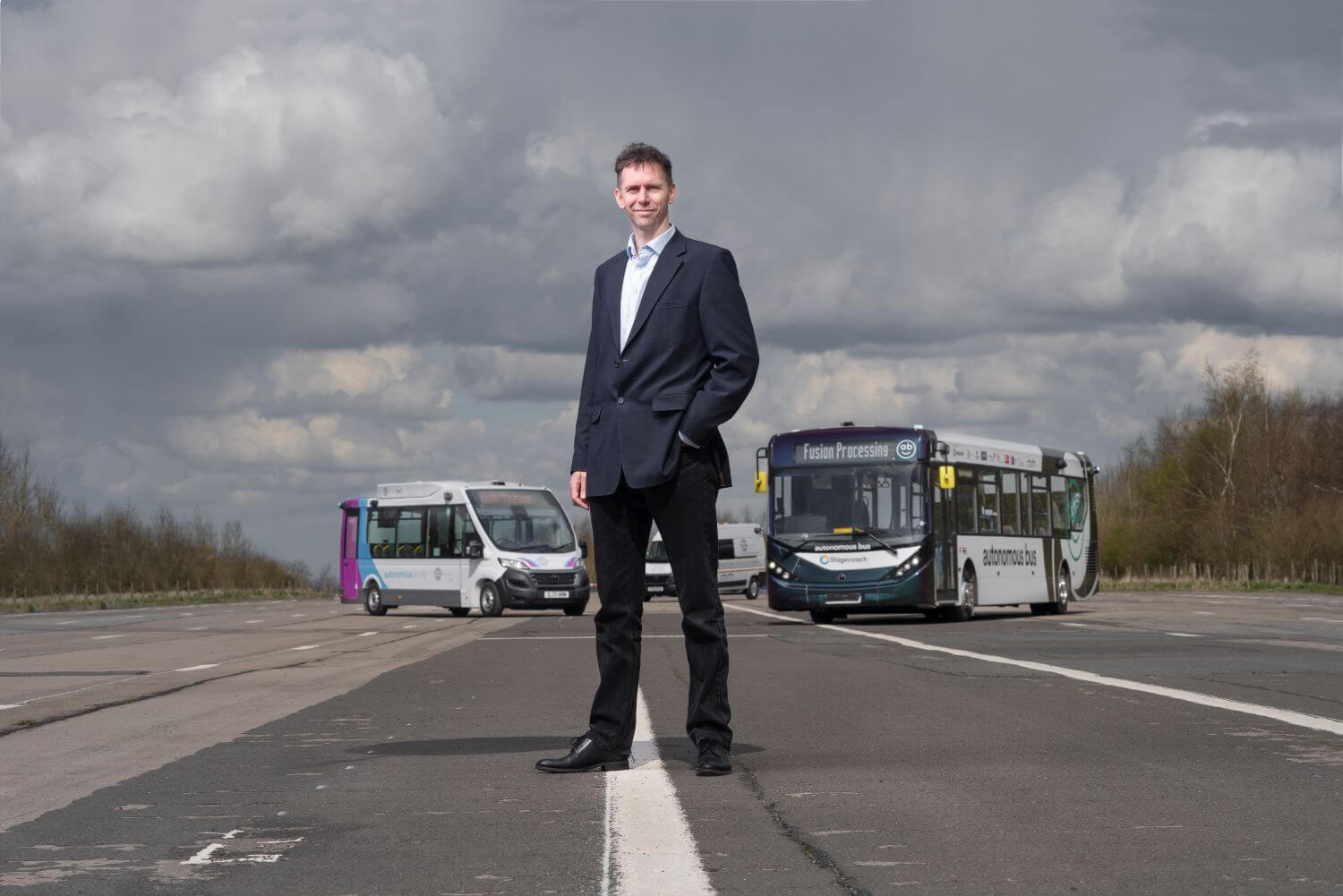
“The whole focus for Alexander Dennis is safety,” says Jamie. “Additional to that is the operating cost proposition of a bus.” He adds that recent trials with CAVForth2 have shown a minimum 7% improvement in fuel efficiency.
“But we also understand that having more repeatable operations lends itself to improved maintenance, less wear, … and, ultimately, an improved passenger experience.”
Progress update
As of March, more than 2,000 passengers had travelled on the three Cambridge buses, including more than 1,000 on Connector 2, which serves Cambridge Biomedical Campus between two park-and-ride sites.
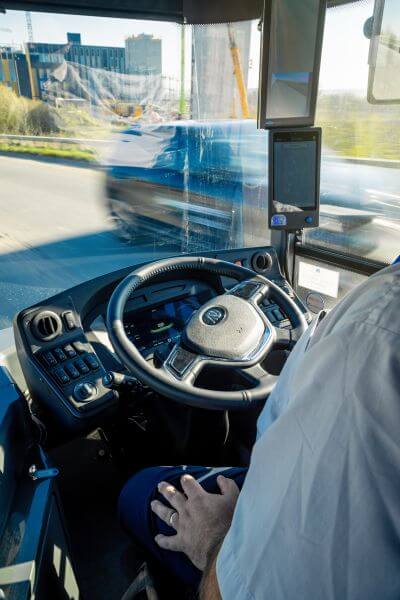
The patronage figures need to be viewed in the context that the routes were chosen to avoid competition with commercial routes.
Jim says: “We are quite critical of the service and we’re still looking to make it smoother. There are certain things we have planned, and they partly involve our suppliers, in order to make it happen.
“The feedback [on the passenger ride] so far has been that it’s no worse than your average city bus and some people even say it’s a little bit better – even in its current state, which we’re not happy with as a team yet…
“We are pleased with how it’s gone so far, but not satisfied. There’s work to be done and my team are working really hard to get it so it can do 100% of the route and we can get it to a point where it could start to demonstrate the remote safety-driver option.”
Jim reveals that the safety drivers take over control on around 10% of Connector 2’s route. This occurs on a few tight corners which have not been signed off for safety reasons yet.
He explains: “The vehicles are constrained to not break rules and, in order to get around those corners, you have to break rules.
“Whilst it’s kind of accepted that drivers need to do that, otherwise they can’t get round the corner so they either need to overhang the kerb or clip the white line in the middle, we are not clear on what the level of tolerance would be for an autonomous vehicle doing that sort of thing.”
However, the route was chosen for its difficulty, given the learnings that could be taken forward from it. Cambridge, meanwhile, was seen as a good choice geographically, due to the severe congestion issues GCP is trying to ease and with which Jim was already well acquainted from his days there as a student.
Indeed, Fusion’s emphasis is on bus projects due to ethical aims around reducing private car usage. Autonomous taxis could have the opposite effect, Jim notes.
Fusion, which was part of the first government-sponsored autonomy project in 2015, is also trialling its CAVstar system on no-user-in-charge autonomous buses in bus depots.
Passengers at the heart of the Connector project
The human element of driverless buses is explored by the addition of Anthrometric to the consortium. It is a big consideration for operators, as highlighted by a 2025 Transport Research Laboratory report, which noted the potential for such services to leave some passengers unable to travel or at risk of injury.
The report assessed that there were 56 non-driving roles provided by the driver of buses – two fewer than for those of coaches. Of these, 21 were judged to be either challenging (15) or impossible (six) to be met without an onboard staff member.
However, Professor Clare Mutzenich, founder of Anthrometric, appears more optimistic after recent work to examine the accessibility and inclusivity of the Connector services.
Her team has used virtual reality headsets to take 50 people with a range of protected characteristics, including neurodivergence and mobility impairment, through the onboard experience.
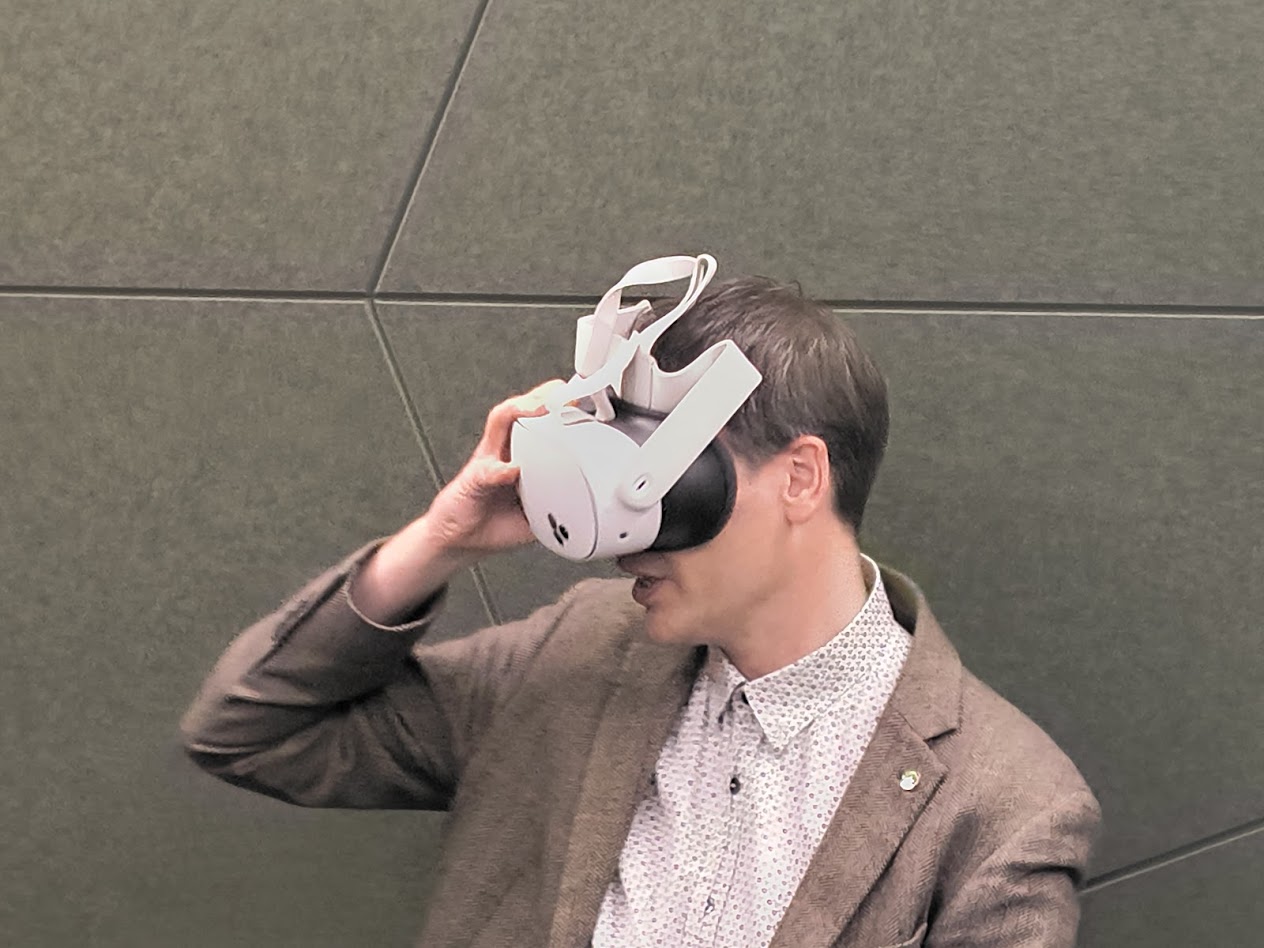
This has been replicated to a lesser extent with physical on-bus trials in which passengers voice their experiences directly to consortium members. One wheelchair user reported that the ride on the Connector service was smoother than on a human-operated bus.
Clare says the aim is “a fully working service that works without a human most of the time but, if you want a human, that’s part of the service provision”.
She adds that autonomous technology provides an opportunity to rethink the passenger service from the ground up.
“What we’re doing in this consortium is we’re giving [passengers] the opportunity to totally change how the transport system works for the better,” she says. “There are more opportunities with automation.”
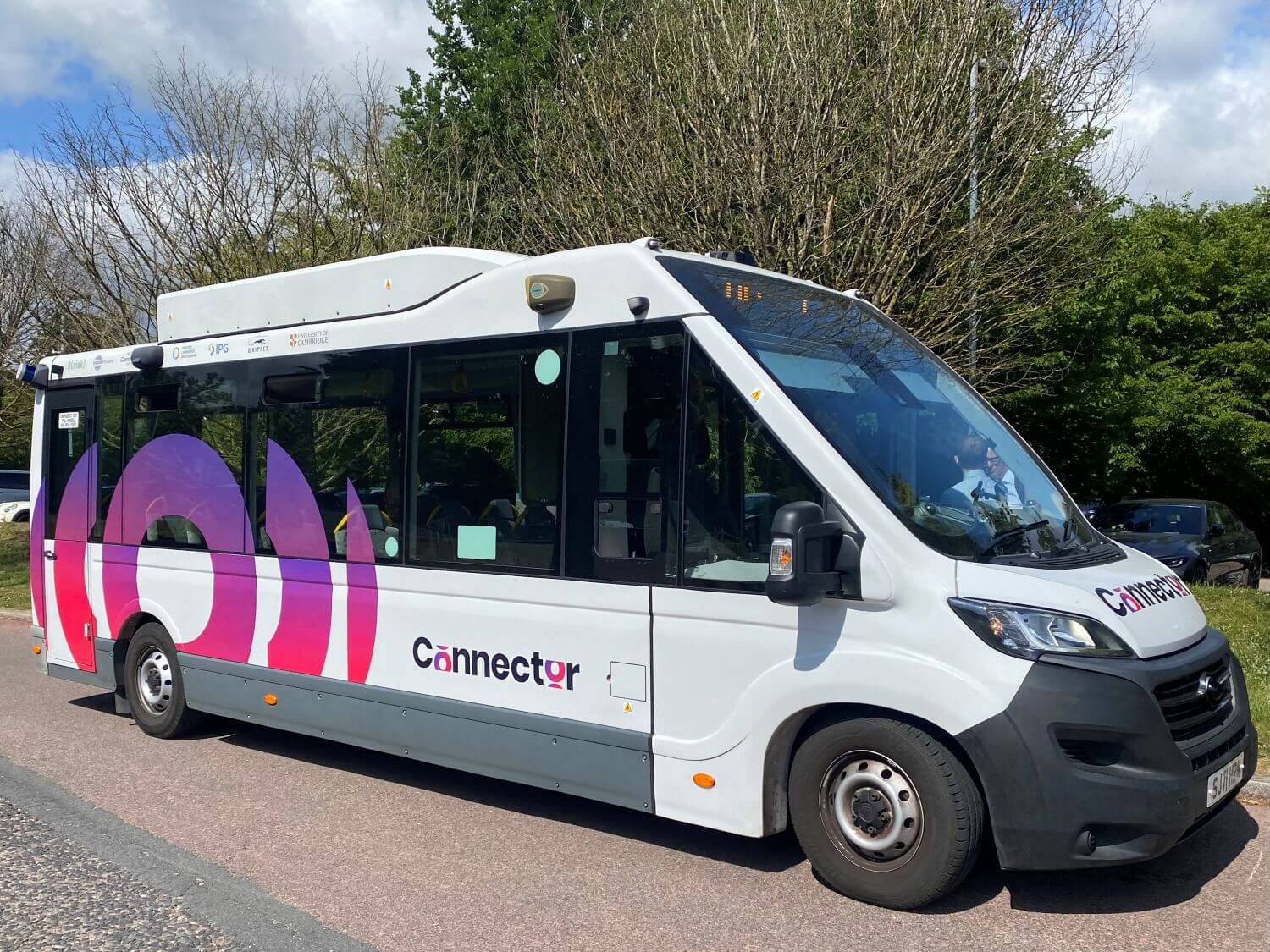
When it comes to autonomous buses, the question is no longer whether they will work, but how they will work. Projects like Connector are beginning to provide the answer.
While technical fine-tuning is ongoing, the focus is shifting to where driverless services add most value, what commercial and societal advantages they will have, and how well they meet the needs of passengers.