





















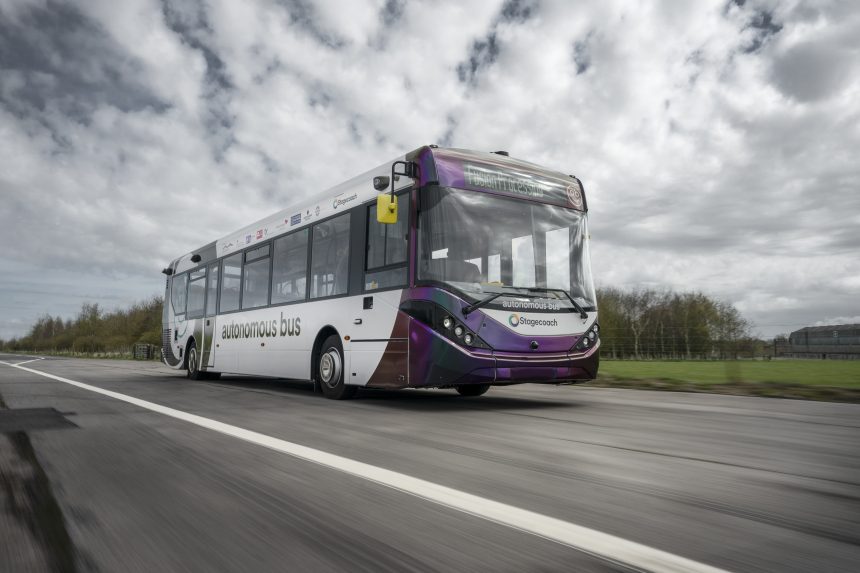
The UK has an opportunity to become a leader in autonomous commercial vehicles over the coming decade if it moves quickly to exploit its legislative and industrial strengths, an industry figure has stated.
Andrew Scott is the Voltempo Innovations Projects lead. He was recently involved in the eFREIGHT Autonomous project funded by Innovate UK, which assessed opportunities surrounding autonomous commercial vehicles in the UK.
Mr Scott says the Automated Vehicles Act 2024 has been drafted broadly enough to permit national trials that could prove harder to pursue in markets such as the US and China, and argues autonomy will bring economic advantages to commercial transport sectors where operators face thin margins, an ageing workforce, and recruitment difficulties – but that the industry must work closely with policymakers to ensure legislation meets its needs.
The eFREIGHT report estimates that the UK’s medium and heavy commercial vehicle sector contributes £185 billion annually to the economy, with £150 billion of that from freight. Its most ambitious scenario foresees an autonomous uptake of 50%, producing over £26 billion in productivity benefits.
Mr Scott says many of the productivity benefits translate to passenger transport, including better vehicle use, improved safety, and the ability to sustain services that are difficult to operate conventionally.
“Autonomous vehicles are liberating in the sense that they can go to places that are maybe not attractive for a conventional transport service,” he says. “They can be on demand, are not restricted by drivers’ hours, and can provide services that could otherwise be economically or operationally difficult to fulfil.”
The UK’s existing commercial vehicle supply chain would capture a share of the value created by autonomy. “One of the reasons the commercial vehicle opportunity is so strong is because the industry is working with a largely UK supply base,” adds Mr Scott. “That is not so much the case in mainland Europe. The wider supply chain and degree of specialisation in the UK presents a huge opportunity if the industry takes advantage of its current position.”
Alexander Dennis Head of Concepts and Advanced Engineering Jamie Wilson agrees that automated buses could improve the viability of marginal routes, while providing economic opportunities to the supply chain.
“Autonomous buses are an opportunity to rethink how services are designed and delivered,” he says. “They are expected to complement, rather than replace, conventional public transport by improving the viability of routes that are currently difficult to operate economically.
“We have a window of opportunity to develop and enhance the core expertise for connected and automated vehicles on a domestic level, not only securing job opportunities in Britain but also ensuring sovereignty over this key technology for transport.”
But Mr Scott says an ongoing challenge is working with government to create “viable legislation” for the industry. That, he says, puts an obligation on players in the sector to engage with legislators.
“The devil really is in the detail,” he says. “It’s beholden on us to understand our industry better than anyone else, to make sure that our voice is fully heard as legislation is prepared and written. If we get flawed legislation we will inevitably compromise the outcomes that we are trying to achieve, so we ust bring as full and committed an engagement with the process as we can.”
Voltempo leads the eFREIGHT 2030 commercial vehicle decarbonisation (ZEHID) programme, and says it is the UK’s leading provider of HGV charging systems.