




















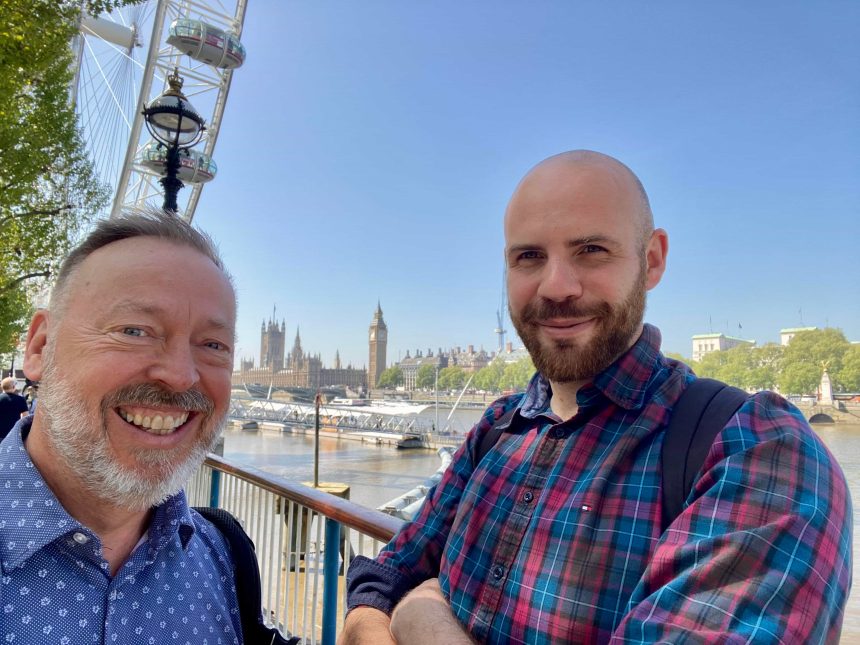
Ferdia UK Country Manager Daniel Morton (pictured, right) marked Mental Health Awareness Week (11-17 May) with a series of interviews exploring wellbeing across the coach industry, with a focus on the pressures of business ownership for smaller owner-operators, lone working, driving, and time spent away from family and friends.
The aim, he says, was to raise awareness of the cost and challenges of mental ill- health, and to help make the topic a routine workplace subject.
The campaign, published online through interview-based content, includes reflections on mental health through the coach sector’s various working patterns. Mr Morton suggests discussions on mental health can often be too broad or corporate, and says he wanted to focus on areas easily missed.
The first interview, undertaken with Richard Bamber, Managing Partner of Anthony’s Travel, addresses the pressures felt by smaller business owners.
“A common phrase owner-operators use is ‘I couldn’t work for anyone else’,” Mr Morton says. “That implies a certain personality when it comes to running a coach business. It’s not advertised as easy and isn’t likely to make you a millionaire, and it requires dedication — but it does offer independence.
“That individualism indicates many might find it harder to accept or ask for help. The message I want to share is that you can still be independent but also be a part of something bigger — there is a strong national community through trade associations, and I would like to see more leadership making the most of that community. You won’t lose your independence by reaching out, and you potentially have a lot to gain.”
Mr Morton highlights the financial impact mental ill-health can have. “There is a very real operational impact on businesses, and being able to create a culture where you can openly express those challenges and tackle them, rather than ticking a box, is important,” he says.
The work has personal significance for Mr Morton, who reveals he has had first-hand experience with mental health challenges. “The aim is to contribute to the normalisation of conversations about mental health and whatever that looks like,” he says. “Some things are very relatable to most people, and some things are less relatable, such as high anxiety, depression, and neurodiversity. Many of those things can be mischaracterised or misunderstood. Spreading awareness and normalising the way these issues are spoken about is important, and I wanted to contribute to that discussion.”