



















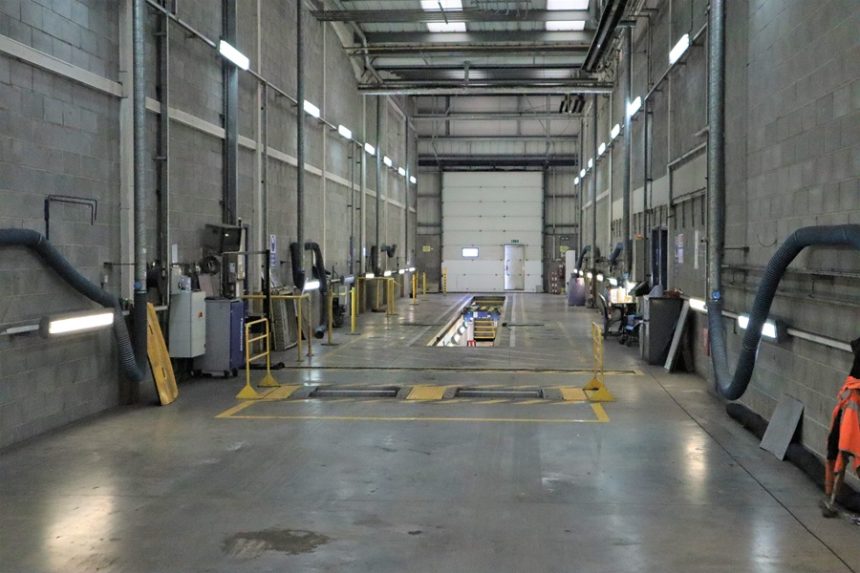
A vehicle’s failure at annual test should be followed up robustly by its operator with in-house teams or third-party maintenance providers to establish the reason why, DVSA Director of Operations Richard Hennessy told delegates at the Confederation of Passenger Transport Coach Conference on 27 November.
Mr Hennessy says that in coach and bus, the failure rate at annual test is 5.4% despite vehicles being prepared in advance. The Agency wants to see that figure fall.
Primary reasons for failure include defects on braking systems, doors and emergency exits, suspension, steps and the platform, and excessive emissions. Mr Hennessy notes how DVSA sees many causes of failure that it believes should be picked up on walk-around checks.
Ways for operators to lift their pass rates where that is required include a regular review of the PSV Inspection Manual; improved internal quality checks; and investment in equipment such as roller brake testers and headlamp testers.
In addition, DVSA suggests that a ‘voluntary’ test should take place before the vehicle goes to the Approved Testing Facility.
Mr Hennessy was questioned by a delegate on scope for members of Earned Recognition to carry out annual testing of vehicles in their fleets via a delegated approach. That was not carried forward under the earlier Heavy Vehicle Testing Review.
He says that the previous work generated such a low level of interest that there are no plans to make changes to the annual testing regime. In addition, the matter is not a ministerial priority. Allowing an operator to test its own vehicles would be like “scoring your own work,” he notes, and that would introduce complexity.
On wider enforcement and compliance issues, the DVSA director notes how there remain some concerns. He says that the Agency sees grossly unroadworthy PSVs “every day.”
It received intelligence on some vehicles carrying Glastonbury Festival attendees earlier this year and sent several Vehicle Examiners there. They turned up what he describes as a lot of non-compliant vehicles including those of two ‘operators’ without an O-Licence.
“Some of it is quite shocking,” Mr Hennessy says, noting how inconveniencing passengers in such circumstances “is the least of our worries.” Some vehicles used on home-to-school contracts on behalf of local authorities are also of concern to DVSA.
Separately, the Agency is working to place artificial intelligence tools over its manuals that can run into the hundreds of pages. Doing so will allow information to be found much sooner. That is currently being trialled internally but will be rolled out on publicly in due course.