



















More work is needed to inform the public “that coach is good” and that it should enjoy a greater market share, FlixBus Vice-President for Europe West Andreas Schörling told the Confederation of Passenger Transport Coach Conference on 27 November.
Mr Schörling points to other nations including India and those in Latin America as examples of how coach travel is widely accepted and used by the population, despite in India’s case an extensive rail network.
“Coach brings a lot of value to society and we need to shout about that more,” adds the recently-promoted former Senior Managing Director of FlixBus UK.
However, he suggests that some here may have a “snobbish” approach to the mode. “Too many people [in the UK] look down on coach,” Mr Schörling continues. “They have a notion of needing to explain why they used it – the train was cancelled, etcetera.”
Like others, FlixBus UK has experienced how when new users are attracted to coach travel, they find it to be a good product that exceeds their expectations. But one difficulty can be in how local authorities approach coaches; while they may build new bus interchanges, the need for coaches to serve them is not always considered.
On the move away from diesel, Mr Schörling says that although FlixBus has various projects in hand around the world, the shift to zero-emission “is driven by incentives.” He questions how many politicians globally will assist the sector in that respect.
Even so, FlixBus UK plans for 2026 call for it to repeat the 50% rate of growth seen this year, he reports, and that will involve significant investment in marketing.
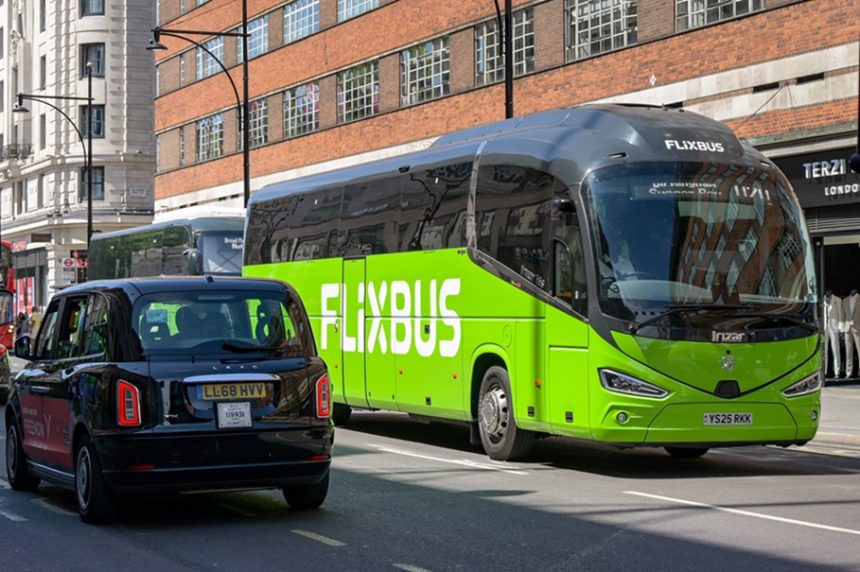
FlixBus adverts have already been seen in a variety of media types and locations, including London Underground stations, and Mr Schörling underlines a longstanding belief that the travel tech business’s green coach scheduled network will ultimately become the UK’s largest.
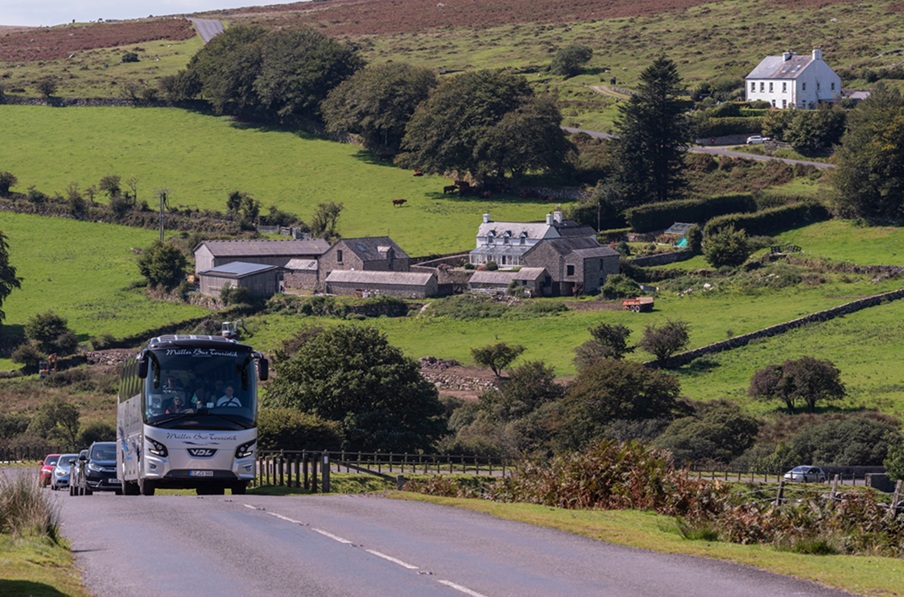
But while UK scheduled coach services major on interurban flows and airport connections, Low Carbon Destinations founder Alistair Kirkbride told conference delegates that national parks and other rural visitor destinations could represent a significant future opportunity for the mode.
He notes how travel to rural attractions represents “a colossal” slice of those places’ carbon budgets. Of the 260 million visitors to the UK’s 15 national parks and 46 national landscapes per year, around 90% go by car.
Mr Kirkbride believes that many of those would be happy to travel via different modes, including coach. In addition, the next generation of visitors are less likely to drive, and it should not be forgotten that those younger people “have significant economic value.”
Rail is not the obvious answer, he adds. “We need another solution and nobody is providing it,” Mr Kirkbride continues, suggesting that “there is some form of market failure” in the lack of alternatives to car travel to national parks and national landscapes.
How to tackle that is the challenge. In response to a question, Mr Kirkbride outlined how many parties in the rural visitor economy field are reluctant to take the issue by the horns and instead see it as someone else’s problem.
“There is still a lack of coach access,” he notes, highlighting one part of the Lake District. “Coaches are not considered. How do we change that?”