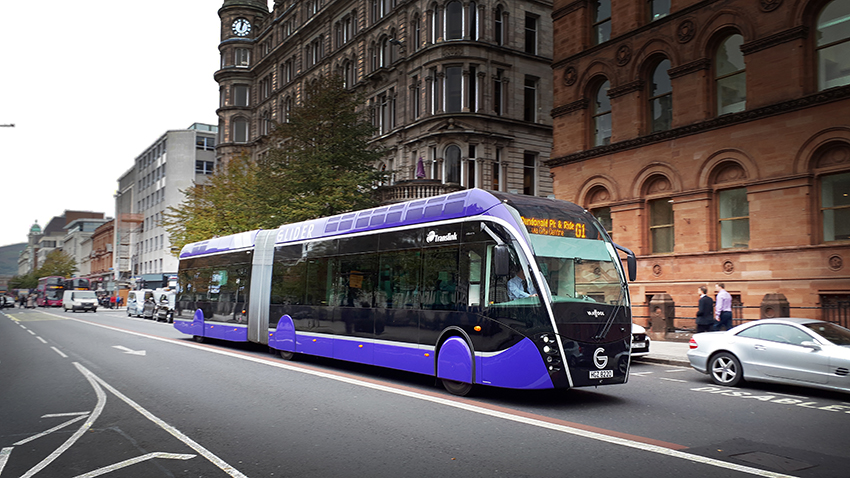





















They’re clean, green, they trundle along, they have seats on board and they drop you off when you ring the bell. For once, though, I don’t have buses on my mind – I’m talking about trams.
The Chancellor this year announced a £15 billion fund for local transport in city regions outside London. Although the money can be spent on any local transport projects, it’s sparked a frenzy of talk about trams.
Leeds is looking at “spades in the ground” in 2028 for a £2.1 billion new West Yorkshire mass transit system. A tram network is being explored linking Bristol with Bath.
The West Midlands and Greater Manchester are both eager to invest in expanding their existing tramways, and Coventry is testing a “very light rail” system.
There is very little a tram can do which cannot be achieved, at a much lower cost, by a decent bus service – Graham Vidler
Mayors across the nation are going to bed dreaming of trams.
It’s time for a reality check. Let’s be blunt – there is very little a tram can do which cannot be achieved, at a much lower cost, by a decent bus service.
An anonymous Treasury sceptic was recently quoted dismissing trams as “just buses that can’t turn left”, which is a level of snark that I, of course, would never endorse.
In public transport, we are all united by the same core goals – to move people around as swiftly, comfortably and efficiently as possible.
But the cost differential between buses and trams is stark. A study on the recent cost of UK tram projects by Britain Remade, a pro-growth lobbying group, put the average cost at £87 million per mile.
This is skewed by several major cost overruns, but even in super-efficient Germany and Finland, you don’t get a tram for less than about £25 million per mile – far above the price tag of a bus, even out of traffic in a guided busway.
In a study for the Confederation of Passenger Transport last year, KPMG looked at the benefit-to-cost ratio of public money invested in buses, and found that, for every pound spent, buses deliver £4.55 in economic value.
By comparison, Sheffield’s mass-transit proposal has a stated potential benefit of between £1.20 and £1.80 for every pound, and Transport for Greater Manchester puts the payback from light rapid transit at £1.86.
Aside from value, buses offer a number of advantages. They’re flexible – you can change the route easily according to demand, while once you’ve set a tram’s path, you’re stuck with it.
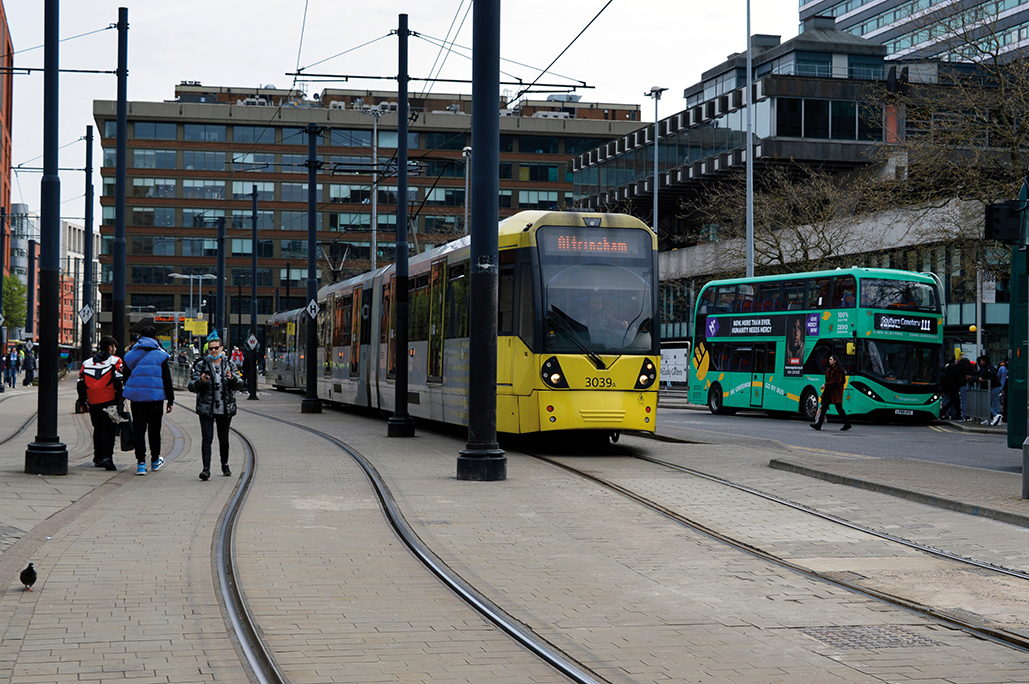
Advocates for trams will say that, as they’re separated from traffic, it’s easier for trams to keep reliably to timetable. But an obstacle blocking a tramway will bring everything to a halt – you can’t divert a tram in the way that a bus can nimbly find a way around.
A bus service can be established at short notice, with only modest infrastructure and little disruption – while for Leeds’ tram, for example, work will begin in 2028 with a view to initial services running in the mid-2030s.
The argument for trams too often tends to revolve around an intangible image premium. The claim, advocated recently in The Guardian by a backer of a tram scheme in Coventry, is that buses have a “stigma” and don’t appeal to car owners, whereas trams are posh enough to persuade motorists to ditch their vehicles.
Evidence for this is scant – a Transport for London study some years ago, for example, found that nearly half of bus users in London have access to cars, demonstrating that, when the circumstances are right, people with a choice do select the bus.
And, once they’re on board, people tend to like buses. According to Transport Focus, 83% of bus users nationwide say they’re satisfied with journeys.
Let me be clear – there is space on the public transport map for all modes of transport: buses, coaches, trams, light rail and trains. To a large extent, we share the same goals in encouraging communities to be less car-centric.
But the lazy assumption that the cachet of trams is sufficient alone to justify billions needs to be challenged. And on most measures, buses – as Britain’s favourite form of public transport – offer more bang for your buck than trams.