




















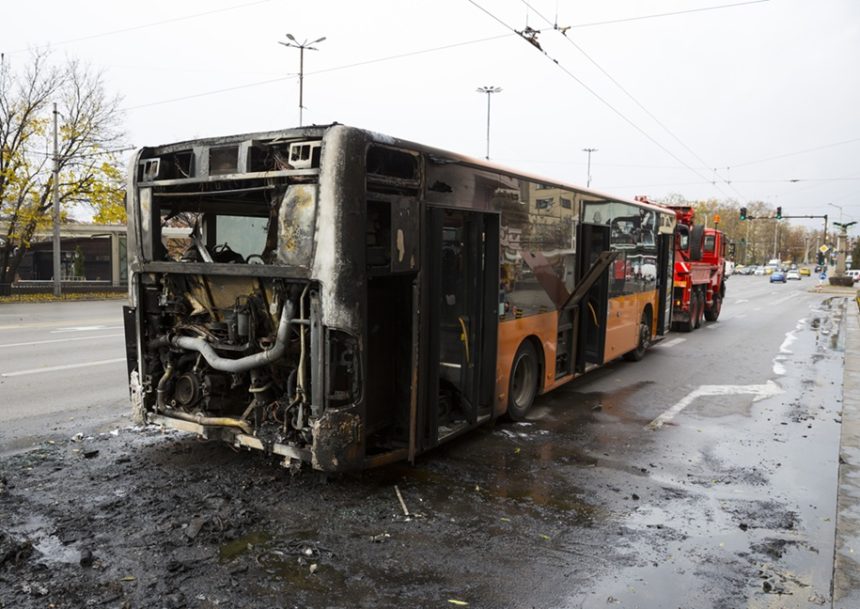
Scarcely a week passes without a report of a coach or bus on fire. Some of those incidents are minor and quelled rapidly. Of more interest to the local mainstream media are those that are not and instead end with a pile of charred wreckage, although those outlets do not always make a distinction between the cause being vandalism or otherwise.
Fires are no new thing for the industry. They have been the subject of various investigations in the past. In publishing the findings of one of those in 2023, DVSA noted how not all mandatory reports of vehicle fires are submitted in a timely fashion.
It also discovered that ignoring dash warning lights relating to temperatures could be a contributor to fires, with the Agency underlining the importance of drivers immediately acting upon such indicators when they appear.
Regulations around fire suppression equipment have been put into place to help solve the problem. Those apply to newer coaches and buses, and it is noticeable that most (but not all) reported fires occur in vehicles that predate such requirements.
A case can certainly be made that most internal combustion engine-equipped coach and bus types will always be more susceptible to engine bay fire than any other vehicle class.
That area can be up to 15m away from the driver, and a good flow of air for cooling a rear-engined layout is more difficult to achieve than where heat-generating components are at the front. And retarders or other auxiliary brakes often put energy back into driveline units.
Nevertheless, and ignoring the difference between fires that start within the engine bay and those that do not, the optics for anyone looking in are the same, as are the passenger and driver safety considerations.
A coach or a bus that has caught fire is seen on local news websites either well aglow or reduced to a blackened heap of scrap post-event. Predictable conspiracy theorists present that it must be powered by electric, even though most often that is not the case.
However, wider public confidence is harmed by such stories. When something goes badly wrong with a coach or bus, mainstream media interest is piqued. Something is causing the all-too-frequent instance of fire, and while good work has been done already to tackle that, it is pretty obvious that more is still needed.