



















I can remember when I was working for Sunderland Corporation Transport (SCT) and the Tyne and Wear Passenger Transport Executive in Central Works, 1966-1980, with a brief interlude to Northern General Transport when we had a big delivery of Leyland Panthers fitted with Simms charging and starter systems. I used to work for Simms Motor Units in Newcastle before I started at SCT.
We were experiencing a lot of control board failures, resulting in batteries boiling over and ballast power packs failing at an alarming rate. Taking the control boards apart, the printed circuit was fried. Nobody could understand why this was happening until our electrical foreman got hold of some temperature sensitive strips and had them placed near the control board. I cannot remember what the temperature was, but it was well over the range for the control board. We moved all the boards to the front of the bus and the problem was solved.
However, the Panthers were a rear-engine bus, with no encapsulation of the engine, so you would have thought no heat issues there. But the buses worked exclusively on town work, and there was no real cooling air when on the road. There was however a lot of residual heat trapped on top of the engine heating everything else up.
Now we have Euro VI and an encapsulated engine retaining loads of heat on town work which is very detrimental to all the associated wiring and pipework. All you need is a bit of oil or a loose wire, and you have a fire.
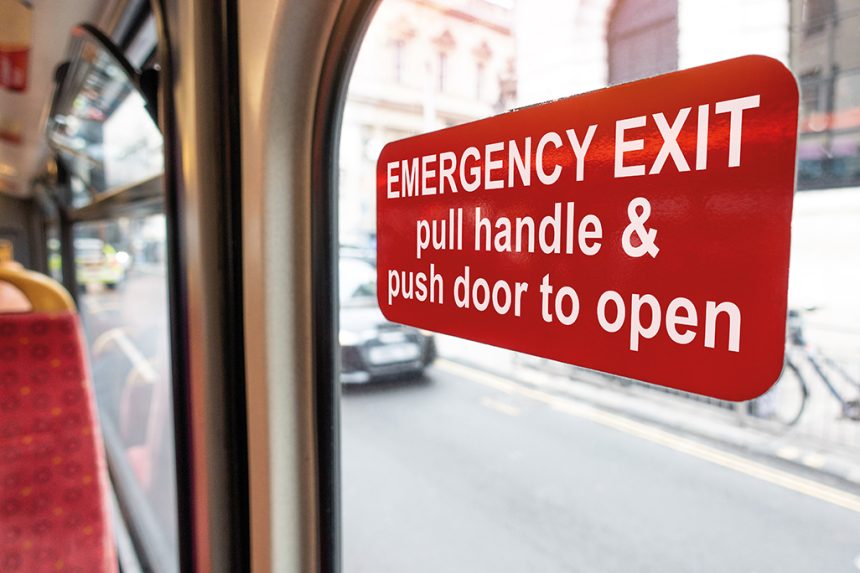
Speaking of vehicle fires, the 3+2 conversions are, in my view, a major concern, as there are not enough exits and no research into how long it would take to evacuate the vehicle in the event of a fire. How are you going to deploy the passenger lift when you have just lost the electrics and the engine?
Ian Ashman, Tyne and Wear