

















Zero-emission coaches bring scope for operators to upsell their benefits to some clients, but charging and fuelling infrastructure remains the critical factor in wider adoption, a coach industry panel has agreed.
It was the shared consensus of an operator and one current and one future supplier of those vehicles at the Confederation of Passenger Transport Coach Conference on 27 November, although the session also heard from Stagecoach London Managing Director Paul Lynch that potential to charge battery-electric coaches at bus depots is rapidly increasing.
Giving the operator point of view was Coatham Coaches Managing Director Mark Hodgson. Coatham was a founder member of The Coach Travel Group in 2024, but it entered the battery-electric field under independent ownership with a Yutong TCe12.
Mr Hodgson notes how Coatham’s contract-dominated income and the predictability that work brings better lends itself to zero-emission than other coach applications, although at present, a wholesale shift would not suit the Teesside business. However, addition of zero-emission vehicles gives “a competitive edge” with some clients.
“Large companies are asking questions. They want to do the right thing,” he observes, albeit not all are comfortable with the additional cost of battery-electric. Coatham keeps its TCe12 busy but “it cannot do everything,” Mr Hodgson adds.
Nevertheless, being part of The Coach Travel Group gives scope to expand zero-emission operation, he believes. That parent has 16 depots across England and Wales, opening the door in the future for charging when away from base.
Representing vehicle suppliers were Pelican Bus and Coach Managing Director Richard Crump and Wrightbus Head of Coach Sales Dave Porter. Products are key to the move to zero-emission but so too is what Mr Porter describes as “ability,” noting that vehicles will struggle on market penetration without greater infrastructure provision.
Wrightbus will advance its hydrogen fuel cell-electric coach platform in 2026, and Mr Porter underlines previous comments how progress on that is now coming quickly.
He believes that hydrogen well suits long-distance requirements. The Wrightbus product will have a range of 1,000km and fast refuelling from the get-go. It will first target the scheduled market, and Mr Porter acknowledges how touring is “more difficult” for zero-emission.
However, he notes that through associated businesses owned by Wrightbus proprietor Jo Bamford, on-site hydrogen can be provided to smaller operators. That involves trailer-based fuel storage and a dispensing unit; while both have a space claim, the solution goes some way to mitigating a current lack of public hydrogen facilities.
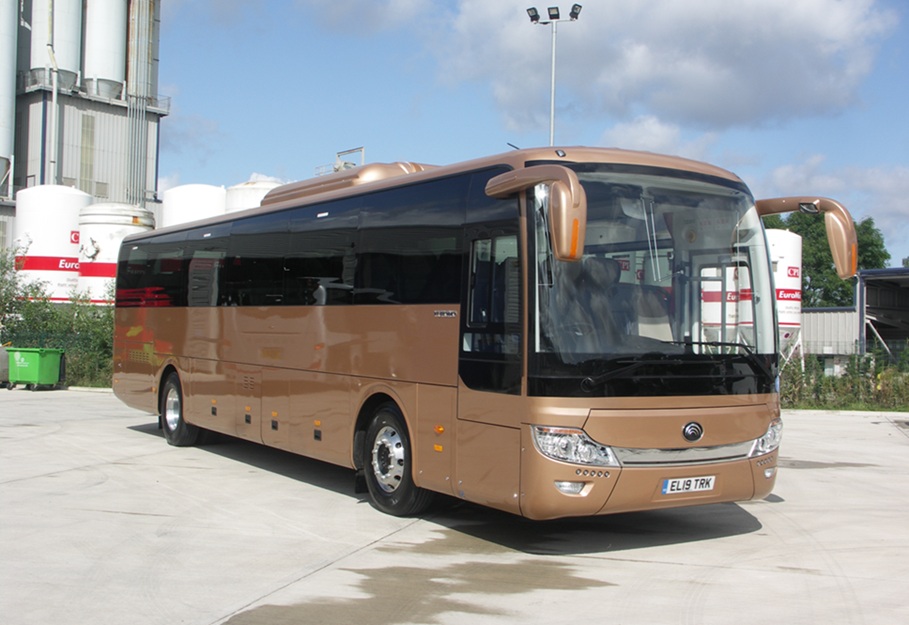
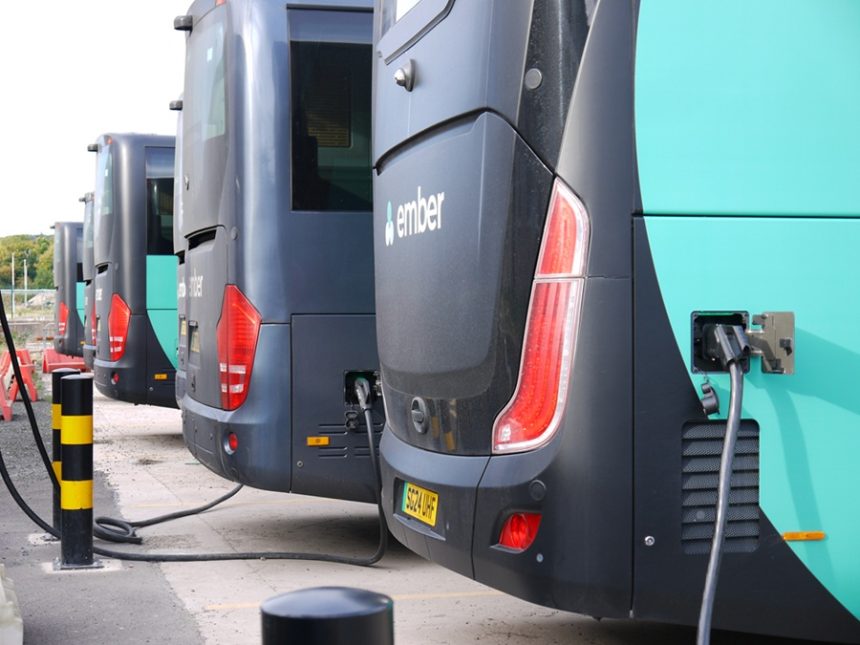
Pelican is so far the only player to deliver zero-emission coaches into the UK through its supply of Yutong TCe12 and GTe14 models. Those battery-electrics have performed well and operate reliably, including in high-mileage applications with scheduled service operator Ember.
Discussions with customers suggest that there is good potential to upsell battery-electric operation to hirers, says Mr Crump, although he believes that a proportion of work done by those existing vehicles is charged at ‘diesel rates’.
That aside, the Pelican chief says that three years ago, the dealership expected more coach operators to take a battery-electric vehicle and upsell it. Backing Mr Hodgson’s comments, more recently Pelican has seen two such businesses make contact based on action by clients around Scope 3 emissions across their ‘value chains’.
Mr Crump agrees with other panellists that infrastructure is the constraining factor for now. High-power battery replenishment is key, he believes; if a coach can plug in at 600kW, that is sufficient to handle charging during drivers’ mandatory 45-minute break.
Utility companies could do better at getting sufficient power into operators’ depots, Mr Crump continues. But he caveats that by observing how once it is in, it is there for good, albeit with that set against the reality that not all premises are owned by the user.
The future looks likely to observe a mixed fleet approach, he adds. Mr Crump suggests that in 10 years, many coach operators that are currently entirely diesel-based will have shifted to an equal split with zero-emission.
Even so, the current versatility of diesel coaches may recede in the longer term. Operators could have some vehicles with smaller batteries to suit shorter radius applications, and others with greater energy storage to deliver long-distance duties.