



















The idea was a pledge in Mayor Sadiq Khan’s re-election manifesto and forms part of TfL’s plans and investment priorities leading up to 2030
Detailed proposals for a publicly owned bus company in London are to be developed by Transport for London (TfL), according to the authority’s draft business plan published today (28 January).
The plan builds on London Mayor Sadiq Khan’s commitment to explore that idea in his manifesto for re-election in 2024.
Under the proposal, when franchise contracts come to an end, TfL would review whether to bring them under a new public bus operator.
Also in the draft business plan, which will be considered by the TfL Board on 4 February 2026, are promises to “reimagine” the bus network, including expanding Superloop, more bus priority, better bus shelters and improved real-time information.
Outlining TfL’s plans and investment priorities for 2025/26-2029/30, the document states: “We will develop detailed proposals for a new publicly owned bus company for London, assessing how this could drive innovation, efficiency and accountability, and support the needs of our passengers and workforce”.
In the foreword, Mr Khan says a new publicly owned bus company in London would “drive innovation, efficiencies and accountability, while supporting the needs of customers and our brilliant bus workforce”.
He had expanded on his idea in July 2024, telling the London Assembly: “It is not taking over the services for the sake of taking them over.
“Firstly, if a private company is making profit, would it not be nice if it was run by us, and we made the profit and reinvested it in public transport rather than in our shareholders getting dividends?
“Secondly, it provides a good benchmark when it comes to bids coming in and so forth. There are lots of upsides in us having a publicly owned bus company.”
Focus on bus speeds
The business plan repeats the promises made in its “London on the move” report this week to use new technology, bus priority measures and lane rental schemes in a bid to ease overall congestion and increase bus speeds.
It also proposes to improve bus connectivity in outer London and make changes to some central and inner London services “to align with changing levels of demand in those areas”.
Zero-emission target adjusted
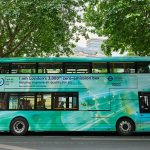
The plan also confirms Mr Khan may fall short in his plan to have a 100% zero-emission bus fleet by 2030, which was one of his key manifesto pledges.
The draft document refers to the goal of operating 6,000 zero-emission buses, which equates to around two thirds of the fleet, with the remainder converted from diesel “soon after”.
These plans could be accelerated “with additional collaboration and support from government”, it says.