


















Coach operators believe that the current fuel crisis is being driven as much by supply uncertainty as by rising prices, with some suggesting the ability to even obtain diesel may soon become the defining challenge for the sector.
While prices have risen sharply due to conflict in Iran, operators asked by routeone consistently point to availability, rather than cost alone, as being among their primary concerns.
Localised shortages
Worries around supply volatility are becoming acute for Greys of Ely. Managing Director Richard Grey describes difficulties securing consistent bulk deliveries, even where operators have invested in large on-site storage.
Greys stores bulk fuel on site, with a 27,000-litre capacity. Mr Grey also says the business uses fuel cards as a “backup” measure.
While he reports a cost increase of about 60% on fuel, sufficient supply is a bigger concern, with suppliers increasingly unable to guarantee full orders. “Where we might need an order for 25,000 litres, the supplier may only be able to promise 18,000,” he says.
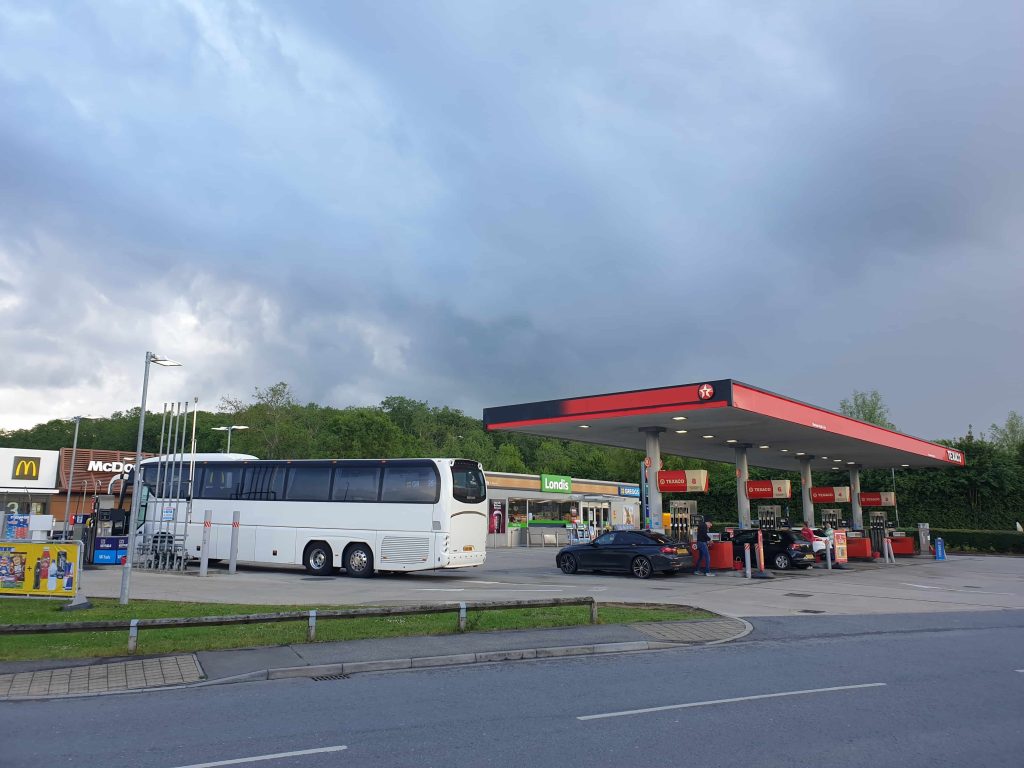
The situation is compounded by shifting buying patterns, with HGV operators also turning to fuel cards and forecourts, placing additional strain on retail supply. Mr Grey shares reports of several local filling stations temporarily running dry, and of fuel suppliers refusing to disclose prices until point of delivery, so high is demand.
“It only takes a clash between low supply and a little bit of panic buying to create those problems,” Mr Grey says.
Surcharge or absorb?
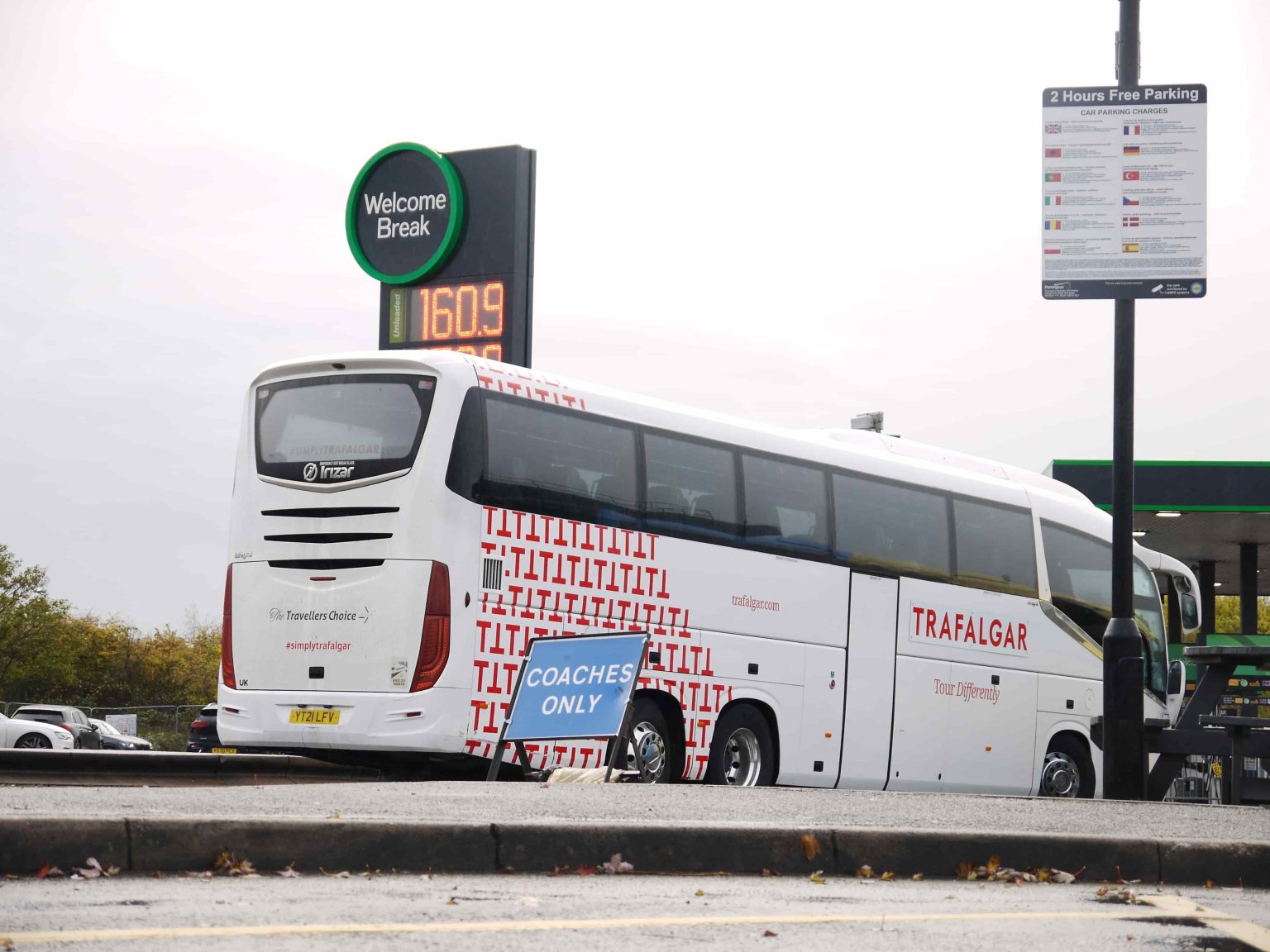
Prices remain volatile, though unevenly felt against the sector. One operator reports fuel bunker prices dropped to £1.49 per litre on 13 April, down from £1.57 the previous week.
Mark Drury, Managing Director of Passenger Plus, estimates a rise of around 20% via fuel cards, while Sam Archer of Archway Travel reports an increase of as much as 45%, equating to thousands of pounds in additional costs each week.
Despite pressures, many operators are attempting to shield customers from abrupt price shocks. Mr Drury says Passenger Plus has largely avoided retrospective increases, instead building flexibility into future quotes via fuel escalators.
Most operators agree that absorbing costs is no longer viable. Mr Grey has introduced a structured fuel surcharge model applied across all work, calculated on a per-journey basis.
“We allowed ourselves a buffer and now we are fuel surcharging on everything into 2027. If the world changes, we can increase or remove it altogether, rather than lump it onto the cost of the hire. It’s an extra to the customer, but it means a better rapport, because they can see it.”
Price challenges
The challenge is particularly acute for operators tied into fixed contracts, such as school transport, where pricing flexibility is limited.
Lynsey Milligan of family firm Milligan’s Coach Travel describes the difficulty of tendering in such an unpredictable environment: “I spent the whole of 2-3 April trying to predict the future of oil prices to price them as it was for quotes for the next few weeks and for school pantomime trips in December,” she says.
“The predicament is whether we price them on a higher rate to be safe, and risk work if competitors price on the optimism of rates dropping later. But keeping quotes at the same rate risks sending hires out for pennies if the price of diesel climbs. We can’t put surcharges on with local authority work, but it may be something we have to look at for direct quotes.”
Mr Archer, whose coach operations are also school based and who cannot surcharge with local authority tenders, is calling for broader structural support, including a fuel duty rebate and the extension of mechanisms such as Bus Service Operators Grant to the wider passenger transport sector.
“Something needs to happen, or the industry cannot carry on,” he says. “If nothing changes, I will be £120,000 out of pocket in 12 months. We’re not asking for help to make more money; we’re asking for help with something that is completely out of our control.”
Crisis still manageable
In private hire and tourism, Peter Bibby, Managing Director of Bibby’s of Ingleton, comments that, despite increases, price remains manageable in the short term, with the operator focusing on absorbing the additional cost of the diesel so as not to discourage customers.
“Even if you don’t make any profit, you can cover costs, you can keep steady,” he says. “Diesel is costing more but it’s not stopping us from doing what we want to do. The only thing that is worrying me is if we can’t get it.”
Bibby’s draws fuel from a mix of wholesale deliveries and roadside purchases. Mr Bibby says supply has so far held up but warns the situation could become clearer over the coming months as shipments adjust to disruption and summer travel ramps up.
The company is already adapting its work patterns in anticipation of potential shortages. In a retrenchment, Bibby’s has begun prioritising shorter, higher-margin journeys over long distance hires.