




















The logistical challenge of switching a large urban bus fleet to zero-emission is one thing, but doing the same when interurban services are also involved is a lot different. Lothian Buses has feet in both camps thanks to multiple distinct brands, and the municipally-owned operator with a network centred on Edinburgh is thus taking a staged approach to the shift, says Engineering Director Dylan Dastey.
Its opening work was built around assessment of zero-emission vehicle types, route analysis, and investigation of power requirements and availability. Battery-electric buses are now in widespread use, but these basics remain ongoing, with Dylan noting how advancements in driveline technology continues to influence what is possible.
Work towards an eventual all-zero-emission fleet across the Lothian city operation and longer-distance services delivered by East Coast Buses and Lothian Country follows a Bus 2020 plan that accomplished Euro VI compliance across the fleet by 2020.
That milestone is now in the rear-view mirror and over 100 battery-electric buses are in service. More will follow soon in nine Wrightbus GB Kite Electroliner single-decks, and funding has been awarded to Lothian via the third round of the Scottish Zero Emission Bus (ScotZEB3) challenge fund. It should see 60 more double-decks enter service from late 2027, again for city work.
Diesel need still clear for Lothian despite zero-emission ambition
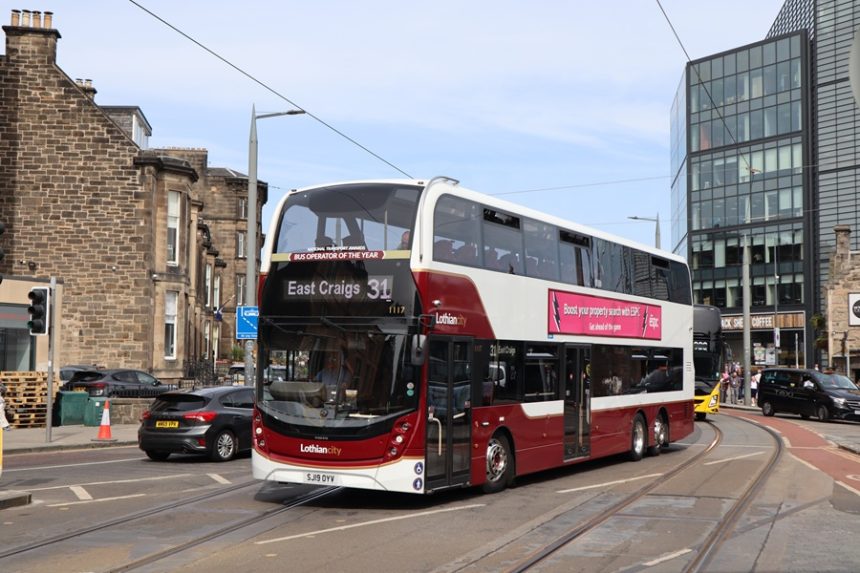
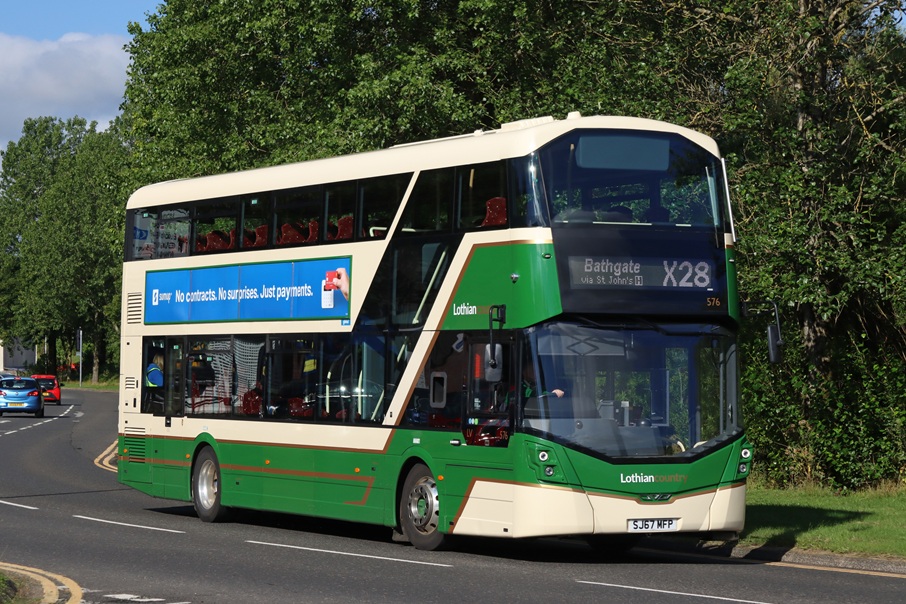
But Dylan observes that in such a mixed operation, there is not yet a natural pathway to a fully zero-emission fleet. More diesel buses will join in the meantime, all on Volvo chassis. It is anticipated that Alexander Dennis will complete 60 further tri-axle B8Ls with its Enviro400XLB double-deck product, while 20 B8RLEs with MCV Evora single-deck bodies are due.
The majority of those will be for the East Coast Buses and Lothian Country operations, although some of the Enviro400XLBs are for the Airlink 100 between Edinburgh city centre and the airport. At 12.8m, all 60 will be shorter than the 13.4m examples delivered from 2019, and have one door instead of two.
Such intended deployments reflect the capabilities of differing driveline technologies. The Airlink 100 runs 24/7, and Lothian is considering how to electrify it. At East Coast Buses, some duties cover 300 miles per day. Nevertheless, it is likely that the pending B8 models will be Lothian’s last new diesel buses.
Although battery-electric continues to advance quickly, East Coast Buses and the similar Lothian Country do not yet lend themselves to that technology, Dylan believes. Cascading older diesels to them is not ideal.
By 2030, battery-electric may have developed sufficiently, but hydrogen remains on the table, albeit perhaps as an outlier; supply, cost, and confidence in the product each need to improve for it to be viable, he adds.
Measured approach considers varying operational landscape
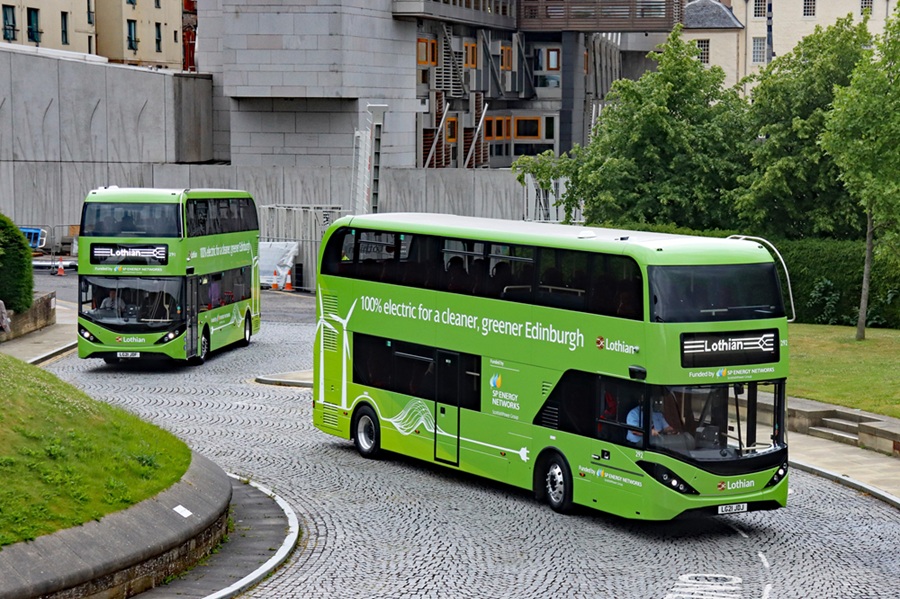
Existing battery-electric work by Lothian is built around its city network in the Scottish capital. In use are 98 Volvo BZL and four BYD Alexander Dennis Enviro400EV double-decks.
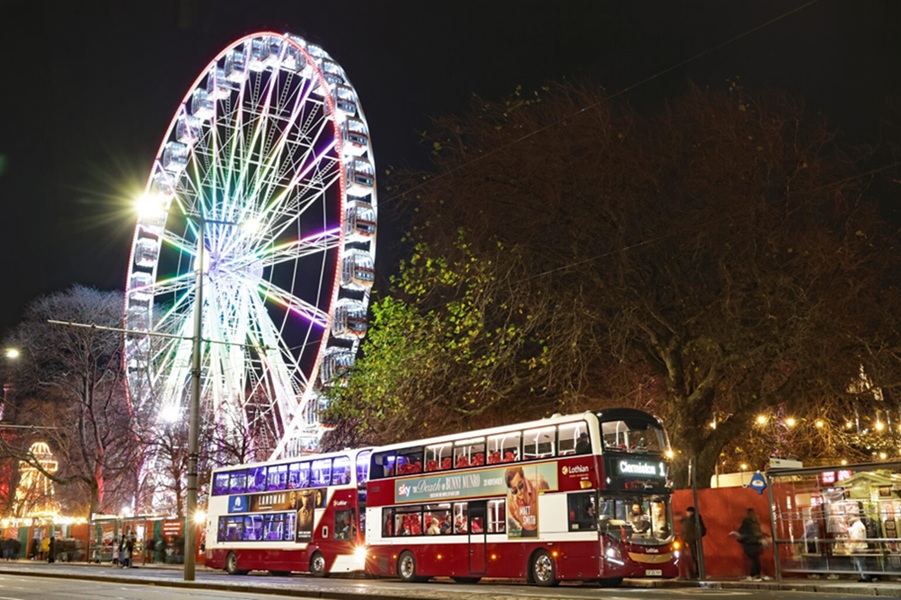
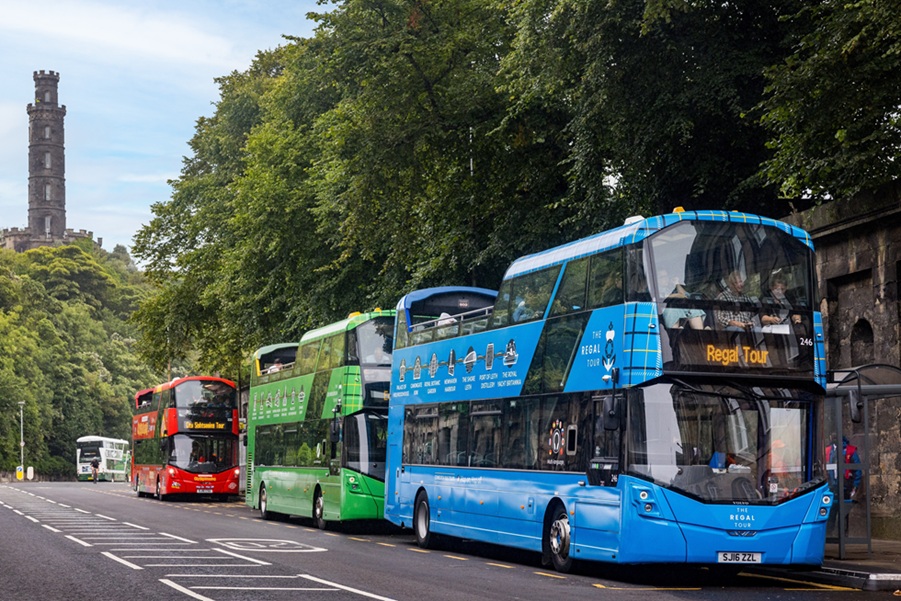
Some Volvo B5TL open-tops on sightseeing duties have been repowered in work that suits their low daily mileages; they need less battery capacity and can utilise charging equipment when it is not fully required by other vehicles.
Early scoping work for zero-emission identified that Central depot could support the power requirement of around 150 battery-electric buses, subject to infrastructure work. Of its total allocation of 220, 80 are now BZLs. The other 18 Volvos went to Marine depot in Portobello in what Dylan says was a relatively straightforward deployment.
The BZL introduction focused on routes that require ranges of around 150 miles per day, easily within the Volvo’s capability. “The policy over the last couple of years has been to ‘tick off’ the routes we know we can convert to electric and will come back to depot with charge left,” he continues.
Across the three city depots of Central, Longstone and Marine, around 50% of duties can be converted to battery-electric on that basis. Others, and those from East Coast Buses and Lothian Country, are more difficult, hence the decision to bring in a final round of new diesels.
ScotZEB3 award unlocks third zero-emission depot for Lothian
Lothian’s appetite for and commitment to achieving a fully zero-emission fleet is clear, but so are the challenges. Affordability is a major consideration; ScotZEB3 will support the next battery-electric double-decks, but the existing BZLs and imminent GB Kite Electroliners are fully-commercial purchases. Even so, the current position is that further subsidy will benefit a timely full transition, Dylan believes.
“At the time of the order for the Wrightbus single-decks, we identified that we could make the purchase [commercially],” he continues. “But for us to maintain our roadmap – whether it be with battery or hydrogen – subsidy needs to continue.”
Orders under the ScotZEB3 allocation have not yet been placed, but it is expected that 20 vehicles will be Wrightbus StreetDeck Electroliners. The other 40 are expected to be a new product: the Volvo BZL chassis with the Alexander Dennis Enviro400EV body.
Once the final grant allocation is confirmed, procurement of vehicles will advance. The approach outlined is thus so far a “preferred solution,” says Dylan. All 60 buses are set for Longstone, where work on power supply is scheduled. That will open the door to a possible 200-bus capacity for battery-electric in the long-term, capturing its full allocation.
“We have got a ramping up agreement for power. We know that with this approach and optimised charging, we can move its full fleet to electric if route applications match that,” he continues. The opening buses expected there continue a strategy of ‘ticking off’ relatively straightforward conversions from the vehicle technology point of view.
Battery-electric repower: still gathering data
Repower has been delivered on the seven open-top double-decks, but whether it contributes to the move to battery-electric in buses with more strenuous mileage requirements remains to be seen.
Those repowers are still at an early stage of deployment and their performance is under close review. After some adjustments, they are at a position “that will allow us to monitor them throughout the summer,” Dylan says.
Evaluation of that data could allow identification of mid-life closed-top buses that are suitable for repower. “We just need to have enough confidence around the product in service before making that commitment,” he says. Vehicles that might fit such a similar approach are still under review.
Zero-emission journey still has much to give
Solidifying zero-emission plans beyond city routes will leverage learnings from existing work, Dylan says. “We now have data from 18 months of running electric vehicles. We know much more about how to optimise their use. We also know that parts of that technology are changing.
“Our schedules and software teams are working to identify the routes that previously we thought were more difficult [to convert]. The answer to those is not that we cannot do it; it is now finding out how we can, and that is where opportunity charging comes in.”
Core is how such equipment could be placed to permit conversion of services that are more demanding. How it rolls out is up for discussion; Dylan notes how opportunity replenishment of bus batteries is so far seen on a limited basis in the UK. Ultimately, it may or may not feature depending on how other elements of the zero-emission journey progress.
And that transition has started to make excellent headway. The city fleet is at around 20% battery-electric already. Data from the Volvo BZLs has shown that those vehicles are performing slightly ahead of what was expected.
Battery degradation is something that will only be learned about in the future, although how warranty periods for energy storage are moving well beyond 10 years is welcomed by the operator. It will potentially have a significant influence on purchasing decisions, but sits as just one factor in an ongoing fleet overhaul.