


















More in-house delivery of supported bus and home-to-school services is seen as essential by The Highland Council to mitigate escalating contract prices, with the local authority also advocating new community transport partnerships to give more cost-effective alternatives on some lower-volume home-to-school routes.
That position is within papers for a meeting of its Economy and Infrastructure Committee on 28 May. Members are asked to approve a draft public transport strategy for consultation, with local bus and home-to-school services central to that document.
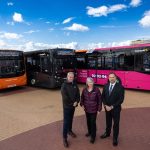
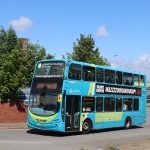
The Highland Council has 50 contracts for fixed-route services, 10 for demand-responsive provision, and 450 for home-to-school, including those operated with cars. It delivers 18 public routes in-house via Highland Council Buses. Since 2025, that operation has also replaced withdrawn commercial services in Inverness.
Founding of Highland Council Buses has countered rising tendered prices from commercial operators, the local authority says. But it notes how “very low levels of competition at tendering” have otherwise sat alongside “significant increases” in contract costs.
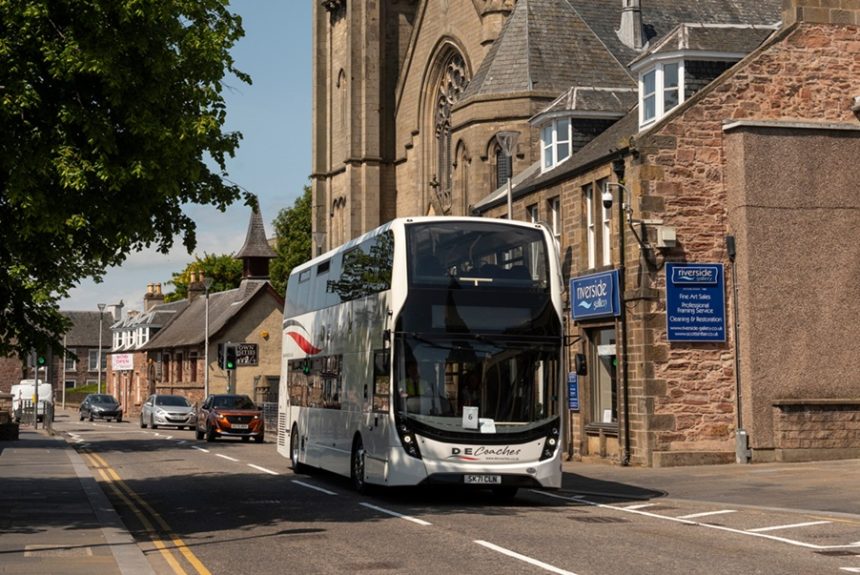
During February 2025, The Highland Council purchased Inverness operator D&E Coaches. It continues to work independently. The in-house arm commenced in January 2023, and further growth of it is envisaged “where there are economic benefits to doing so.”
The draft public transport strategy will guide and support many elements of provision in the local authority’s areas, including negotiation with operators regarding commercial routes, future specification of contracted and in-house services, and development of community transport.
“The draft strategy confirms that both the in-house bus service and external contracts will have continuing roles in providing socially necessary transport, and that the council-delivered service is an effective means of controlling overall costs and enabling a fuller network,” the papers state.
“The council’s bus contracts, in-house services and community transport grants are intended to fill the gaps in the commercial network as effectively as possible,” they add, noting how resource constraints “make prioritisation inevitable.”
On expansion of community transport, committee members are asked to agree that bids for grants for three years commencing in April 2027 are invited, with a recommendation that awards are made in November. The Highland Council already supports 29 community transport organisations. A community transport working group was established in 2025.
Despite the interest in bringing more bus services in-house, the meeting papers do not recommend pursuit of franchising because of “significant legal steps” before such an arrangement could be reached.
Instead, the local authority continues to work with other parties including operators to develop a Bus Service Improvement Partnership, initially to cover areas around Fort William and Inverness.
On decarbonisation, the papers note how the Highland Council Buses fleet has already received one battery-electric coach and has a battery-electric double-deck bus in build, both part-funded via the Scottish Zero Emission Bus challenge fund. 10 more battery-electrics will follow in 2027 thanks to money from the same source.
It is intended that the next round of tendering for public and home-to-school transport will include a score for the use of zero-emission vehicles.
“That would give some preference to their use when awarding contracts, and would enable the cost of this, compared to conventional vehicles, to be measured,” the papers add. “The aim is that all new vehicles operating on contracts would be zero-emission by 2035.”