





















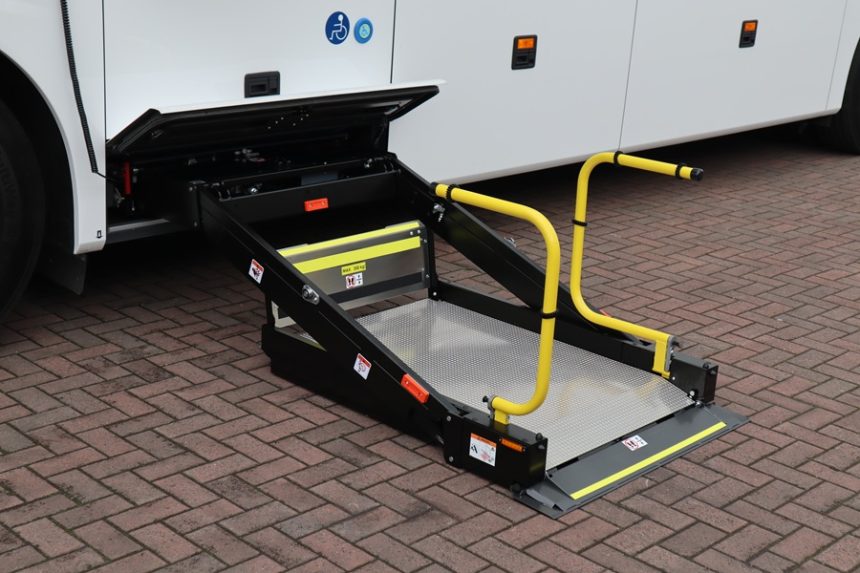
New four-year medium-term exemptions (MTEs) from PSVAR will be introduced for in-scope closed-door home-to-school transport from 1 August, Minister for Roads and Buses Simon Lightwood has advised trade bodies representing the coach industry.
They will follow the current round of MTEs for those services and rail replacement duties, all of which expire on 31 July. The future home-to-school exemptions will be offered subject to specific conditions that will be laid out when eligible operators apply.
At the same time, the minister has confirmed that rail replacement services will see no more exemptions from PSVAR and must comply from 1 August. He has thanked coach, bus and rail operators for increasing the level of compliance on rail replacement, “enabling me to end the granting of exemptions for these services when MTEs expire on 31 July.”
To continue in the home-to-school field from 1 August will be a requirement that operators holding MTEs maintain a minimum proportion of compliant coaches in their fleet, aligned with existing MTE stipulations, to ensure that there are sufficient compliant coaches in the market.
A key element of the future MTEs regime will require operators holding them to provide compliant coaches for home-to-school duties on request without charging a premium.
Details of how to apply for exemptions from 1 August are awaited, but one source close to the matter has suggested that movement will come soon given the less than eight-week window until expiry of existing MTEs and the likely volume of applications.
In a notable change of approach, Mr Lightwood has acknowledged the differing positions around users of rail replacement services and of closed-door home-to-school transport.
For the latter case, pupils’ needs “are known in advance,” and many with disabilities either attend specialist education settings or are provided with door-to-door transport “and would struggle to access mainstream services even if they were PSVAR compliant.” But from 1 August, disabled pupils must be able to travel with classmates if they wish to.
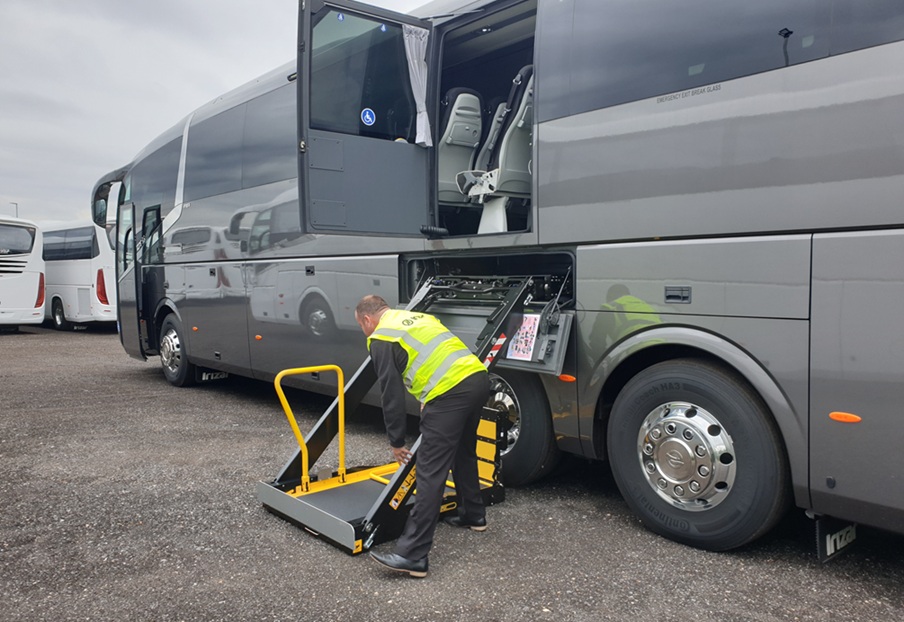
A decision on the home-to-school position follows a data gathering exercise and dialogue between the industry and government that the Confederation of Passenger Transport (CPT) says it has led.
CPT adds that such work demonstrated to DfT how few wheelchair users are carried by conventional home-to-school services. Also highlighted was the disproportionate cost of converting the entire in-scope home-to-school fleet to comply with PSVAR.
Operations Director Keith McNally has welcomed the outcome, which he describes as “a pragmatic way forward.”
Continues Mr McNally: “It ensures that every passenger with accessibility needs will be accommodated on school coaches. The coach and bus industry is able to deploy wheelchair accessible vehicles on all school services that are likely to need them. And we support the position that all rail replacement services should be accessible to all.
“This is a positive outcome which will meet everybody’s needs without placing an undue burden on coach and bus operators.”
The Confederation notes that via the current medium-term exemptions, the proportion of compliant coaches has reached around 25% of vehicles used to transport children.
RHA Managing Director Richard Smith notes how the position outlined by Mr Lightwood “shows [how] ministers increasingly recognise that making coach travel fully accessible is a complex challenge that needs to focus on more than the vehicle.”
He continues: “Operators need clarity and certainty on inclusive travel provision to be able to plan and invest, and are committed to making journeys fully accessible. However, we’re clear that regulations must focus on all elements of the journey to be truly inclusive and effective. We will continue to work with ministers and officials on shaping the right solutions to support passengers and operators alike.”
In response to a question about PSVAR on home-to-school services, Mr Lightwood said on 23 April that since the opening of a review of PSVAR by the previous government, DfT has been inviting feedback from stakeholders “with a view to understanding the extent to which the Regulations remained appropriate and continued to serve disabled passengers.”
He noted then how the Department was continuing to work with partners to understand the best way forward and that next steps on PSVAR were due soon, “including a decision on the future of the [medium-term exemption] scheme and its application for [home-to-school] services.”