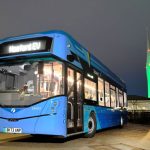
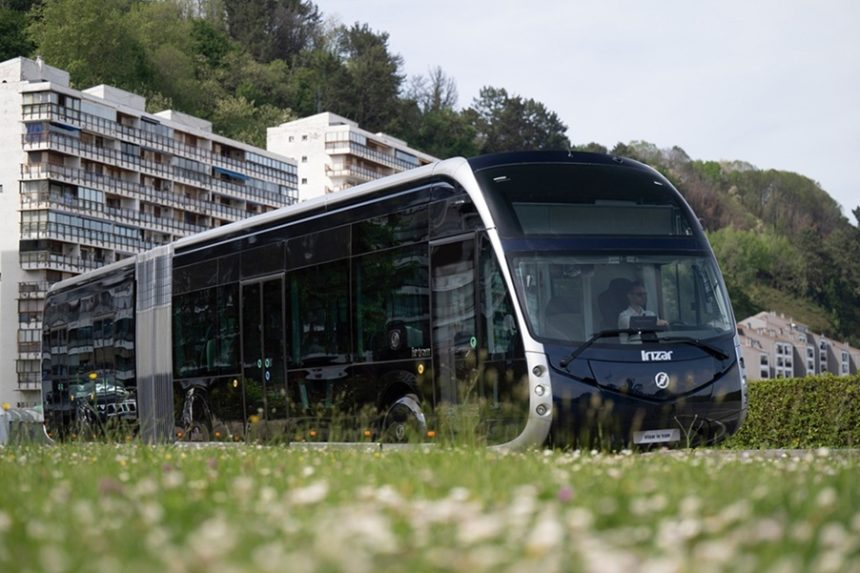
Irizar has revealed an Efficient development of its ie tram battery-electric bus, with the vehicle joining other coach and bus members of the Efficient range.
The manufacturer says that the ie tram Efficient is “a completely new and renewed vehicle” that leverages extensive battery-electric bus knowledge gained since 2011 in more than 55 European cities and across over 200 million kilometres run.
Innovation and improvements earlier implemented on the more conventional ie bus Efficient are incorporated by Irizar into the ie tram Efficient. It says that energy consumption is down by up to 10% and almost 1,000kg of mass is removed, allowing a 5% increase in passenger capacity.
The climate control system has gained efficiency and a more compact motor is utilised. Latest generation batteries are incorporated and 50% more recycled source materials go into the build, the manufacturer continues.
Redesign of the frontal area has improved visibility and gives what Irizar says is “a panoramic view,” although it notes that the ie tram signature appearance is not compromised. The cab area has also seen changes to follow the German VDV reference standard.
A new generation chassis is used, while the builder says it has carried out “exhaustive work” to strengthen reliability and durability. Irizar e-mobility carried out a study to lower repair and maintenance costs and time, implementing what it says are “significant improvements to access various devices and making it easier to replace bodywork elements.”
Wider doors feature on the ie tram Efficient, which is lower than the original version. Aspects around connectivity and digitalisation are also improved.
The ie tram in both standard and articulated form has been delivered to customers here. In April, Irizar UK Managing Director noted sizeable further opportunities for the product.
A left-hand drive articulated example has been under demonstration in Aberdeen to highlight what a future Aberdeen Rapid Transit vehicle could look like in an echo of similar work undertaken in the Liverpool City Region during summer 2025.