




















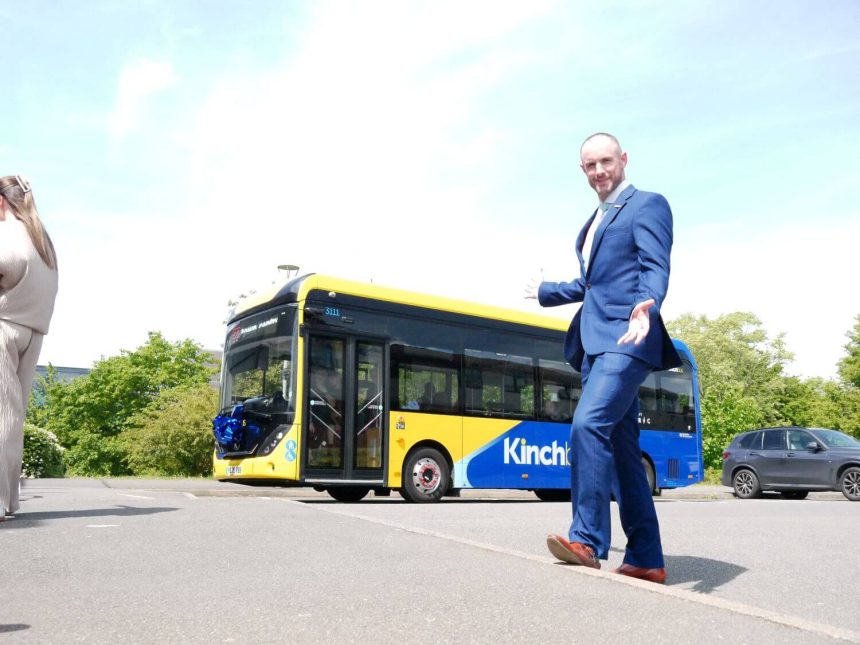
Kinchbus showcases its electric bus fleet with what it describes as a first-of-its kind collaboration and pioneering focus on neuroinclusive bus design
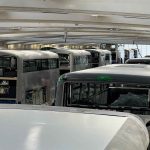
In January, Kinchbus deployed 22 new battery-electric buses in Loughborough: 11 Yutong E9L types on its Sprint university service, and 11 Yutong E12 models on its 9 service between Loughborough and Nottingham.
The £10 million investment marked a complete replacement of the fleets on both corridors, supported by depot electrification and a wider programme of work involving Pelican Bus and Coach, Altro, Camira, VEV, and accessibility partners. Leicestershire County Council supported the project through the ZEBRA framework.
On 22 May, Kinchbus showcased the new fleet with a seminar, ceremony and depot tour at Burleigh Court Conference Centre and Hotel in Loughborough.
Managing Director Tom Morgan shared the core proposition: that Kinchbus has taken the opportunity to rethink the bus as a passenger environment entirely, introducing a “step change” in the customer experience.
The ambition has taken the project beyond the standard specification of a zero-emission bus.
In what has been described as a first-of-its-kind bus procurement process, Kinchbus has worked with partners to create a calmer, more welcoming and more inclusive interior, shaped by neuroinclusive design principles and by the lived experience of passengers for whom public transport can be difficult, stressful, or excluding.
The Altro influence
The starting point for Kinchbus and its supplier partners was a recognition that accessibility does not end with a minimum level of compliance.
Conventional thinking around vehicle accessibility has, they argue, often focused on visible physical needs: wheelchair spaces, ramps, priority seating and mandated requirements.
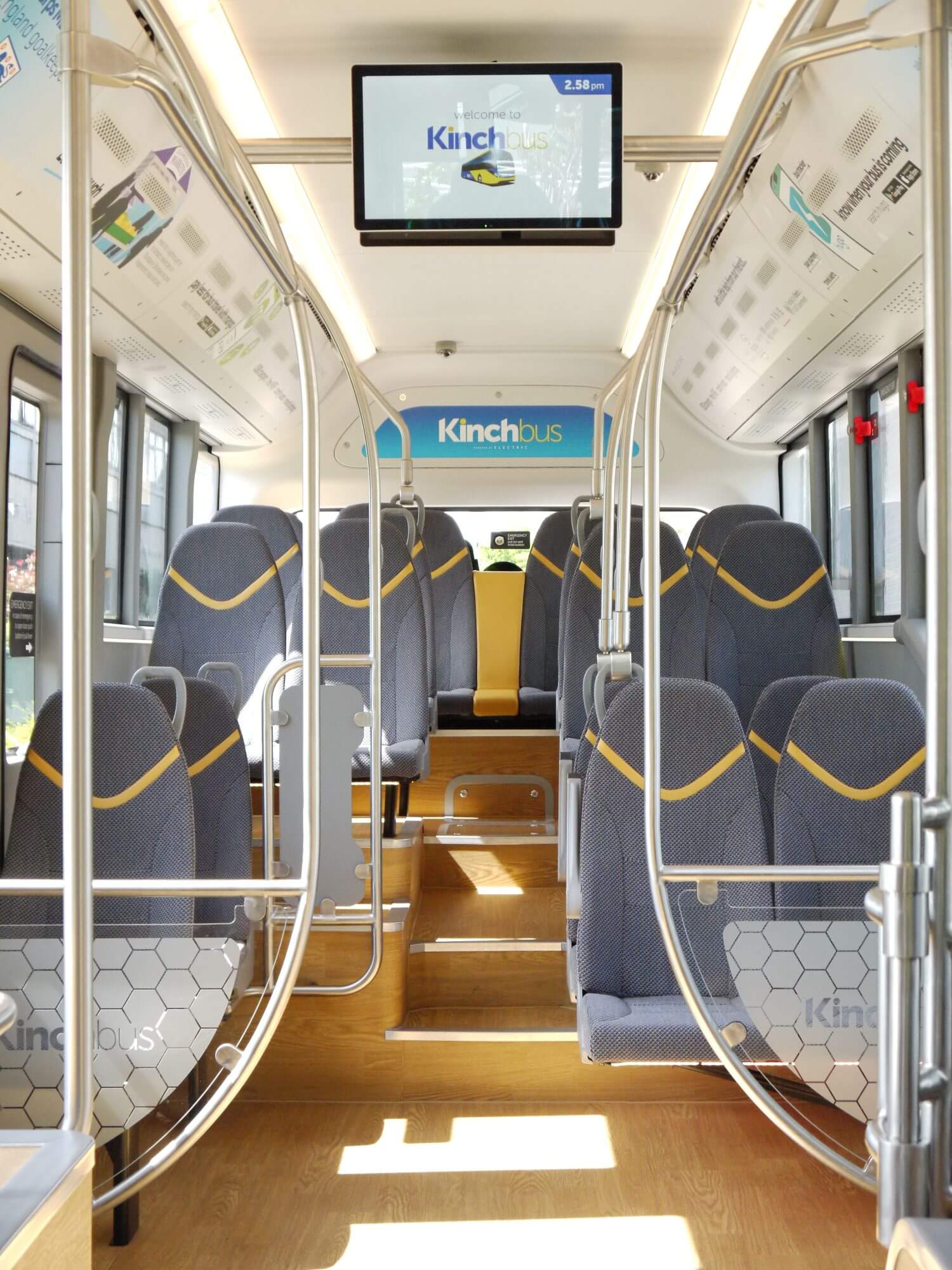
Kinchbus’s project adds a broader question to those essentials, and asks: how does the vehicle feel to use?
The thinking behind the project can be traced back to Altro’s Transport Design Forum in June last year.
That forum exposed Kinchbus to discussions around hidden disabilities, neurodiversity and the role of design in making public transport more accessible.
Scarlet McCourt, Marketing and Communications Manager at Kinchbus, says the process began when she and the operator’s in-house graphic designer attended an Altro focus group.
It changed how the business thought about its own brand-led approach to interiors.
“For the first time, Altro made us sit in a room and think about colour, seating, lighting, temperature and texture as one, and not as separate design elements,” she says.
“The smallest thing can be the difference between travelling confidently and not travelling at all, and that is the complete opposite to what we want to achieve.”
Chris Edwards-Thorne, Marketing Manager at Altro and one of the chief architects behind Altro’s inclusive focus, says this is the kind of challenge the industry needs to confront.
“What’s been brilliant about working with Kinchbus has been how proactive and open-minded the team has been, and of the value of doing this for the community,” he says.
“The industry as a whole does what it needs to for mandated regulations to accommodate physical disabilities, but that seems to be where many think our responsibility ends. Buses should be accessible for everyone; everyone should be considered and accommodated, and not only that, made to feel welcome.”
Chris points to an ‘accessibility iceberg’, where many of the barriers that people face — particularly for those with neurodegenerative conditions such as dementia or Alzheimer’s — are not immediately visible.
We really pushed and challenged ourselves not just to design a bus but an environment, and one that considers all the senses to shape its overall atmosphere – Tom Morgan
For example, heavy patterns can be perceived as physical objects and strong reflections can create uncertainty. Stripes can be mistaken for stairs while harsh contrasts and glare can create visual confusion.
That sensory approach has influenced everything with the new bus interiors, from flooring and seating to lighting, colour, texture, temperature, acoustics, and even passenger flow.
The project challenges the assumption that a bus interior must carry the same visual energy as its external identity and has been somewhat of a significant shift for a business known, through both Kinchbus and Trentbarton, for strong, colourful branding.
The electric drivetrain already helps provide a quieter and smoother base, and that has been leveraged to make the rest of the vehicle consistent with the change.
The brief produced a number of firsts and notable design choices for manufacturer Yutong — including what is believed to be the first use of cantilever seats and double-glazing on one of its electric buses, alongside tinted glazing, waste-rail mood lighting, an onboard bin, and an interior passenger information display colour-matched to the interior environment.
Dealer Pelican Bus and Coach says the additional weight of those additions has only reduced standing room by one occupant.
Tom says one of the boldest decisions was to move away from the operator’s traditional bright interior palette. “We diverted away from that to completely mute those colours,” he says.
“It went against everything we’ve done before. We really pushed and challenged ourselves not just to design a bus but an environment, and one that considers all the senses to shape its overall atmosphere, and the experience people go through while they travel. We wanted not just to consider those senses, but soothe them.”
Drivers have not been forgotten either, with team leaders noting a positive response to better seat and steering wheel adjustment, faster heating and cooling, easier controls and quieter operation.
One of the most visible decisions has been the absence of an assault screen between driver and passenger.
Tom says that decision reflects how the operator wants to frame the relationship between passenger and driver – an inclusive and friendly one.
Collaboration as a procurement model
One of the most significant aspects of the project has been how the specification was developed, and a key message is that procurement culture matters.
Rather than treating each part of the vehicle as a separate decision, with materials chosen in isolation, Kinchbus brought its suppliers together in-person for a joined-up approach. That included Altro for flooring, Camira for fabrics, and Pelican Bus and Coach for the vehicle.
Scarlet says in-person collaboration accelerated the design process. The presence of different suppliers allowed for the testing of ideas in real time and honest conversations allowed ideas to be developed while others were quickly rejected from a technical or compliance perspective.
Tom agrees, noting “there was honesty in an industry where often we don’t like to say no. That was refreshing.”
Ian Downie, Head of Yutong UK, praises Kinchbus for that direction. “The vision was clear, even if the end result wasn’t,” he says. “That helped us and gave everyone the flexibility and headroom to challenge things in different ways.”
Designing for confidence
The inclusive design work is not presented as a niche intervention. Kinchbus and its partners argue that the changes improve the environment to everyone’s benefit.
That principle has been reinforced by Kinchbus’s work with Canine Partners (present for the showcase were two assistance dogs, Harry and Sparky).
Belinda Essex, from the charity, says the operator has provided a quiet depot environment where assistance dogs in training can become familiar with buses before working in busier public settings.
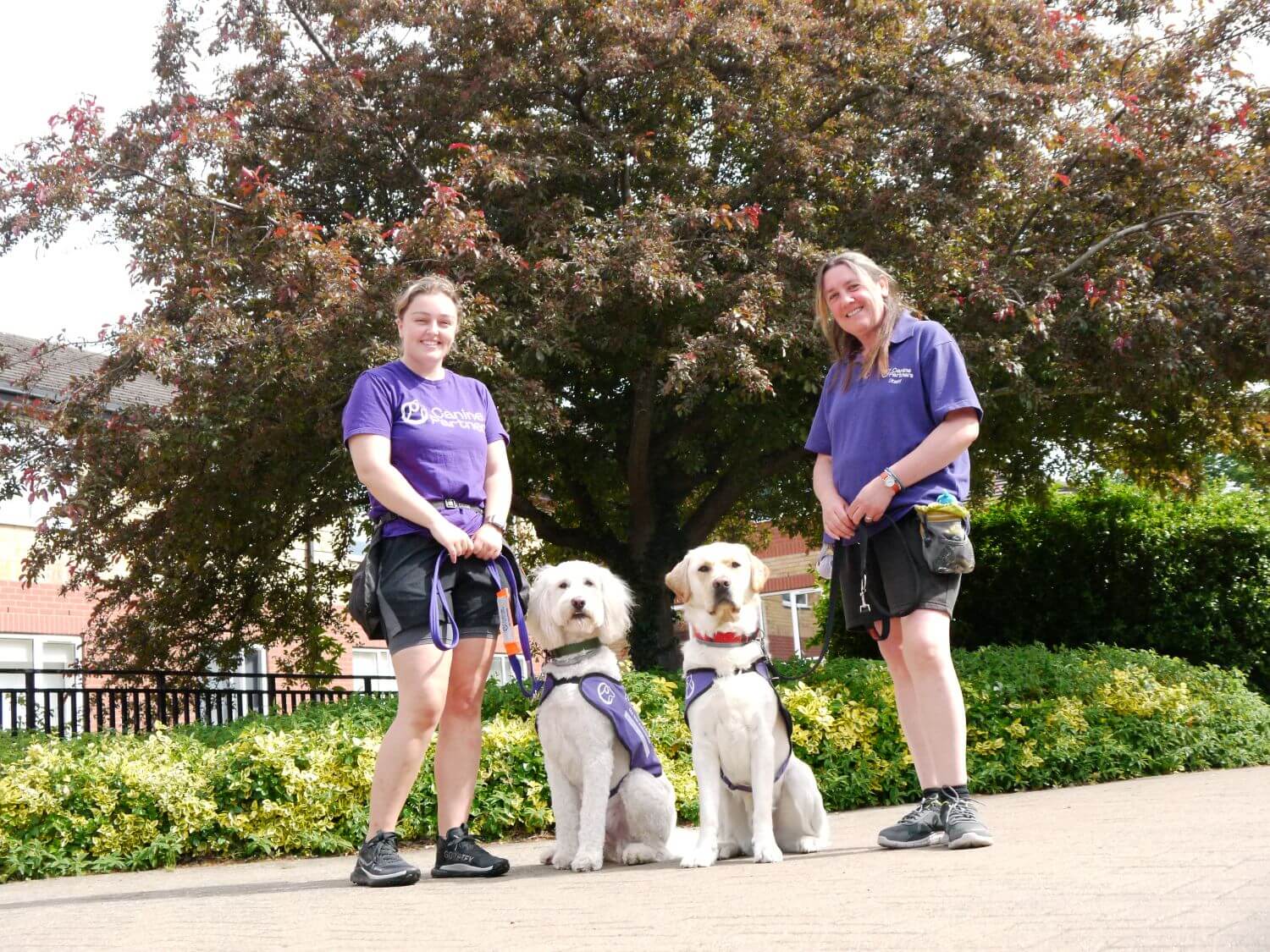
“We noticed with the electric bus design that they are spacious, much wider, with no awkward holes to move around, and they’re quiet, so they are much more accessible for clients to use,” she says.
“Public transport is a massive part of our lives. If the dog can’t use the bus, it impacts their owners massively.”
For Kinchbus, the feedback matters because the project, ultimately, is about confidence, necessary for a broader goal of modal shift.
A passenger who finds the bus confusing, stressful or physically difficult may not use it at all. A calmer and more intuitive environment removes barriers to travel.
Michael Meyerstein, one of Kinchbus’s team leaders, compares the new environment to a car – something that Scarlet and Tom both note is deliberate. “Our biggest competitor is the car,” Scarlet points out.
“We asked ourselves why we, as bus operators, are not designing an environment that mimics that, and giving passengers the feeling they are on their own journey.”
Beyond a cleaner bus
Kinchbus does not claim to have created the perfect, fully inclusive bus that accounts for every passenger need. Chris suggests there may never be such a vehicle. But this is one step on a journey, and feedback is expected to shape future phases.
The significance now lies in the direction of travel for the wider industry. The Loughborough project aims to use electrification as a moment to rethink what the bus is for, how it feels, and why people may or may not choose to use it.
For Tom, it forms part of a desire to reframe the discussion around modal shift as one of quality, not cost.
“We don’t want buses to be cheap,” he says. “We want them to come first in people’s travel choices. We want to make public transport better, rather than cheaper.”
The challenge now is whether more operators, suppliers and authorities are prepared to treat inclusivity and that approach to customer experience as a mainstream commercial issue, rather than a specialist add-on.
In an industry where decarbonisation often dominates the conversation, Kinchbus has taken the opportunity to revisit the bus as a passenger proposition. Cleaner, quieter vehicles are attractive in their own right – but the larger commercial prize is in making the bus feel like the credible first choice.
“We’ve pushed the boundaries,” Tom says. “And we like to think this this project resembles what can be achieved.”