



















Critical to the decarbonisation of vehicle classes including coach under the next Prime Minister is “substantial coordinated leadership” from the government and sectors involved, RHA Managing Director Richard Smith has said.
He was speaking as the start of Net Zero Week on Saturday 4 July approached. The difficulty of moving commercial vehicle types such as coaches away from diesel sits against what Mr Smith calls a challenging investment backdrop and the presence of significant risks that threaten to derail existing decarbonisation plans.
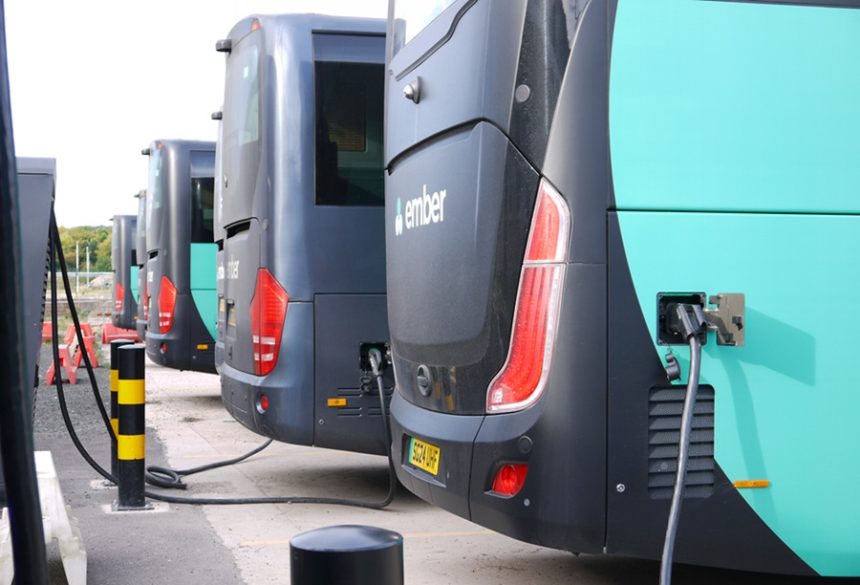
A major coach-specific decarbonisation call from RHA is extension of funding support to assist operators in procuring those vehicles. In the HGV field, a combination of the Depot Charging Scheme – which also captures coaches – and the Zero Emission Truck Grant will help market penetration of battery-electric vehicles, but nothing similar to the latter exists for coach.
“This must change,” says Mr Smith. “We also need to keep a watching brief on overall affordability. For a thin-margin, tight cash flow industry, further funding for HGV and coach operators may be necessary if the market cannot drive the required vehicle volume production alone.”
Notwithstanding RHA’s call on decarbonisation work sitting on a long list of priorities for the incoming Prime Minister, publication of a well-overdue infrastructure strategy for zero-emission coaches and HGVs would represent “an early signal of intent,” he continues.
A call for evidence (CfE) on that was published in October 2023. It was to inform development of the strategy for release in 2024. The CfE noted how the previous government welcomed “the ambition of and progress being made by the coach industry in what is already one of the greenest modes of travel available.”
Mr Smith says that knowing where infrastructure to power zero-emission commercial vehicles should be located “remains a key stumbling block” for the transition. While what he describes as “much good work” by some agencies and distribution network operators has been done in that field, “it lacks a central focus.”
To that end, he has called for an infrastructure strategy for zero-emission coaches and HGVs to be governed by a reconstituted Freight Energy Forum. That would give clarity on how, when and where investment in infrastructure will occur. Such a step would “give operator confidence to plan their investments,” the RHA chief continues.
Beyond infrastructure, the trade association wants regulatory certainty on decarbonisation. A comprehensive zero-emission vehicle mandate for coaches and HGVs across all use cases “is still some way off for it to be workable,” Mr Smith believes.
“However, carefully targeted regulation and investment focused on those operations that can be easily decarbonised could be possible,” he says.
Despite significant challenges, “the high-tech innovation that is transforming the commercial vehicle sector is very exciting and, in turn, we hope will inspire the next generation of engineers and school leavers to enter our industry,” Mr Smith observes.
“We also look to see how hydrogen develops as a credible alternative for lorries and coaches, particularly for the very hard-to-decarbonise operations such as long distance or very heavy abnormal load operations.”