




















Stagecoach has undergone a series of changes in recent years.
In August 2021 the company launched a five-year sustainability strategy, Driving Net Zero: Better Places to Live and Work, publishing a roadmap to becoming a carbon neutral business by 2050. Embedded in that strategy were commitments to creating more female leadership roles, increasing the number of employees from ethnic minorities, and the launch of new employee-led diversity and inclusion networks.
In November 2024, additional work was done to put company values further in line with that strategy. Consultancy work pulled together a plan on diversity, equity and inclusion (DEI), which led to the creation of a new role — Chief People Officer (CPO) — taken on by Sarah Blake, who joined the company’s executive committee in 2025.
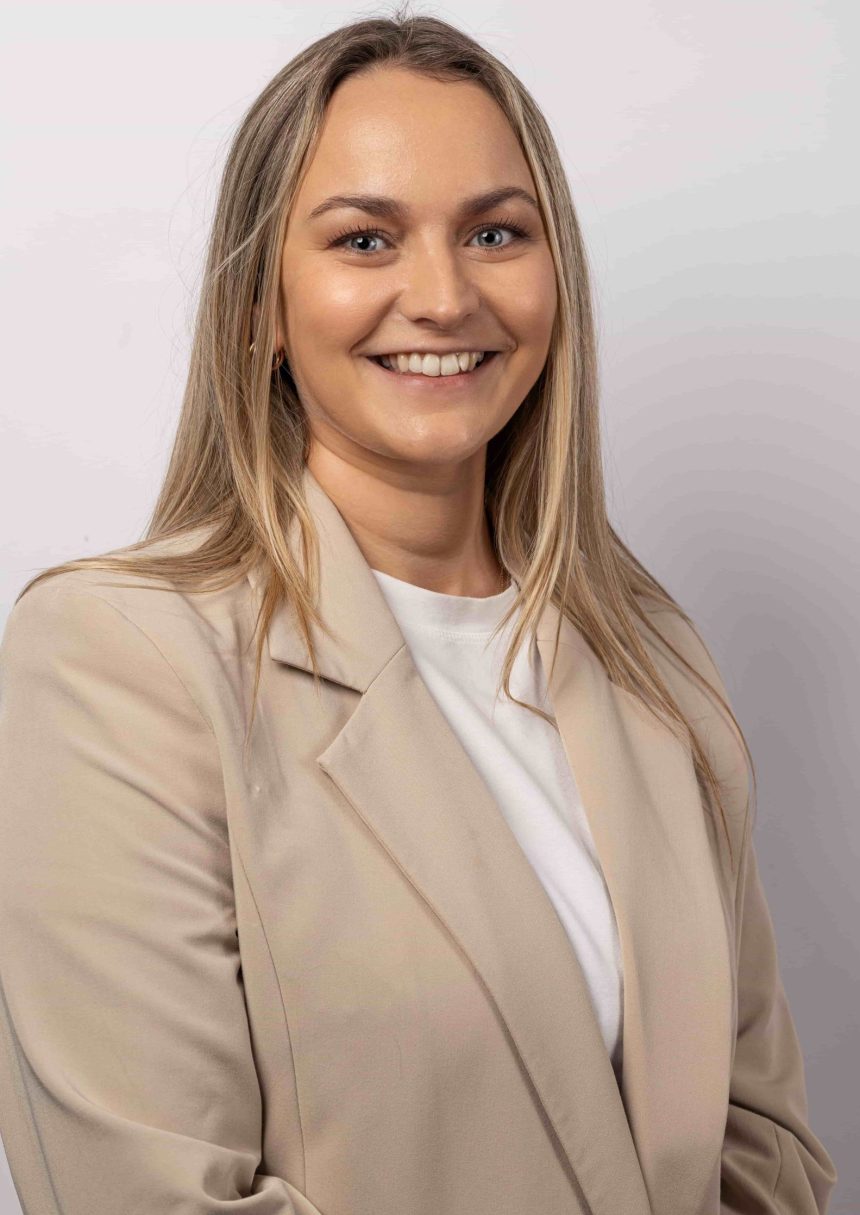
It was through Sarah that another new role, Head of Culture, Engagement and DEI, was created, reflecting her vision that culture comes first and foremost in a people strategy. Sam Davys applied for the job mid-2025. Six months on, she speaks to routeone to share what culture means at Stagecoach, and how she hopes to continue shaping that in the coming years.
Establishing shared values
Sam started her career in the student union world, collaborating with the governors of Liverpool John Moores University. From there she moved into learning development, working with people functions across different industries, with a specialty in early careers, apprenticeship programmes, and assisting young people from more deprived socioeconomic backgrounds.
Moving to the bus industry appealed because of axioms heard often — that it is a male dominated industry, and that it relies heavily on legacy ways of working.
“There is a huge opportunity to modernise and seeing more of the focus around women drivers, and the work the industry is doing to address that, was attractive,” Sam explains. “With the bus industry, we can go back to basics and look at where the gaps are in how we find people.”
Sam says culture is defined by how employees feel when they choose to work for Stagecoach; what makes them stay over working for another operator, and vice-versa. It is also in how the company attracts talent and gives everyone the opportunity to grow their potential in a way that is reflective of all areas of the UK and beyond.
For the last six months, Sam has been asking questions such as whether Stagecoach is reflective enough of areas where it needs to be, and whether the people working across the business can see themselves doing so every day, fulfilling not just routes and engineering, but central functions as well.
“How someone feels waking up on a Monday morning describes a lot. It’s a combination of things, and a lot of it is around our leadership and their vision,” she says. “There has been a lot of change, and going through that change curve is challenging, given that we are a dispersed organisation with many teams running their own operating companies. Culture is ensuring we’re all on the same path, delivering the same vision, shared set of values and behaviours.”
That sounds like a complex task, but the approach has been to “strip it back and keep things as simple as possible”.
Nurturing autonomy in leaders
Culture forms part of an overarching people strategy which started in earnest earlier this year at the highest board level within Stagecoach. Under Sarah, the company is targeting broader strategic priorities through three pillars: building trust by addressing the biggest pain points fed back by staff; fostering an inclusive environment where individuals feel valued, safe and recognised; and modernising the workplace.
Stagecoach sets what it sees as a shared culture, value, and behaviours from a ‘central functions’ perspective. But how that runs locally may differ slightly.
Sam stresses that there is not a one-size-fits-all approach to this, particularly given Stagecoach’s position as an operator across all regions of the UK. It is instead about taking a vision and putting it at the forefront of its employees’ minds.
“It’s no secret to say if you visit some depots around the UK, you will find inconsistencies both in facilities and the way they are led,” she notes. “Operationally, we’re trying to ensure consistency. And that isn’t to say we are dictating how operating companies (opcos) should run their operations. Holding guard rails around culture is the shared common goal, and being consistent in that approach with a localised look and feel.
“From one opco depot to another, things can look very different and we can’t necessarily put the same message out everywhere. We have to leverage what works well within the opcos to make their organisations more engaged. It has to be comfortable and authentic, because it’s with these types of discussions we set a framework and empower leadership to work autonomously in a way that fits.”
Attracting and retaining talent
Prior to Stagecoach refreshing its values and strategic commitments, external consultancy work shared a series of findings about what made the company unique and an enjoyable workplace for its staff.
What came back was that Stagecoach appeals for its sense of family (literally, in some cases) at its depots.
“I hear it weekly when I ask people why they joined,” Sam says. “For many, it was their mother and father, or other relatives, who began that connection. All our depots are deep-rooted in their communities giving that sense of community. That was key, and we would never want to take that apart.”
Like any bus operator, certain anchors within the organisation encourage staff loyalty. Other companies will say the same; after all, this is an industry where tenures can run to 30 and 40 years, or longer.
But strong family connection does not necessarily a sustainable recruitment pipeline make. Those years of experience must be balanced with new and different perspectives.
“That is what the research says, in building a successful business,” Sam explains. “That means diversity, whether through protected characteristics, as well as through long tenure. We have to have that combination. No-one has all the answers, and we need to collaborate. We might not always be attractive if we were to continue to rely solely on the family connection.”
There has been a lot of change, and going through that change curve is challenging… Culture is ensuring we’re all on the same path, delivering the same vision, shared set of values and behaviours
There is a need to be careful about how that message is delivered. The type of directness seen in other organisations may not be embraced as easily within the bus sector. But there is no reason that a message arguing a case for modernisation, whether it be a call for more female drivers or a push towards digitalisation, cannot harmonise with recognition for staff that have served for many decades.
Sam describes it as being clear, careful and considerate about what is brilliant about Stagecoach and its legacy, while selling the benefits of why the business should modernise. Refreshed facilities are one example of a clear, tangible benefit that staff can readily appreciate.


“There are some depots in Stagecoach where we are still working on going paperless, for example,” Sam reveals. “In some organisations you would never see that. We are taking learnings from modern day offices, asking how we can implement these into Stagecoach, and challenging people’s thinking of how we can be more efficient and more compliant.”
Levelling out the gap between customer and driver demographics is another part of the appeal, and Sam acknowledges there is still work to do, with the figures from February 2026 showing over half — 53% — of Stagecoach passengers being female, reflected in only 11% of its drivers, and 14% of its overall workforce.
Attracting young people is given weight in that journey. A leadership conference in November 2025 sought to understand what it is younger staff want out of the workplace, and highlighted a need for flexibility, autonomy, the sense of being respected and listened to. “We hear it and know it ourselves,” says Sam. “No longer are the generations that work starting at a place and staying there for their whole career. People tend to move around. We have to be the most attractive we can be to have the ability to retain people.”
External perceptions matter too, and Sam is acutely aware of brand campaigns undertaken by competitors around recruitment. But she urges caution when it comes to pushing too hard, too fast.
“We could look at adverts and strategy and how we are encouraging people,” she says. “But the last thing I want to see is for women to leave the business because the organisation and environment isn’t there to retain them. That’s not just for women; that’s for any group of people.”
Care needs to be taken to make the job compelling while being realistic and not making false promises. Buses run throughout the day and night and shifts are not always the most attractive. Work around Stagecoach’s apprenticeship and graduate programmes is reinforcing that reality, while the Driving Excellence scheme and a push for a culture of safety, learning and mentorship is delivering good feedback.
“We still have things to do before we go out to tell women en masse to come and join us,” Sam notes. “Retention and attrition are a big thing for us and it costs us a lot of money to lose people and retrain. We have to be able to put all the building blocks in place and ensure we’re fully fit for purpose. Doing so will ensure the company is sustainable for years to come.”
Ensuring the message reaches the depot
When asked what keeps her up at night, one of the first things that comes to Sam’s mind is to ask how much of a shift is needed at Stagecoach — with reflection on its history and its legacy — so that anyone, from any background, can, if they wanted to, confidently choose to work there. “That will continue to be a discussion,” she notes.
That conversation is not happening in isolation. Sam is collaborating with peers at First Bus and highlights the importance of organisations such as Women in Bus and Coach when it comes to tackling issues such as discrimination and preventing sexual harassment.
While culture may be easier to embed at a board level, ensuring it translates to front-line staff is a different challenge. Last year Stagecoach launched ‘It’s Not Just Banter’, a campaign fronted by Chief Operating Officer Sam Greer, to educate staff on where “locker room talk” crosses a line.
“This company has a great sense of humour, and that’s what has kept so many people in the job for so long,” Sam acknowledges. “We wanted a prominent figure to lead this for it to have an authentic message. It is not going to happen overnight, but we have to maintain belief that we can get there. We have a duty to bring awareness to what subjects matter to certain people, and to bring education around that in the hope people come away better versions of themselves. There is no reason to believe we can’t make the moves to be in that desired culture we feel.”
That is where Stagecoach is also leveraging its employee-led networks. Sam says it would be impossible to transform culture single-handedly, which is why it is crucial that networks across the organisation are in place. The culture committee and DEI Action Group are focused around driving that change.
Reaping commercial benefits
Though Sam acknowledges it can be hard to see a cause-and-effect on commercials, it goes without saying that Stagecoach recognises that as a benefit to its culture strategy. Metrics such as attrition and interview conversion rates, as well as customer feedback, are being monitored to see how the strategy is delivering.
With many franchising and local authority contracts now stressing social value, a proactive approach may deliver clearer benefits over time. “We’re teetering on this exciting transition for us and the more we learn as we go along, the better informed we will be,” Sam says. “But we know we’re in the right place to do that.”
At the same time, there is a shifting political landscape. Sam acknowledges there has been visible pushback against DEI initiatives in regions where divisive politics have taken hold. That may be alarming to many, but Stagecoach is undeterred.
“I have seen it myself where businesses have scaled back such policies,” she says. “Whether we call it DEI or not, what has been most impressive to me is how Stagecoach is committed to ensuring that we are representative, we are inclusive, and setting a shared culture everyone can be aligned to and part of.
“It remains true that we want people working for us that feel they can bring their whole selves to work and to not be made to feel they are lesser. We don’t need to be blatant about that as an agenda. It’s about people ensuring they are enjoying their time with us. That’s crucial, and will always be a shared vision.”