



















We put the focus on two often overlooked aspects when it comes to ensuring your fleet gives passengers maximum protection
For coach and bus operators, the safety of their vehicles is the number one concern. Passengers expect to get to their destinations safely, while regulatory compliance is also essential. Yet two critical aspects in this area are often overlooked.
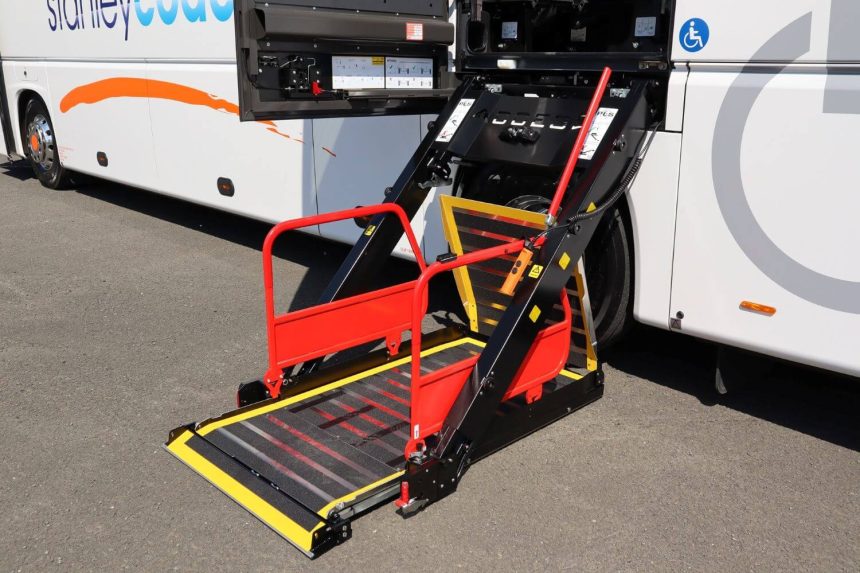
Passenger lifts are an integral part of the journey for many of our passengers; therefore having one installed should be more than simply a tick-box exercise to meet PSVAR requirements.
In addition, as the nights draw in, operators need to pay particular attention to the biggest cause of MOT failures – headlamps.
Passenger lifts ‘overlooked’
For thousands of passengers who rely on accessible transport, the safety of passenger lifts can mean the difference between independence and isolation, yet these systems often receive less structured attention than engines or brakes.
As PSVAR compliance becomes increasingly important and social care transport demands grow, questions are being raised about whether passenger lift safety deserves more dedicated focus within fleet management strategies.
The intensive operating patterns typical in UK social care and SEND transport create demanding environments for all vehicle equipment.
For thousands of passengers who rely on accessible transport daily, lift safety isn’t secondary; it should be fundamental to any comprehensive vehicle safety programme – Morgan Clisset
Regular use, varied operating conditions, and the critical nature of accessible transport services mean that maintenance approaches for passenger lifts require careful consideration across the sector.
“Passenger safety around lifts is often overlooked in the industry,” says Morgan Clissett, After Sales Director at Passenger Lift Solutions.
“For thousands of passengers who rely on accessible transport daily, lift safety isn’t secondary; it should be fundamental to any comprehensive vehicle safety programme.”
If lift equipment fails, the impact reaches beyond operational disruption to directly affect passengers who depend on these services for essential transport.
The regulatory framework supports focused attention on lift safety. Lifting Operations and Lifting Equipment Regulations examinations require lifting equipment used to carry people to be examined by competent persons at regular intervals.
These mandatory inspections form part of a structured approach that also encompasses routine servicing, preventative maintenance, and operator training programmes specifically designed for lift systems.
Response to these requirements appears to be evolving, with specialist passenger lift servicing expanding over the past year to meet what appears to be growing demand for professional maintenance programmes.
This growth may reflect some operators’ increasing recognition that passenger lift care requires dedicated expertise rather than general mechanical servicing.
To support this shift, Passenger Lift Solutions established PLS Assist in 2024, a dedicated division providing operators with structured servicing and technical support for passenger lifts.
The initiative has grown steadily over the past year, reflecting demand for tailored maintenance solutions across the sector.
“Too often, operators invest heavily in vehicle servicing but treat passenger lifts differently,” explains Morgan.
“That overlooks the fact that, for many passengers, the lift is one of the most critical components of their entire journey.”
The business case for structured passenger lift maintenance extends beyond compliance obligations. Properly maintained equipment reduces service interruptions, supports consistent operational standards, and helps maintain passenger confidence in accessible services.
Training programmes form another important element of comprehensive passenger lift care. Staff who understand lift operation and can recognise early warning signs are better equipped to address minor issues before they develop into service interruptions or safety concerns.
The administrative aspects of lift maintenance also benefit from structured approaches. Due date tracking, scheduled servicing, and direct access to trained technicians can help operators integrate lift care into daily fleet management routines.
The expansion of specialist passenger lift servicing over the past year indicates a growing focus on passenger lift safety within fleet management.
With demand for accessible transport rising, operators who embed structured lift care into fleet strategy will be best placed to deliver safe, reliable services for every passenger.
Spotlight on headlamps
Visibility becomes one of the most important aspects of vehicle safety as the clocks turn back and the evenings grow darker.
Coach, bus and heavy goods vehicle operators must make sure that all of their vehicles’ headlamps are positioned correctly for the safety of other road users as well as for compliance.
Drivers who have poorly aligned headlamps run the risk of blinding oncoming traffic and impairing their ability to see potential hazards.
Even minor alignment mistakes can have major repercussions because inclement weather – such as rain, fog, and snow – makes things more difficult. For this reason, a crucial component of any fleet’s winter maintenance programme should be routine, precise headlamp testing.
According to data from DVSA, headlamps are by far the most common cause of MOT failure – even more common than faulty brakes or emissions.
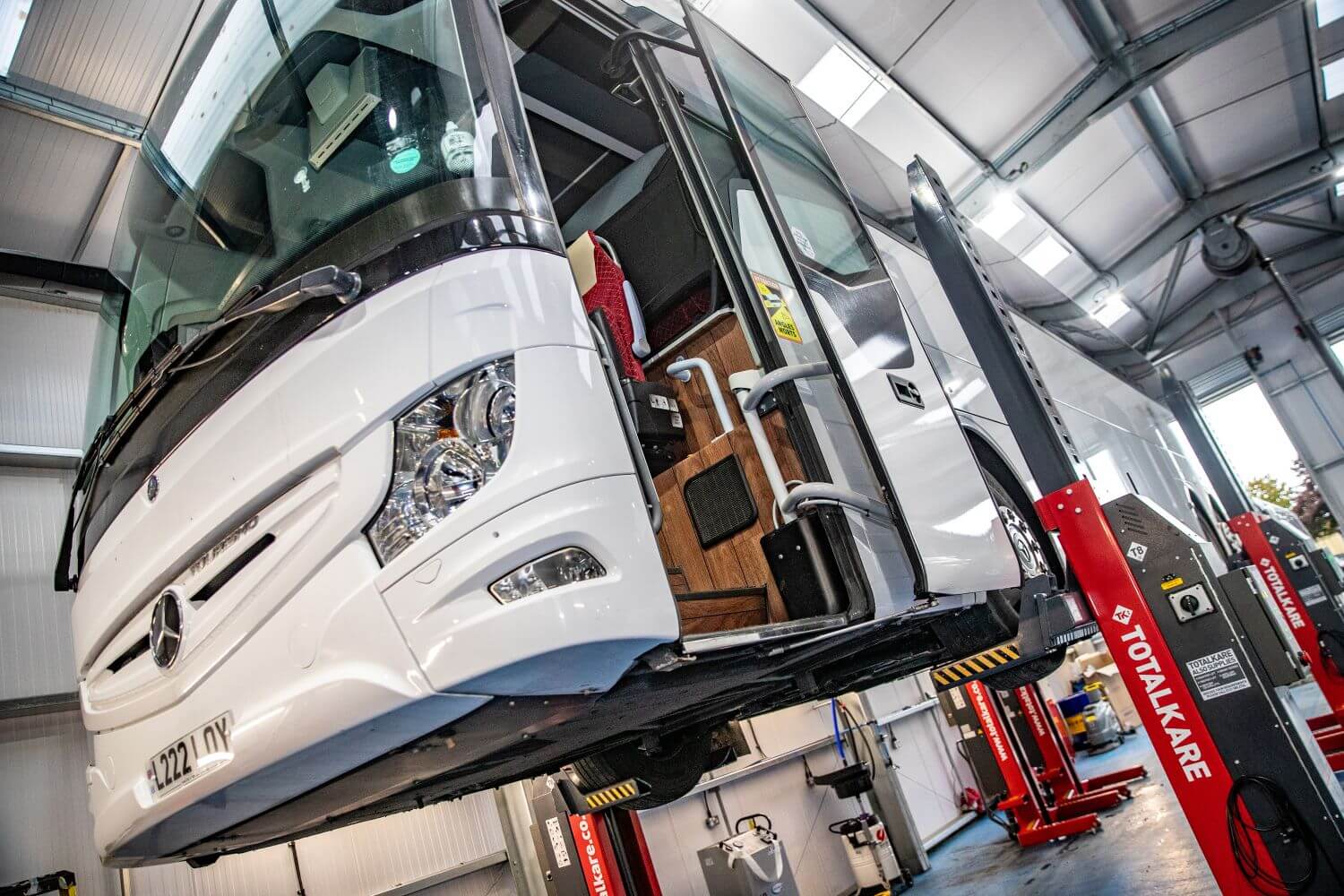
Totalkare’s selection of headlamp testers are designed to make these inspections quick, accurate, and repeatable.
“The testers are appropriate for all heavy vehicle types and give workshop technicians the confidence to evaluate beam height and direction, guaranteeing that every vehicle satisfies legal requirements and operates safely on the road,” says Totalkare Marketing Coordinator Josh West.
“They are portable and simple to use, and they can be combined with brake testers and other workshop tools for a thorough safety check or incorporated into regular inspections.”
In order to provide a comprehensive picture of each vehicle’s safety condition, operators that use telematics and digital maintenance systems can also record and store headlamp test data electronically.
In addition to preventing MOT failures, this proactive strategy promotes safer, more effective fleet operations all winter long.
With shorter days ahead, now is the time to make headlamp testing a regular part of your safety routine – keeping your fleet road-ready, compliant, and, most importantly, visible.