



















I am writing to further highlight what I believe is a complete lack of common sense in the application of PSVAR to closed-door home-to-school transport.
One point that seems to be missing entirely from the discussion is this: many wheelchair-using students currently receive a door-to-door taxi service. This works. It is safe, supervised, weather-proof, and tailored to their needs. I fail to see what benefit is created by forcing those students onto a large coach operating a fixed route.
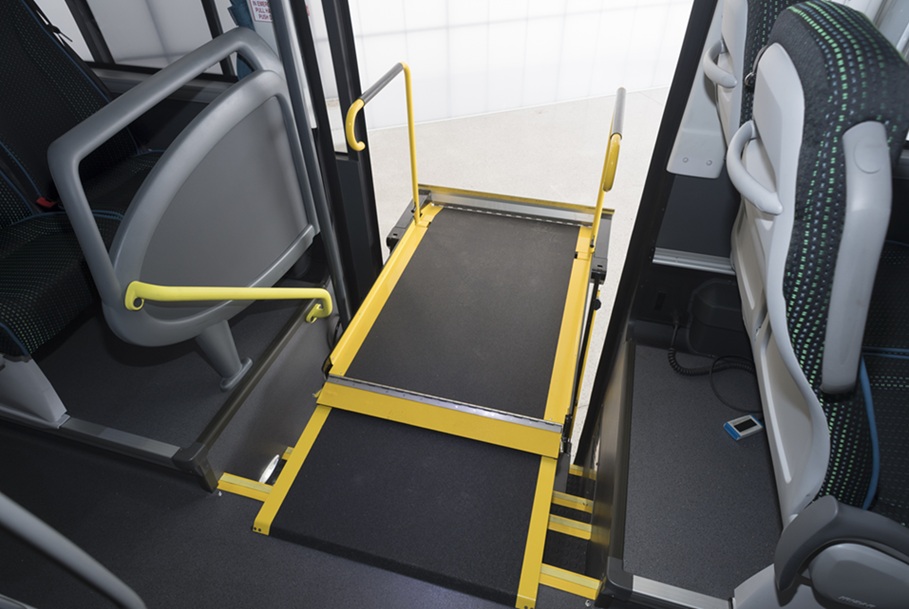
Under the current thinking, a wheelchair user would be expected to make their own way, often in darkness, cold, and poor weather, to a roadside bus stop. In many rural locations, those stops are wholly unsuitable for safely deploying a cassette wheelchair user lift from the side of a coach.
Practicalities of PSVAR on closed-door home-to-school services
The practical reality for the driver is rarely acknowledged. To load one wheelchair passenger, the driver must:
-
- Leave the vehicle
- Deploy and lower the lift – often in wind and rain
- Safely position and secure the student on the lift
- Raise the lift into the coach
- Secure the wheelchair user inside the vehicle
- Stow the lift before returning to the driving seat.
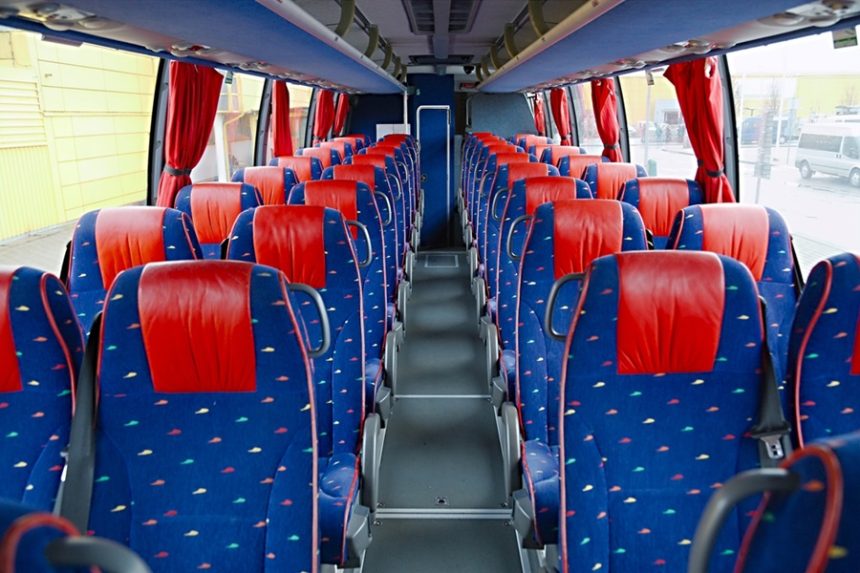
All of this can take a significant amount of time. During that process, the driver has left a 50- or 70-seat coach full of students completely unattended.
Those of us actually operating school transport already face ongoing issues with poor behaviour and vandalism. Leaving a vehicle full of pupils unsupervised twice a day, potentially for 15-20 minutes at a time, raises obvious safeguarding concerns and is a recipe for damage and disorder.
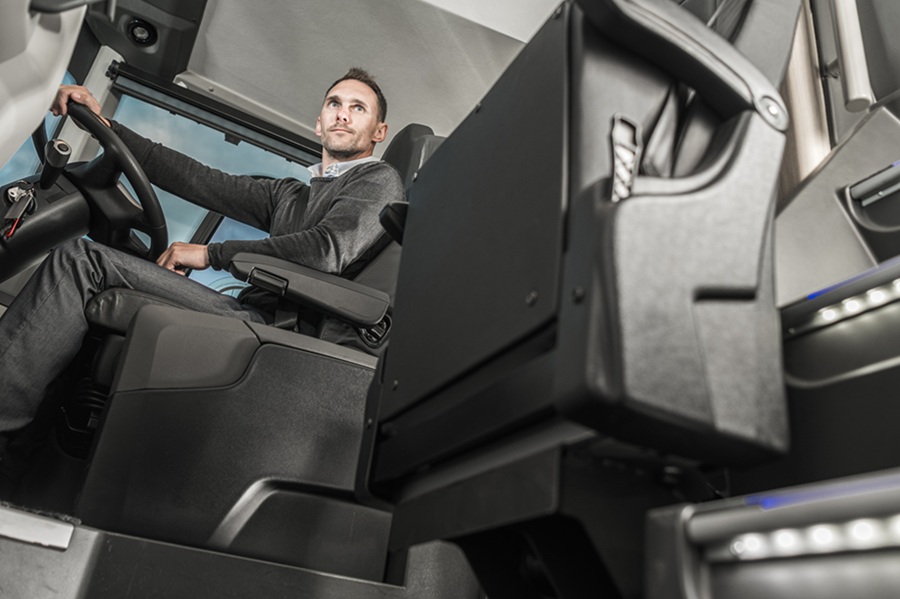
There is also the issue of driver training and responsibility. Drivers would need to be trained and signed off on the operation of different types of passenger lifts across the fleet, all of which vary by manufacturer and installation.
Not every driver will want to accept that responsibility, particularly given the potential consequences if something goes wrong. At a time when the industry is already struggling to recruit and retain drivers, this is another unnecessary burden.
Once the loading process is complete, the driver, possibly soaking wet, can finally return to the job they joined the industry to do: drive a coach. None of this improves working conditions, safety, or outcomes for anyone involved.
Compliant vehicle availability remains in question
The commercial reality cannot be ignored. Achieving PSVAR compliance would require either the purchase of new coaches or the retrofitting of lifts to existing vehicles, at a cost running into hundreds of thousands of pounds.
For operators whose work is almost entirely private hire and closed-door home-to-school transport, this has never been commercially viable at any stage.
It is often argued that operators have had sufficient time to prepare. That argument ignores two key facts. First, the availability of suitable PSVAR compliant coaches and retrofit solutions has been limited. Second, until relatively recently it was widely understood that PSVAR was intended primarily for local service routes, where passenger needs cannot be anticipated in advance.
Closed-door school contracts, where transport requirements are known and already met through appropriate alternative provision, were not the original focus.
Many operators only began to seriously question the implications around 2020, at which point the industry was immediately hit by COVID. Since then, operators have been focused on survival, recovery, driver shortages, rising costs, and maintaining essential services.
At no point during that period has the scale of investment required for PSVAR compliance on closed-door work been economically justifiable.
PSVAR accompanies other worries for the coach industry
The financial hit does not stop with PSVAR. Operators have already been forced to shoulder significant costs linked to emissions requirements (Euro V/Euro VI and Low Emission Zones), which have pushed up capital costs and reduced the workable lives of vehicles.
Now, adding PSVAR on top creates a double squeeze: operators are being asked to invest heavily again, while non-PSVAR compliant vehicles are likely to suffer a sharp fall in resale values as the market narrows. That destroys balance sheets and makes reinvestment even harder.
I have spent 30 years building a 28-vehicle operation. I now face the very real prospect of being forced out of business, not through poor service or lack of demand, but because a regulation designed for public service routes is being rigidly imposed on closed-door contracts where it delivers no tangible benefit.
This policy does not improve outcomes for wheelchair-using students who already receive appropriate transport. It does not improve safety. It does not improve efficiency. What it does do is threaten the viability of experienced operators, reduce competition, and reduce capacity in the school transport market.
Why are operators being forced to look for an exit strategy and be driven out of business in this way, and who is actually benefiting?