





















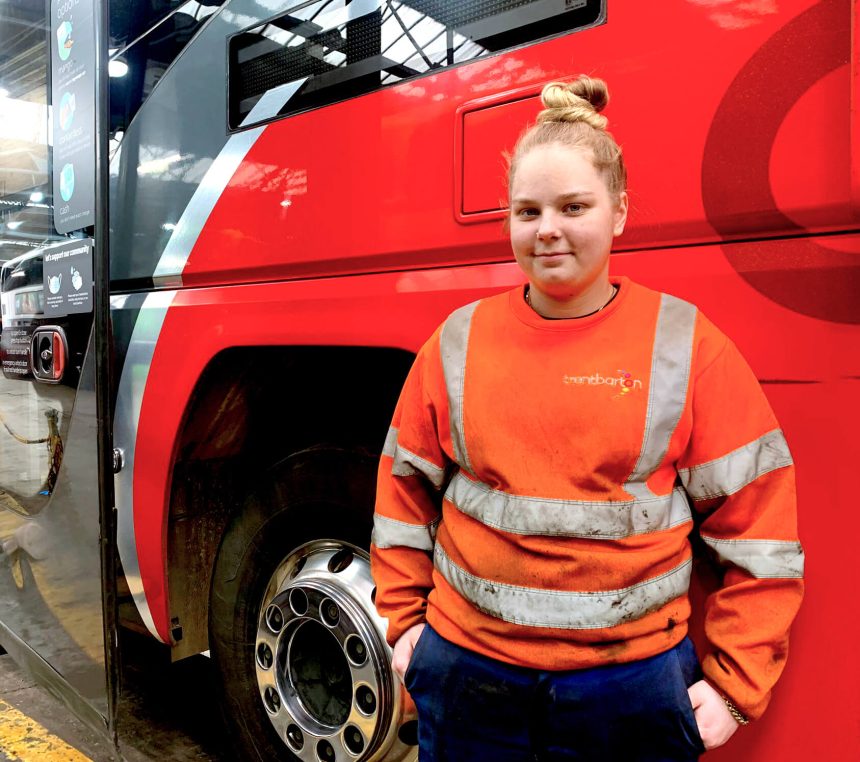
Kathryn Pulham, the President of the Confederation of Passenger Transport, reflects on the need for better representation for women in the coach and bus industry
For me, International Women’s Day (IWD) on March 8 was both a point of pride and a prompt to reflect on where our industry stands and where we must still make progress.
I have worked across many aspects of day-to-day operations, from driving and fuelling to payroll and people management. That breadth of practical and operational exposure has given me a deep understanding of how our sector truly functions – and how it shouldn’t.
Our industry itself is often described as the Cinderella of public transport. The coach sector, in particular, operates in the background, usually as independent businesses on tight margins, stepping forward when the country needs it most. Moving 450 million passengers each year and supporting more than 80,000 jobs, we deliver, calmly and competently, every day.
And yet, women remain underrepresented in driving, engineering and senior operational roles. In many family firms, men have traditionally taken on the external, deal-making roles, while women have managed administration and compliance. Those contributions are vital, but they should not define the limits of opportunity.
This year’s IWD theme, “Give to Gain”, speaks to something our sector understands instinctively. Progress does not come from guarding opportunity, but from sharing it. Giving is not a subtraction. It is intentional multiplication. As Richard Branson famously said, “Train people well enough so they can leave; treat them well enough so they don’t want to.”
What does that look like in practical terms? It means giving time to mentor a new female driver. It means giving visibility to women in engineering and operations when we promote our businesses. It means giving fair pay, transparent progression and honest feedback. It means giving space for open conversations around maternity, parenting responsibilities and women’s health, recognising that these are normal parts of working life.
Through Women in Bus and Coach (WiBC), we have seen what happens when support is made visible. WiBC has grown into a network that connects women at every stage of their careers. At the Confederation of Passenger Transport’s (CPT) recent summit, the aspiration was clear: women want to be heard, respected and given equal access to opportunity. They are not asking for advantage. They are asking for access. Progress is also strengthened when women support one another with professionalism, encouragement and shared experience, helping to build confidence and open pathways for progression across the sector.
Despite decades of space missions, a woman has yet to land on the moon. That makes me reflect on how many women across industries have looked at a role and wondered whether it was truly open to them. The barrier is rarely ability. It is often belief and support.
We must be practical. Fine words are not enough. We need to review how we advertise roles and whether our language unintentionally discourages applicants. We need to ensure training routes are accessible and flexible. We need to mentor with intent, supporting progression into supervisory, managerial and director-level positions.
This is not solely a women’s issue. Male allies have a vital role to play in calling out inequity, recommending talented colleagues for advancement and ensuring inclusive decision-making. A sector facing skills shortages cannot afford to overlook half the talent pool. Diversity strengthens decision-making, improves customer insight and enhances our reputation with passengers and policymakers alike.
I am conscious that discussions around IWD can sometimes prompt questions about balance, and whether there should be equal recognition for men. International Men’s Day is, of course, recognised each November, and the contribution of men to our sector is significant and deeply valued. Our industry relies heavily on the dedication and skill of a predominantly male workforce. However, IWD exists because equal access to opportunity and representation has not yet been fully realised. Recognising that reality is not about division; it is about progress.
I am immensely proud of what coach and bus delivers for the country. We are reliable, adaptable and rooted in our communities. Those are traditional strengths worth preserving. But tradition should never mean limiting who gets to lead.
My pledge, as CPT President, is that we will continue to listen, to engage and to champion meaningful change. By giving our time, advocacy and commitment to supporting women across our sector, we strengthen the whole industry.
Ours is a profession built on keeping Britain moving. It is time we ensure opportunity moves just as freely.