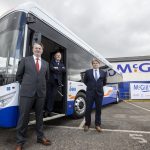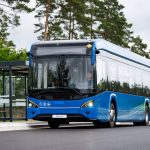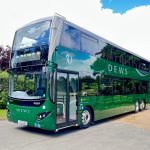



















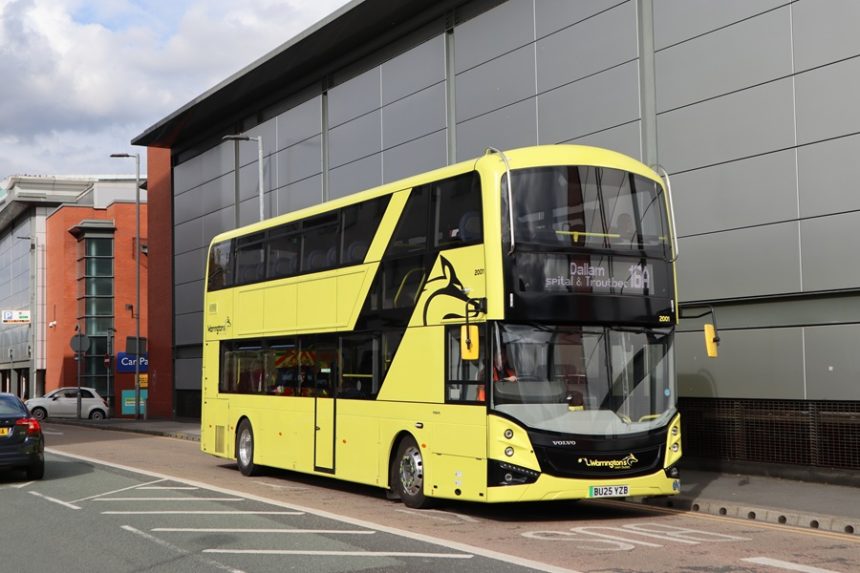
There was encouraging news in the end-of-year registration figures published recently by the Society of Motor Manufacturers and Traders showing how the UK has continued its position as Europe’s leading zero-emission bus market by volume. Buses remain the fastest-decarbonising segment of UK road transport.
In 2025, zero-emission vehicles accounted for more than 27% of the 9,259 coach, bus and minibus registrations – a 10.4% increase on 2024. The overall coach and bus market was buoyant last year, achieving its highest outturn since 2008.
The Scottish market was particularly strong, growing by more than 160%. That was driven in part by success of the Scottish Zero Emission Bus challenge fund.
The transition to zero-emission buses is clearly well underway, but questions and challenges remain.
For example, how many of the opportunities for ‘flagship’ projects have been delivered, and could the sector now be moving towards more routine fleet renewal? And how might that impact the zero-emission bus market in the current and coming years? Are grants and OEM production capacities aligned with the next phase?
An increasingly significant challenge for many coach and bus fleets is securing the required grid connection in a reasonable period of time. Demands for grid capacity are growing in many quarters, including artificial intelligence data centres, which could dramatically increase electricity consumption.
With grid connection queues and delays already severe in many places, fleet managers are strongly advised to plan and apply for connections well in advance of their expected implementation.
In the bus sector (and more modestly so for coaches), the decarbonisation challenge is becoming less about vehicles and more about infrastructure and local energy capacity.
Fleet operators now increasingly need to become, or work closely with, energy managers, and be more aware of the opportunities and risks associated with electricity price fluctuations.
They will also need to build relationships with Distribution Network Operators to help secure capacity for future electrification phases and be in a better position to negotiate flexibility in connection agreements.
Operators in the early phases of their decarbonisation journeys should look for depots where there is spare electricity capacity and where duty cycles and mileage demands are reasonably predictable.
If the bus sector is to remain at the vanguard as the decarbonisation transition progresses, operators will need to adapt quickly and learn new skills to anticipate and pre-empt future challenges before they become significant hurdles to progress.
In particular, they will need to be smart and adaptable to secure grid capacity and win the ‘megawatt race’.
For more about Zemo’s work supporting the coach and bus transition, membership, and to join its Public Mobility Working Group (PMG), visit its website. For more on the next PMG meeting on 7 May, click here.