


















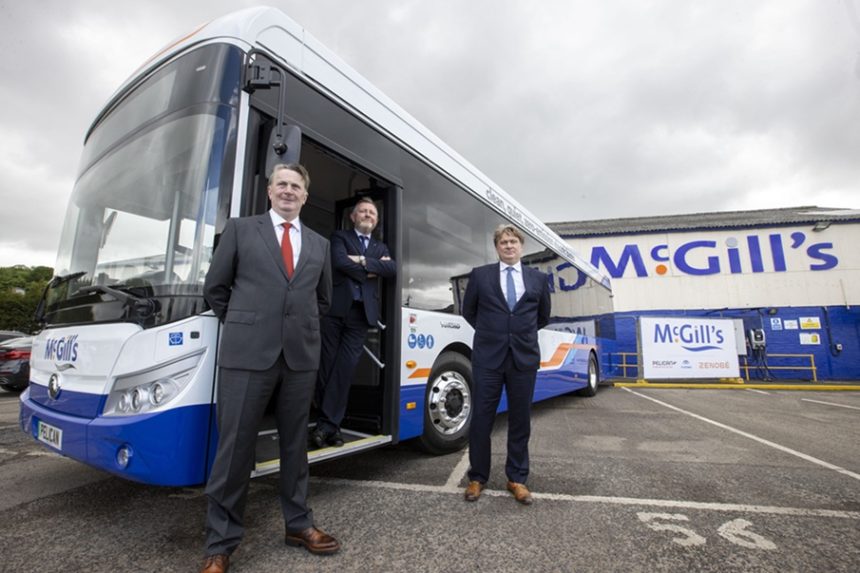
McGill’s Buses has launched what it describes as a multi-million-pound legal action against the Scottish Government and its agency Transport Scotland relating to the operator’s failure to win funding from the third round of the Scottish Zero Emission Bus challenge fund (ScotZEB3).
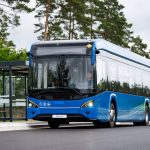
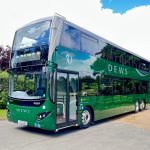
An appeal has been submitted to the Competition Appeal Tribunal following rejection of a bid by McGill’s that sought £4.36 million from ScotZEB3 towards 33 Alexander Dennis battery-electric buses and 13 chargers. Five other recipients were successful in the £45 million scheme.
McGill’s “seeks to challenge how the bids were scored, overturn the funding decision, and force a comprehensive rethink of how zero-emission subsidies are allocated,” the business says.
The legal argument centres on what it claims is a breach of the UK Subsidy Control Act 2022 by the Scottish Government relating to no separate subsidy control assessment having taken place for ScotZEB3.
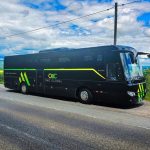
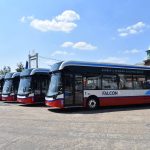
The operator also cites funding being allocated to subsidise battery-electric coaches for new competitive routes rather than upgrade diesel fleets, despite ScotZEB3 being “designed to use the lowest possible level of subsidy to deliver the replacement of the maximum number of public service buses with zero-emission vehicles,” a Notice of Appeal (NoA) states.
Sandy Easdale (pictured above, left), who is joint owner of McGill’s Bus Group with his brother James, has attacked the decision to award £13.2 million of ScotZEB3 money to Ember to part-fund a further 100 battery-electric coaches.
He says that such a decision “would not result in any diesel buses being replaced.” The McGill’s submission would have done, while supporting manufacturing jobs at Alexander Dennis.
“We have questionable decisions being made on large amounts of public money by nameless people in secret rooms who are trying to avoid scrutiny,” Sandy Easdale continues. “Decisions on taxpayers’ sums of this magnitude should be fully transparent and decision-makers should be willing to be held accountable.”
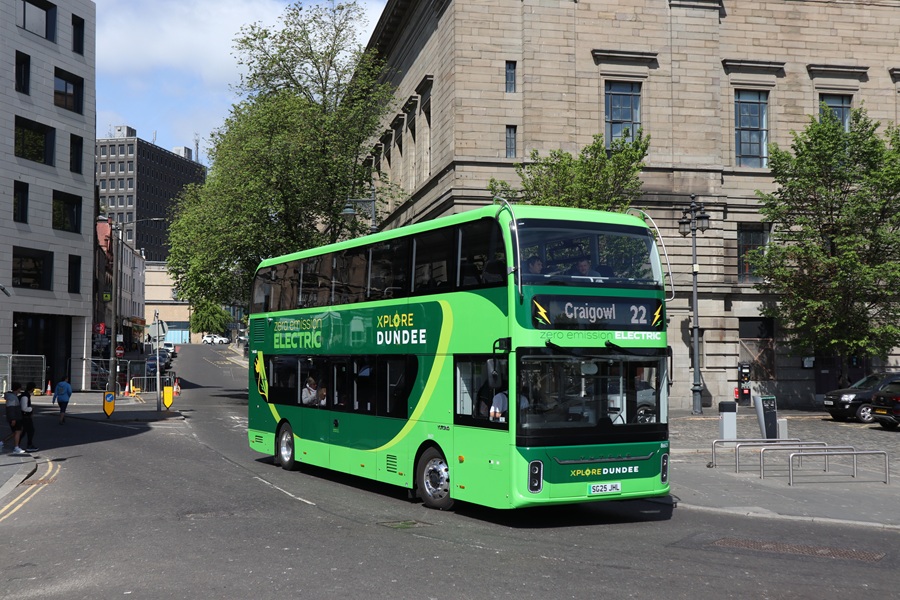
What became ScotZEB3 was initially projected as a reopening of the earlier ScotZEB2, with an intention that one unsuccessful ScotZEB2 consortium-based bid would be revisited, albeit with scope for organisations not part of the submission at its opening stage to participate.
However, £40 million for the reopening was subsequently moved to the new ScotZEB3, which became worth up to £45 million and dropped the consortium bid requirement. That followed what Transport Scotland said was “careful consideration” and a view that a competitive ScotZEB3 was “the fastest and most certain route to support new zero-emission bus orders.”
The NoA states how McGill’s position is that a shift from reopening ScotZEB2 to a competitive ScotZEB3 followed the lawfulness of the initial plan being “challenged in correspondence by various bus operators,” including McGill’s.
It adds an allegation that no entry has been made on the UK Subsidy Database in relation to ScotZEB3, either as a modification of ScotZEB or as a new subsidy scheme.
Upon enquiry about that by McGill’s in April, the Scottish Government is said to have informed the operator that no separate or additional subsidy control assessment was required for subsequent phases of ScotZEB.
In addition, the NoA claims that the response from Scottish ministers stated that ScotZEB3 operated within scope of the overarching ScotZEB subsidy control assessment and that it constituted a “permitted modification of a legacy scheme.”
McGill’s believes that ScotZEB3 was not a legacy subsidy modification and was not permitted under the terms of the Act. It also claims that the Scottish Government should have treated ScotZEB3 as a new subsidy scheme, among other submissions to the Competition Appeal Tribunal.
James Easdale (pictured top, right) adds that there is “a fundamental question about fairness and transparency” around how ScotZEB3 funding was allocated. “We have looked very closely at the scoring process and reached the inevitable conclusion that a legal appeal had to be submitted,” he says.
McGill’s successfully bid through the first round of ScotZEB and ScotZEB2, which saw Chinese-built vehicles favoured for battery-electric bus purchases. Those replaced diesel vehicles in the group’s fleets.