


















Operator consolidation has become one of the coach industry’s hottest topics. While business acquisition by larger groups – either well-established or newly-formed – has captured much of that attention, the buying of one SME by another is equally relevant to the wider story.
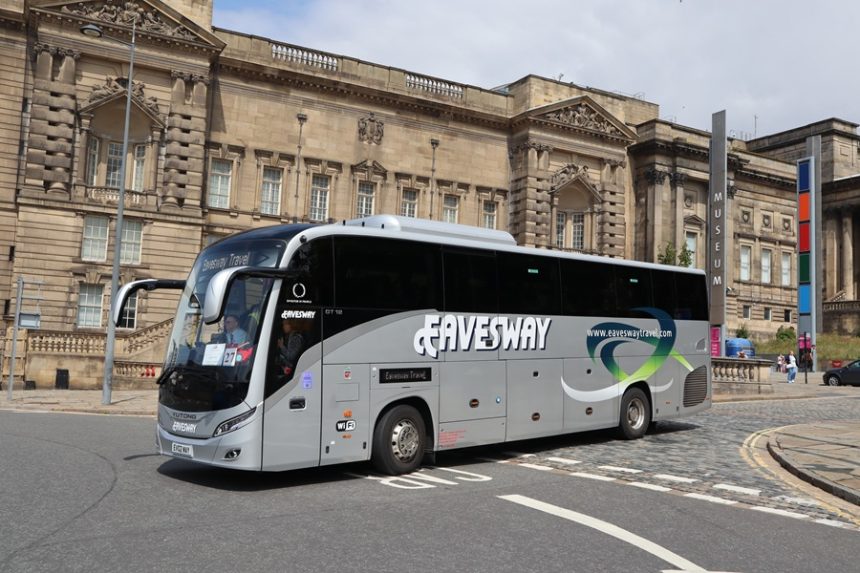
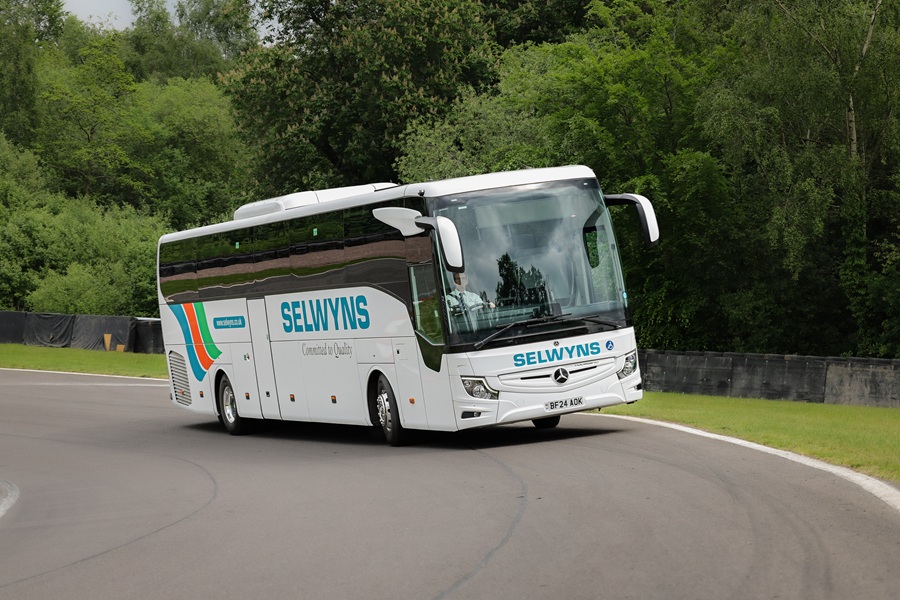
An example of the latter that caught the sector’s eye in early January was the purchase of Ashton-in-Makerfield corporate, sports team and cruise transfer specialist Eavesway Travel by Selwyns Travel Group of Runcorn, around 25 miles away. Completed on New Year’s Day, its timing hints that 2026 will be another active year for buying and selling.
Eavesway was previously owned by Mike Eaves and his wife. Mike’s grandfather founded the business in 1933 and Mike has spent 55 years with the operator. Selwyns Travel Group is owned by Executive Chairman Selwyn Jones.
Concurrent with the purchase, former Selwyns Travel Deputy Managing Director Billy Jones was promoted to Managing Director of both operating companies.
Coach consolidation no new thing, players agree
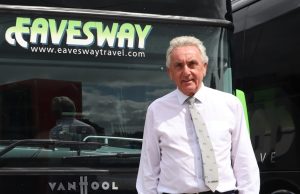
Under separate ownership, the two operators had a close relationship, hiring each other’s vehicles when required. Mike and Selwyn are also long-term acquaintances.
Speaking to routeone, they both note that while consolidation in coaching is a point of interest presently, it is not a new phenomenon.
Indeed, Selwyn adds how his business completed its first acquisition in 1979. That saw the then-eight-coach Selwyns Travel buy 32-vehicle operator Yates Tours of Runcorn. Eavesway is its fifth purchase. Added to that is Selwyn’s decision to sell the business to RATP some years ago, which was subsequently reversed to bring it back into his hands.
“Consolidation is nothing new, but it does seem to be gathering momentum,” he says. “The coach industry is looking more attractive to outside investors, groups and private equity houses, and that all comes at a time when some operators are seeking to retire.”
Mike agrees, adding that succession planning is an issue for some coach businesses. He and his wife have four children, all with successful careers elsewhere. Mike also observes a particular interest from large bus groups in operators that have strong contracted revenue bases.
Although joining a larger group did not appeal to the former Eavesway owner, he believes that small operators will increasingly benefit from the economies of scale that come with consolidation. The cost of running coaches has risen greatly in recent years and will continue to do so, he believes.
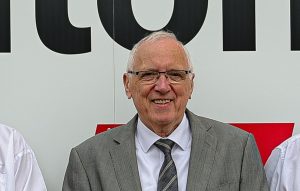
Selwyn adds that change in the bus industry, including pressure on margins and the threat of franchising to incumbent operators, is likely to further influence their interest.
“But there are reasons other than financial. Geographical considerations could be present, or a company may need improved depot and workshop facilities or more parking to grow its existing business. That happened for us in the past.”
The Yates Tours deal 47 years ago came when Selwyn was “a bit more naïve than I am now,” but it stood the Runcorn buyer in good stead, leading to further rounds of growth via acquisition.
Purchase of Eavesway brings together two complementary operators. Eavesway has its specialist fields, while Selwyns majors on contracted duties and scheduled services. There is little crossover. Mike will remain with Eavesway for at least 12 months working with Billy, who took over as MD as soon as the deal completed.
Growth a self-fulfilling prophecy for Selwyns and Eavesway?
Economies of scale will be leveraged in areas such as HR, accounting, sales where appropriate, and cross-hiring of vehicles to increase utilisation. But Selwyn notes how the Eavesway brand is strong. It will it be kept separate, and he sees scope to grow it in the areas where the name already has a commanding presence.
Mike highlights how the combination of Selwyns’ base in Runcorn and Eavesway’s in Greater Manchester – both close to the motorway network – gives a ‘golden triangle’ in the north west to leverage further.
He adds that the purchase provides long-term clarity for Eavesway’s customers and staff. From completion on 1 January, he and Billy have worked closely. Billy has a background in finance, and that is key to the current-day coach industry, Mike believes; while strong focus on operations is imperative, so is financial expertise.
Selwyn notes how familiarity streamlined the acquisition. “Once the deal had been agreed, we did the actual financial and legal due diligence in three months,” he explains.
“It was a short timescale, but that was because we had been in discussions for 12 month prior, and we had gained a good feel for the business. We also had a good relationship with Mike. Had that not been the case, it would have taken longer. But I had a lot of confidence in what we were told.”
Strong future for family-owned operators, believes Selwyn Jones
While industry consolidation will continue, Selwyn stresses that for many small operators, there is no reason to see it as an inevitable. “There are a lot of excellent family-run businesses [in the coach industry], and I believe that they will be here forever,” he says.
Nevertheless, ownership changes are a fact of life. “I am sure there will be more this year,” Selwyn adds. Will any be executed by the Runcorn operator? Time will tell.
But growth is a priority. Selwyns and Eavesway each have younger people within their respective management teams, and investment there will continue. Mike notes that those leaders are at the stages of their careers where ambition is strong. “The sale gives scope to push the Eavesway operation to the next level,” he concludes.