





















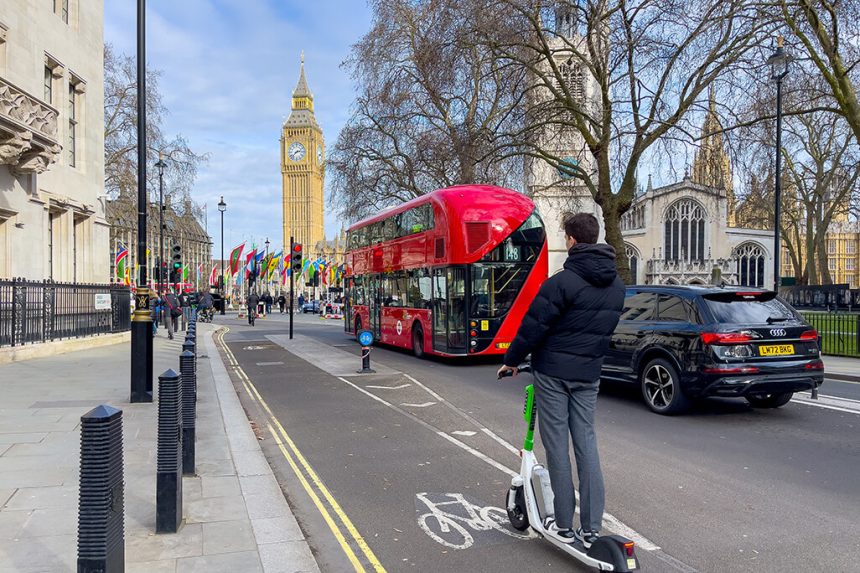
With micromobility use rapidly growing, experts weigh in on what effect the trend will have on bus patronage
Micromobility modes such as e-bikes and e-scooters are set to shake up the transport landscape like arguably no other form in the years to come.
The number of shared e-scooter users in England increased by 55% from October 2024 to September 2025 to 1.5 million and, over this period, 16.7 million trips were made, according to the charity Collaborative Mobility UK (CoMoUK).
The same research found that the number of shared bike users grew four-fold from 2019 to 2025, with 2.7 million people availing themselves of either a pedal or electric version over a 12-month period.
The size of the micromobility market in the UK is expected to grow at around 14% annually over the next seven years.
The use of personal e-scooters is also rapidly growing, even though they are still illegal on both public roads and pavements.
In 2024, the government promised to introduce legislation which would permit their use, but some have been frustrated by a perceived lack of progress.
Everything that makes it easier to live a car-free lifestyle ultimately is beneficial to bus
Meanwhile, a series of long-established trials of e-bikes and e-scooters in UK towns and cities were extended for two more years until 2028 to help inform policy.
While illegal use of e-scooters has been a source of public annoyance, e-bikes have been similarly controversial due to users who illegally modify them to overcome the 15.5mph speed limiter.
However, there is no doubt that micromobility will impact public transport – for better or for worse.
Competition in London
In London, rental e-scooter usage via the Transport for London (TfL) trial experienced a 54% year on year increase, with more than two million trips in the 12 months to September 2025.
The argument has been made that, in the capital, e-bikes and e-scooters rather than the car are the main competition for bus patronage.
This is logical when you consider that around 45% of households in the conurbation do not have access to a car.
However, for most other cities, micromobility is valuable for shifting people out of cars into public transport, even if some bus journeys are lost to it.
Boost for modal shift
CoMoUK’s Annual Shared Micromobility Report UK 2024 cited its research showing that 49% of all micromobility users said that they combined their most common bike share trip in the last 12 months with at least one other mode of transport. Of those interviewed, 17% combined the e-scooter or e-bike trip with the use of a bus.
Thomas Ableman, founder of Freewheeling and a former Director of Strategy and Innovation at Transport for London, says: “I think the number one thing to remember is that the big divide in the amount of people who use buses is between people who have a car and people who don’t have a car.
“And therefore, everything that makes it easier to live a car-free lifestyle ultimately is beneficial to bus.”
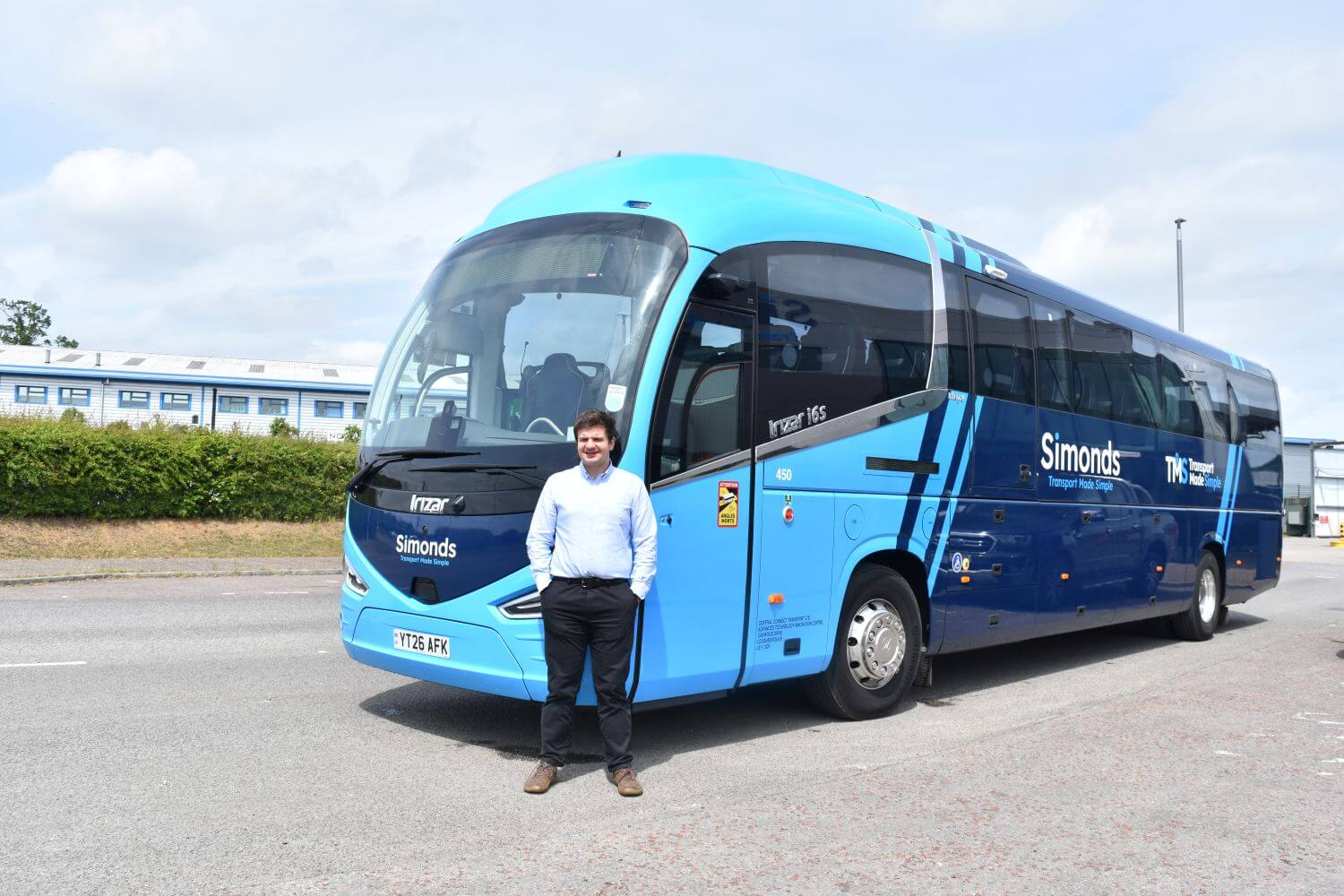
Operators to which routeone spoke generally back this up. Peter Nathanail, who is Managing Director of Transport Made Simple, which operates bus services throughout the East Midlands and East Anglia, says: “I think, for an operator like us, which runs a fairly inter-urban network, it would help us, because one of the challenges we have is we might be able to get you fairly quickly from an urban centre where you are to the urban centre where you want to be, but we might not stop that close to your ultimate destination.
“So, if you can get off at a bus station, jump on a bike or an e-scooter, whip down the road for five or ten minutes, and get where you want to be, fantastic.”
First Bus, which operates services in Portsmouth, where a successful trial of e-scooter and e-bike rentals has been co-ordinated by Portsmouth City Council (PCC), says: “We recognise that e-scooters and e-bikes can play an important role in the wider transport network and can complement bus travel by helping people complete part of their journey to and from the bus.
“While we do not have evidence on whether this directly increases bus patronage, it provides customers with another convenient and sustainable travel option, particularly for those who live further away from public transport links.”
Gareth James, PCC Transport Strategy Team Leader, adds the example of micromobility providing a car-free option for shift-workers when buses are less frequent.
Dr George Beard, Head of New Mobility at TRL, says: “In the shared context, I think e-scooters, e-bikes and other forms of micromobility can work well with public transport.”
Thomas, who last month gave evidence at the Transport Select Committee’s inquiry into transport integration, admits he could understand why bus operators would see micromobility as a competitor but says this would be a dangerous view.
He says: “[Micromobility] provides a level of flexibility that buses don’t provide.
“If somebody doesn’t buy a car as a result, because they can use their e-bike for journeys they wouldn’t otherwise have made, or use a rental e-bike for journeys they would otherwise have made by car, you end up then with them also using the bus more.”
Predictably echoing that is Sampo Hietanen, who founded Finnish business Maas Global, which launched Whim – an app designed to serve up all forms of transport via one subscription fee.
Although admitting that, for a small number of journeys, micromobility could replace bus trips, he says: “In order [to get people to feel they can live without a car], you need to give them the full confidence of being able to go anywhere, anytime on a whim.
You could imagine a Mobility-as-a-Service-type model going on, where packages are offered, such as bus ticket plus a discount on your e-scooter trip
“And that means that buses alone will not be able to compete against car ownership, nor can micromobility or ride hails or any one of them, but put together, they actually can give a better service.”
In the case of London, Thomas agrees it could be the case that e-bikes are eating into bus patronage but that is because the provider, Lime, is concentrating on the places of highest profit potential.
He says: “We don’t have a TfL-designed scheme that’s designed to maximise the public transport benefits and maximise the benefits of the city.
“That is coming with the Devolution Act, which will provide TfL with the power to define the scheme that benefits London.”
Integration and partnerships
Peter says there may be a case for bus operators entering into partnerships with micromobility providers but that “it’s all about making it work in practice”, suggesting a shared app platform approach, for example.
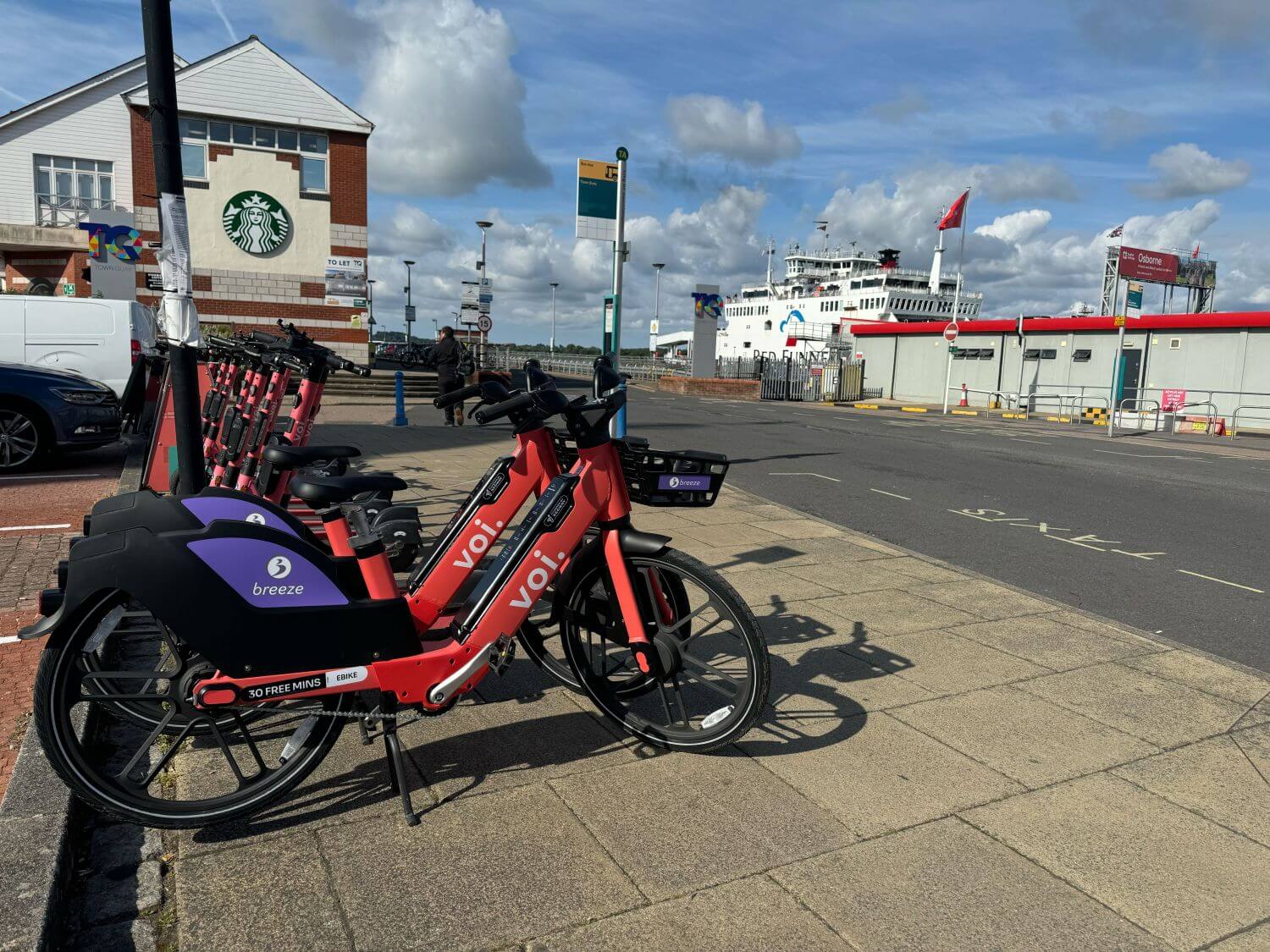
Direct links between operators and micromobility providers may be further into the distance, but integration led by local transport authorities and councils is perhaps a more immediate proposition. PCC has aimed to plant Voi stations near to public transport interchanges, for example.
Via the council’s recent £52 million upgrade of bus shelters, locations of Voi docks can be seen on smart screens. Later this year, in what the council says could be a world first, three such “super stops” will have the docks themselves integrated – a move which PCC says is supported by the bus operators.
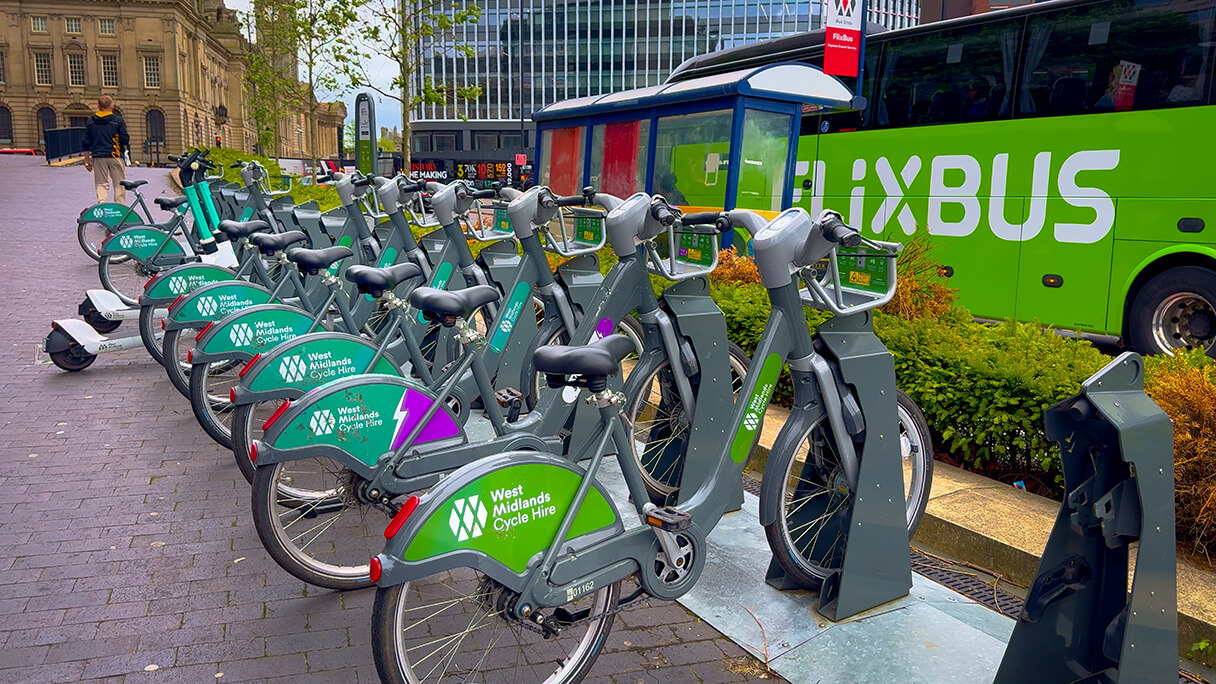
Although still in discussion phase, one prospect is having such dock locations displayed via next-stop screens.
Richard Gagg, PCC Passenger Transport Team Leader, adds that some form of payment integration or discount scheme between bus and micromobility modes has also been discussed informally in Portsmouth.
George adds: “You could imagine a Mobility-as-a-Service-type model going on, where packages are offered, such as bus ticket plus a discount on your e-scooter trip or other arrangements to remove that friction for customers and make it easier to chain the trip across multiple modes.”
Sampo notes that this idea of integrated pricing has barely made it out of trial stage anywhere in Europe, though.
Saying that “aggressive”, multi-modal pricing is key, he adds: “One of the tricks we learned is that, if you want to do multi-modal then you need to do all the perks cross-modal.
“So, for example, for high usage of bus, you need to give the incentive or the bonuses in micromobility in order to get people cross-using. And I understand if you’re a bus operator, it’s pretty hard to give your bonuses in micromobility.”
Legislation important
The legislation around e-scooters, when it finally comes to fruition, will increase micromobility use, George believes.
Sampo says that, in regard to this field, “the biggest innovation actually happens in regulation”.
He adds: “The ecosystem is so vast, and it is very complicated. The markets themselves will not get this going … and the societal benefits will not be realised.” In the case of subscription-based multimodal systems, it needs government to incentivise the more sustainable rather than profitable modes, he says.
Gareth says the UK government legislation would be useful to PCC for long-term certainty.
Safety and road space
George adds that it would be a “missed opportunity” if solutions were not explored to allow e-scooters and e-bikes on board buses.
He says research shows that the likelihood of a battery fire is overall quite low but, of course, can have devastating consequences.
He admits the fear from operators is understandable but says: “We have to try to find a solution.” That may come via better enforcement of standards and improved technology.
While getting people out of cars is a good thing, there may be implications for bus speeds if the number of e-scooters and e-bikes on the roads increases and if dedicated lanes are given over to a form of transport which, George says, will likely expand into a whole new classification of varying forms of vehicles.
He adds that the battle for road space could become more complex, leading to a rethink around road planning.
“The bigger goal here is to try and reduce overall car traffic.
“So, it needs to be part of a broader suite of interventions: behavioural change and other infrastructure measures like congestion charging and so on to reduce the amount of traffic; that frees up space on the road that could be reallocated to bus and micromobility, for example.”
Such a redesign may be well into the future, but the time for operators and authorities to consider the impact of micromobility is arguably now.
These newer forms of transport are set to reshape how people travel, and the industry needs to see this development as an opportunity to embrace.