


















The government has announced part-funding of 484 new zero-emission buses via a £73.2 million package for councils and combined authorities in England.
South Yorkshire Mayoral Combined Authority (SYMCA) is the biggest recipient with £33.42 million going towards 186 battery-electric buses in Sheffield, as it prepares to franchise the county’s bus network.
Meanwhile, £11 million will support Tees Valley Combined Authority’s (TVCA) introduction of 82 electric buses and the electrification of two depots.
Liverpool City Region, which is also working towards bus franchising, benefits from £7 million for 36 zero-emission buses.
Reading Borough Council (£3 million), West Northamptonshire Council (£2.2 million), North East Combined Authority (£3.6 million), Isle of Wight Council (£3.6 million), Devon County Council (£7.5 million), Surrey County Council (£0.5 million) and Nottinghamshire (£1 million) are the other benefactors.
The government funding will be supplemented by £94 million of investment from operators, authorities and councils.
Most of the funding is via expansions of existing Zero Emission Bus Regional Areas projects.
SYMCA will contribute £59.28 million towards purchase of the vehicles and £25.99 million for supporting infrastructure, which includes the upgrading of Olive Grove depot with charging facilities.
Secretary of State for Transport Heidi Alexander, who visited Sheffield yesterday to make the announcement, says: “Buses are the backbone of our public transport system, and Sheffield’s passengers deserve a network of well-connected, affordable routes, that they can rely on.
“This funding will replace polluting diesel buses with new electric vehicles that will make a real difference to people’s daily lives, better connecting them to work, to healthcare and to opportunity, whilst cleaning up the air we all breathe.
“But this is about more than new buses. It’s about cleaner air for children walking to school and reliable connections for people getting about their daily lives, and I’m proud to back South Yorkshire’s ambition to deliver exactly that.”
Sheffield, along with Doncaster, will be the first areas to be reformed when SYMCA begins the roll-out of bus franchising in September 2027.
South Yorkshire’s Mayor, Oliver Coppard, says: “Public transport in South Yorkshire used to be world-class. But our buses have been broken for too long.
“Now, we’re getting on with the job of delivering the promise of a bigger, better transport network, starting with our huge ambition for better buses.
“Today’s investment means we can get on with the job even faster. Upgrading Olive Grove to a fully electric depot and bringing almost 200 new zero‑emission buses into service is a huge step forward for South Yorkshire. It means cleaner air, more reliable buses and a much better experience for people.
“This is exactly the kind of practical, everyday progress we can deliver through bus franchising. Taking back control, putting people first and building a transport system that works for South Yorkshire.”
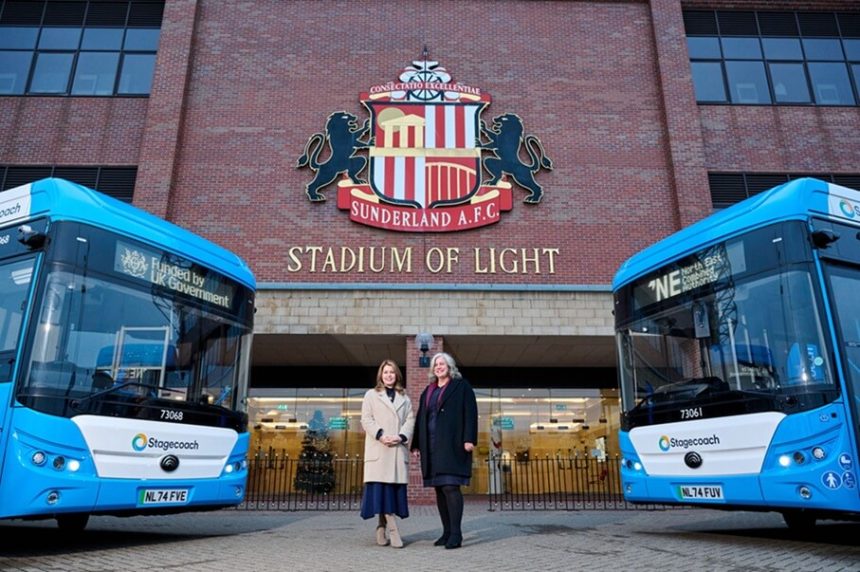
In Tees Valley, the £11 million investment will also go towards electrification of Stagecoach’s depot in Hartlepool and Arriva’s depot in Darlington by 2027.
TVCA says the announcement will mean the area will, by next year, have 170 electric buses – more than half the fleet.
Arriva is set to receive 54 of the new vehicles with Stagecoach gaining the other 28.
In the North East, 28 of the new buses will be rolled out on services in Cramlington, Morpeth, Stannington and Dinnington over the coming weeks.
In Reading, the funding will see 17 new buses and charging infrastructure introduced in 2027 and 2028.
The £3.6 million of the Isle of Wight will be supplemented by £8.1 million from Southern Vectis to pay for 31 new buses, including three open-top electric double-deckers to operate the Needles Breezer, and charging infrastructure.
Graham Vidler, Confederation of Passenger Transport Chief Executive, says: “Today’s announcement is a welcome step forward for the UK’s transition to greener public transport.
“Bus operators across the country are committed to decarbonising their fleets, with the government funding announced today being matched by more than £94 million of investment from operators in new vehicles and charging infrastructure.
“This partnership between government and industry is exactly what is needed to deliver the next generation of greener, quieter buses while maintaining reliable services for passengers.”
Lydia Horbury, Chief Executive of Bus Users UK, adds: “This is a real boost for the country and the planet. It will offer passengers a first-class experience and make it easier to leave the car at home and choose sustainable travel. Cleaner, greener buses aren’t just better for the people who rely on them every day, they’re better for everyone.”
Funding allocations
South Yorkshire £33.4m (186 buses)
Tees Valley £11m (82 buses)
Devon £7.53m (90 buses)
Liverpool £7.3m (36 buses)
Isle of Wight £3.67m (23 buses)
North East £3.6m (18 buses)
Reading £3m (17 buses)
West Northamptonshire £2.2m (17 buses)
Nottinghamshire £1m (11 buses)
Surrey £0.5m (4 buses).