




















The application process for exemptions from PSVAR for coaches used on in-scope, closed-door home-to-school services from 1 August have opened. They will extend for four years to summer 2030 and reflect recent policy for accessibility on such transport.
Closing date for applications is 23 July. If it is missed, the Department for Transport (DfT) gives no guarantee that submissions will be processed and that respective coaches will be included before current medium-term exemptions end on 31 July, “or at all.”
Conditions applied to forthcoming exemptions relate to minimum fleet compliance with PSVAR; provision of a compliant coach being mandatory on request; and – in a notable shift – that new coaches with more than 22 passenger seats entering service from 1 February 2027 with an operator holding an exemption are PSVAR enabled.
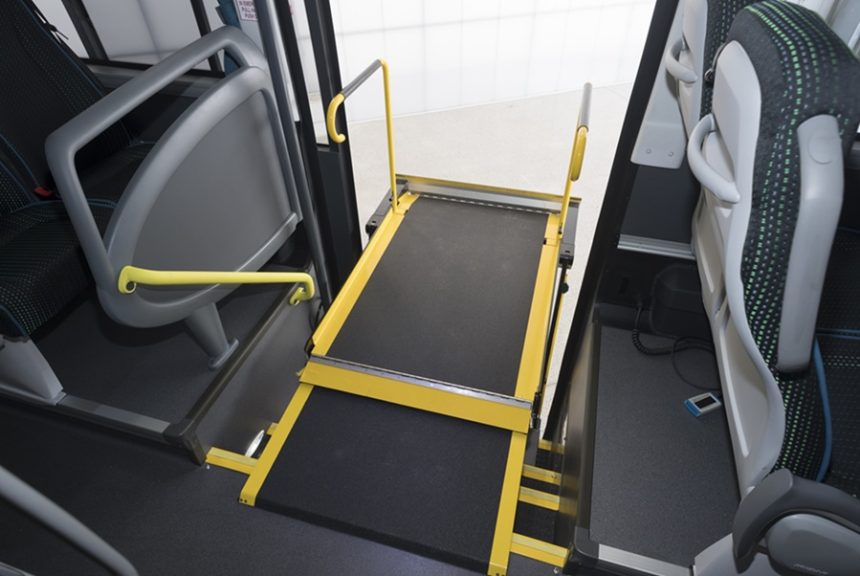
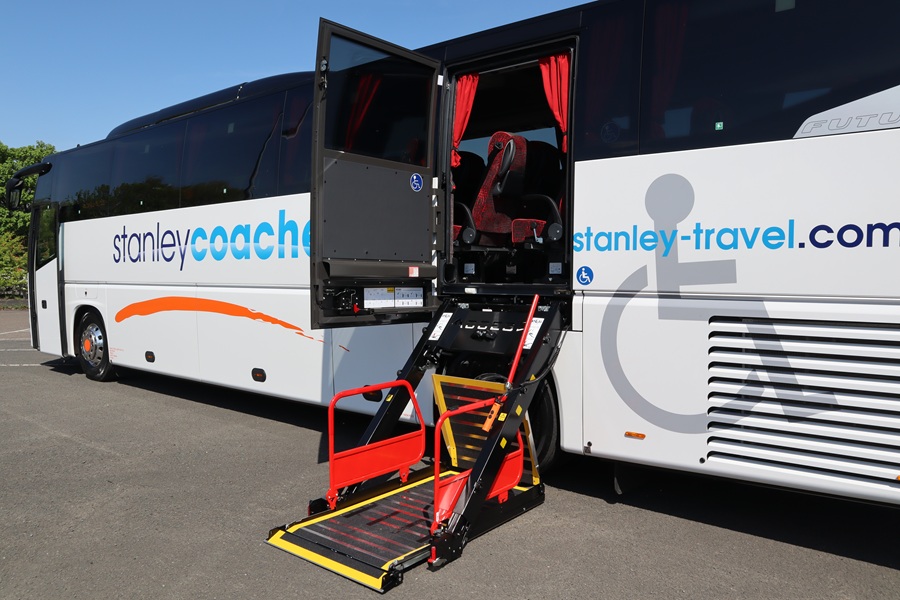
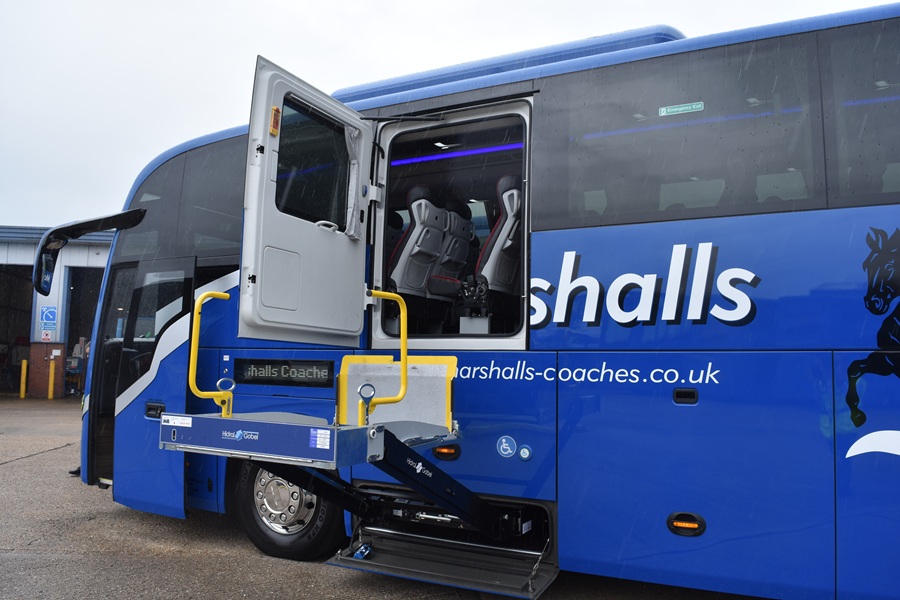
PSVAR enabled means satisfying the main standards of the Regulations, including space for a wheelchair user and signage. Importantly, a PSVAR enabled coach need not have a passenger lift, but must be built so that one “can be easily installed later, without major structural changes.”
Destination displays are also not mandatory to meet the PSVAR enabled condition for new deliveries, but like lift provision, they must be able to be installed readily.
While this condition applies to new coaches bought for all services by the exemption holder and not just home-to-school transport, application guidance states that those for some more niche use cases need not be PSVAR enabled if they are:
-
- A special type of vehicle already exempt in existing regulations
- A Ministry of Defence vehicle first used before February 2027
- Operated under a long-term private hire, which is to say booked by a customer for one month or more
- A specialist touring vehicle, such as for sports teams or bands, that has a non-standard layout; has at least 20% fewer seats than normal; and includes built-in features like a kitchen.
Fleet PSVAR compliance leans on existing position
On fleet compliance levels with PSVAR, exemption holders will use their position on 1 May 2026 as a yardstick. They should check how many coaches were carrying out home-to-school and rail replacement duties, and work out how many should have been PSVAR compliant.
Instructions on how to calculate the minimum percentage compliance to be maintained is within the exemptions application portal and guidance. Levels are based around the previous medium-term exemptions, hence inclusion of rail replacement.
On mandatory provision of a PSVAR compliant coach when required, that must occur if such a vehicle “is available,” the guidance states. An accessible coach cannot be charged out at more than a standard coach. The request must be met within two calendar months.
A request is valid if from a local authority, school, or organiser of the service or a passenger. A coach is “available” if it is owned or leased by the exemption holder, and is not already spoken for on a school contract in response to another valid request.
As a final condition, holders of the new exemptions must provide a full, accurate and timely response to any request from DfT or DVSA for data on their coach fleet. Non-compliance with any condition will render exemptions invalid “and operators may be subject to enforcement action by DVSA,” the guidance says.
Applications require the operator’s contact details, O-Licence number, and vehicle identification numbers for every coach used for home-to-school services from 1 August that is not PSVAR compliant. Various other fleet data must also be submitted.
‘Weak’ case for 100% home-to-school PSVAR compliance
A final stage impact assessment for the coming exemptions notes an imbalance in legislation between closed-door home-to-school services where no fares are paid – which are thus outside PSVAR – and those where at least one separate fare is taken, which are within it. As a result, the case for seeking 100% compliance on in-scope home-to-school services “is weak,” it adds.
“We intend to move from a system of exemptions [that] requires arbitrary annual increases in fleet compliance to one which maintains at least the current level of compliance, while targeting compliant vehicles at passengers who need and want them,” the impact assessment continues.
New coach PSVAR requirements seeks to boost pool
Inclusion of a condition within the new exemptions that will require all new coaches entering service with an exemption beneficiary from February 2027 to be PSVAR ready (subject to the niche relaxations) is to grow the overall pool of accessible vehicles.
That stipulation will result in what the impact assessment describes as “an evolving accessible sector, while being realistic that all vehicles do not currently need to be fully compliant for all the different types of services operated using coaches.”
Also explained is how the four-year exemption period to summer 2030 will be used to develop a longer-term, fit for purpose regulatory approach for accessible coach provision for closed-door services.
That could include extending PSVAR to a broader range of use cases, including a new vehicle compliance requirement, or developing explicit regulatory provisions for home-to-school transport. “This would mean that the exemption supports transition rather than creating a permanent carve-out,” the assessment says.