




















Around 80% of costs within bus operation relate to network speeds, and significant hurt has thus come to the sector’s economics via the continual slowing of services by congestion, public transport analyst Chris Cheek told the ALBUM conference in Blackpool on 13 May.
Department for Transport data shows that the cost per bus kilometre has risen in real terms by 46% since 2005 and by 14% since before 2020. Cost per passenger journey is up by 30% in real terms since 2005, and by 15% since pre-2020. Revenue per passenger trip has grown by 9.8% on the same basis since 2005, and fare levels are down by 7.4% since 2019.
Mr Cheek thus questions whether it is any surprise “that the economics of the industry have gone rather badly wrong.”
In highlighting the fiscal benefits to both the sector and society by accelerating buses, he notes how major priority infrastructure can be game-changing despite some local hostility.
“Crawley with Fastway, Dartford with Fastrack, and Fareham and Gosport with Eclipse. Those were transformative,” Mr Cheek says. “I think it is true that in Crawley, patronage on the town’s bus network rose by 150% after the impact of the Fastway investment.”
When average bus speeds increase, target revenue to return a profit falls significantly, he continues. A hypothetical service with a 12-kilometre round trip with six journeys per hour during daytimes and a lower frequency outside that requires revenue of £1.3 million at an average of 7.8mph. At 13.2mph, that figure is £817,000.
In acknowledging that lifting a service’s average speed from the lower of those figures to the higher would be difficult, Mr Cheek points instead to how buses have slowed over the last 40 years as illustrating the impact on industry costs. Faster and more consistent overall journeys significantly grow revenue, he adds, resulting in a virtuous circle.
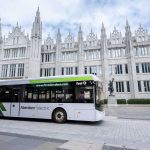
While priority measures accelerate buses, delivery can be controversial. “You will see motorist and resident objections, and media hostility. Follow the trail in the local press in Aberdeen about the bus gates that were introduced there.”
Mr Cheek also cautions of a possible “fiscal crunch” over coming years. That could hit the amount of public money available for bus services. Industry economist David Leeder previously calculated that over half of the sector’s income is now from the public sector.
“If the public sector cannot provide, can the private sector?”, asks Mr Cheek. “And if so, under what terms, and will it be affordable? And will the private sector be prepared after its experiences in 2020 to take in the degree of risk it did [with deregulation] in 1986?”
Exhortation by politicians that bus fares must be affordable and reluctance to increase them is a spanner in the works for revenue. “Bus services cost what they cost, and that is rising all the time. The risk is that continuing an ever-growing [level of] subsidy is unsustainable.”