




















First Bus has introduced what is believed to be Glasgow’s first round-the-clock bus service, extending operating hours on its 77 route to provide continuous day-and-night connectivity between the city centre, the West End and the Queen Elizabeth University Hospital.
The operator began running the enhanced timetable on 18 January, adding late evening and early morning journeys seven days a week. First reports a strong legacy of performance on the corridor, which already had a frequency of up to 15 minutes, and a dedicated ticket for journeys between Partick and the hospital.
It says the choice to operate the 77 on a 24-hour basis follows sustained demand and wider economic and social considerations. It expects the service to support shift workers, the night-time economy, leisure and hospitality, hospital staff, patients, and visitors.
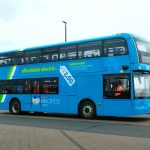
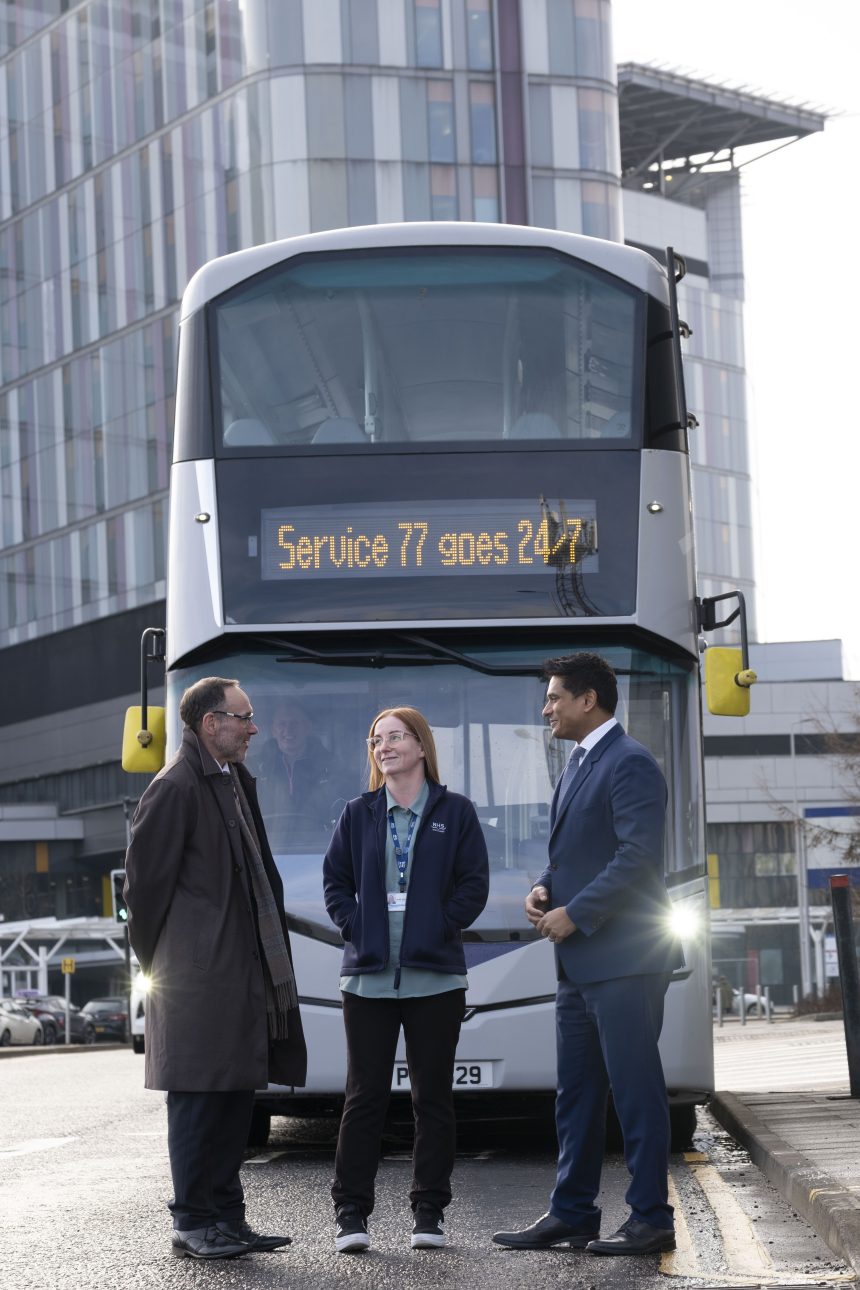
The launch was marked at the Queen Elizabeth University Hospital by Graeme MacFarlan, Commercial Director of First Bus in Scotland, alongside Dr Sandesh Gulhane MSP and Louise Nesbitt from the hospital’s facilities team. The group viewed one of the repowered electric buses that will operate on the route as First Bus begins a campaign to raise awareness of the expanded service.
“We’re pleased to see First Bus introduce a 24‑hour service to the Queen Elizabeth University Hospital,” says Denis Sweeney, NHS Greater Glasgow and Clyde Travel Planning and Systems Manager.
“As a major acute site operating around the clock, reliable transport links are essential for our staff, patients and visitors. Extending the 77 to run through the night will make a difference for colleagues working early and late shifts and will improve access for families visiting loved ones at night. This enhanced connectivity is a welcome development for the hospital and the wider community.”
Adds Mr MacFarlan: “Safety is our top priority and we believe this 24-hour connectivity aligns well with city council and transport authority commitments to give focus to the safety of women and girls. We are confident this round-the-clock connectivity to popular districts and vital services will quickly capture the attention of existing customers and build bus travel habits for new users into 2026.”