



















Essex Police has partnered with the First Charge arm of First Bus to support the continued rollout of battery-electric vehicles by the constabulary.
It will use high-power charging infrastructure installed during 2025 at the First Bus depot in Basildon to support a growing Essex Police electric fleet that in 2026 will increase to 50 with an expectation of that number growing further.
The public charging network was initially used by Essex Police when it began its move to electric in 2022. As the number of such vehicles in the force’s fleet expanded, access to high-capacity charging has become critical to operational delivery. Using provision from First Bus at Basildon will support further decarbonisation by the constabulary, it says.
The operator adds that for public sector bodies working towards zero-emission vehicle targets and with large and operationally critical fleets, installing their own charging “can present significant financial and practical challenges.”
First Charge already has relationships with other police forces. Police Scotland charges its electric vehicles at depots in Aberdeen and Glasgow, while Norfolk Police is expected to start doing the same at the Roundtree Way site in Norwich during the coming months.
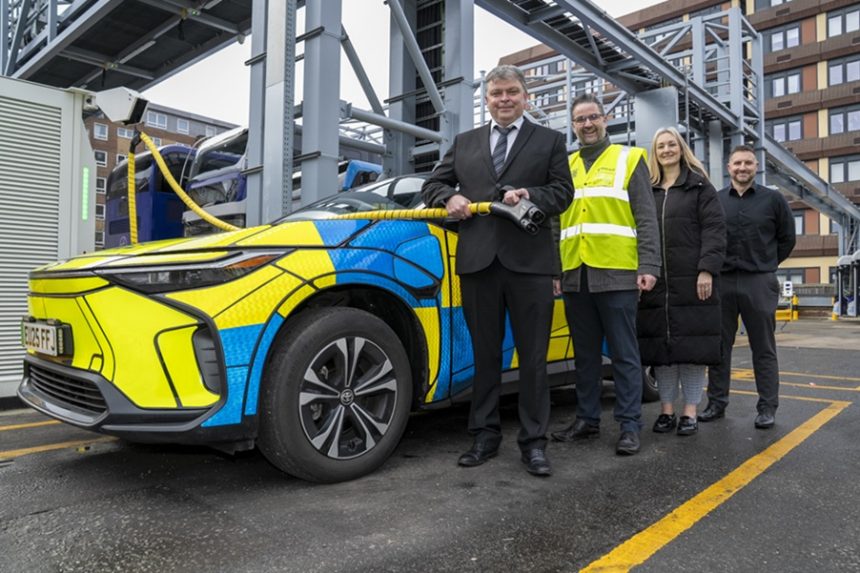
Essex Police Acting Head of Fleet Jason Tyrrell (pictured, left) notes how the partnership with First Bus and First Charge allows expansion of the force’s electric fleet “while maintaining the operational resilience our service requires.”
First Charge Head of Product Andy Gwilliam (pictured, second from left) adds that for fleets needing regular, high-power charging, use of bus depot facilities can be significantly more cost effective that relying solely on public charging while freeing the latter sites for others.
The approach supports wider adoption of battery-electric vehicles by opening the First Bus charging estate to third parties including commercial fleets as well as public sector bodies.
Mr Gwilliam notes how the engagement with Essex Police shows the benefits of that and positive decarbonisation outcomes. “We look forward to working with more public and private sector organisations to help remove some of the practical barriers to fleet electrification,” he concludes.