





















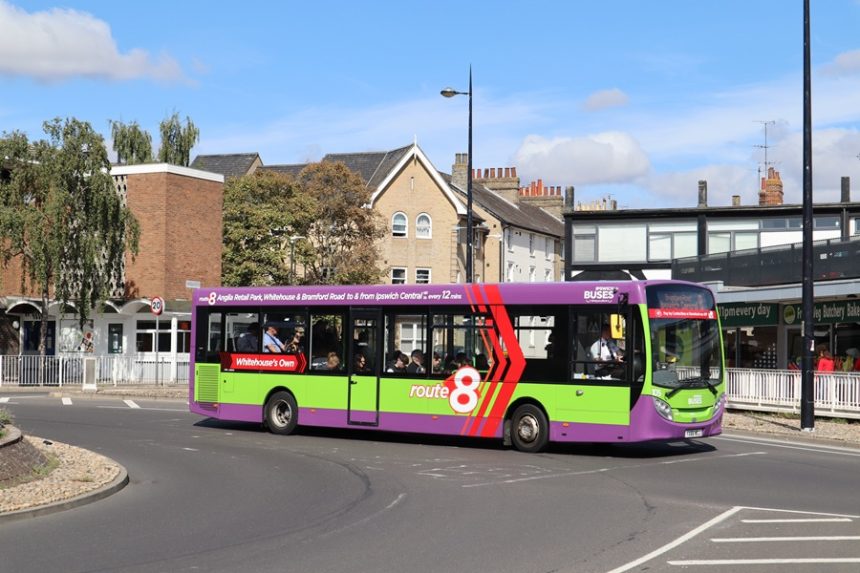
Any exploration of a new local authority bus company (LABCO) in England should first determine a clear case why and how the operation can help to improve bus services in the area concerned, guidance on the subject published by the Department for Transport has said.
The Bus Services Act 2025 removed a bar on creation of new LABCOs in England. Key to the guidance is helping to understand the legislative and regulatory framework that underpins the establishment, governance and ongoing management of a new LABCO, including practical and financial considerations.
Interested authorities must decide how best to establish a LABCO “that meets local needs and ambitions,” the document notes. Central to determining why and how such an operation can improve bus services are:
-
- What the central purpose of the LABCO will be and what value it offers over maintaining the status quo or implementing other reform options
- Whether sufficient financial resources are available to establish and run the LABCO, ensuring that it would be self-sustaining at minimum
- Confidence that a LABCO’s leadership and governance structures will be stable, robust, and transparent
- Certainty of support from council members and wider political leaders
- Confidence that the local authority will have sufficient capacity and capability across all areas to run the LABCO successfully.
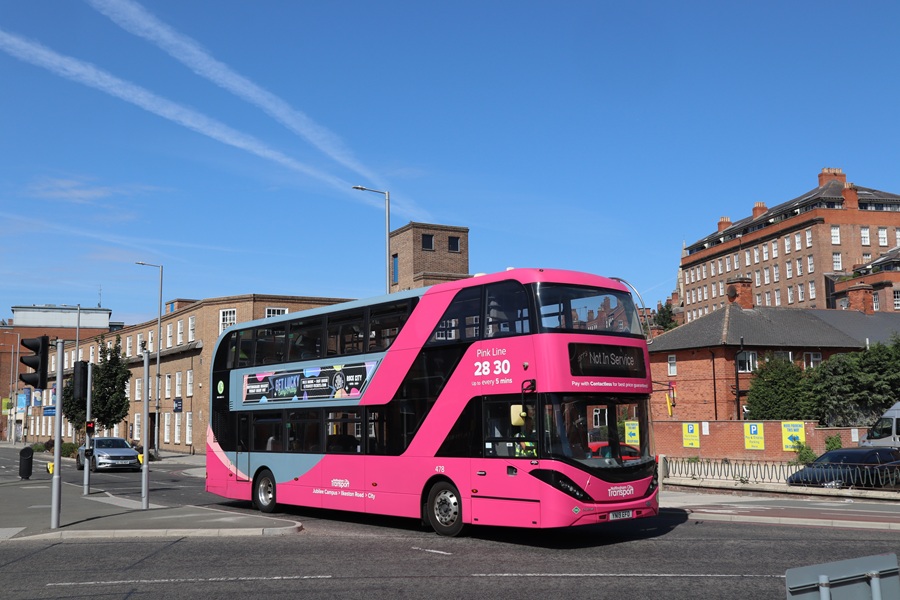
Any local authority in England outside London may now own and operate a LABCO, including strategic authorities, unitary bodies, county or district councils, and metropolitan districts.
They may purchase an existing operation to run as a LABCO, or set up a new entity. Such an undertaking may be established as part of a franchising scheme or following creation of one, or under Enhanced Partnership.
Where a strategic authority is in place, it can establish a LABCO to provide services across its entire area. Alternatively, one local authority under a strategic authority could own and operate a new LABCO that runs services within its own area and the wider strategic authority region, although secondary legislation may be required for that.
The guidance makes clear that any authorities looking to form a LABCO should carefully consider all funding and financing matters beforehand. Three options are given for paying for the operation:
-
- Using public money from direct grants or by borrowing from the owning authority
- Borrowing from the Public Works Loan Board or National Wealth Fund
- Borrowing from other private lenders.
It also notes that a LABCO is subject to public accountability, as well as being required to demonstrate commercial discipline. Strong governance will thus be needed when forming the new LABCO, with a host of legislation cited as being relevant.

The operation could be created as an ‘arms-length’ company, as is the model for most existing municipals in England. That undertaking would have to bid for council tenders in the same way as a private operator and would hold no commercial advantage via its ownership.
Alternatively, the LABCO could be controlled by one more authorities in a manner that a ‘Teckal exemption’ applies. That would enable direct award of service contracts without competitive tendering. Conditions in the Procurement Act 2023 and the PSOT Regulations must be met for a Teckal exemption.
To conclude, the guidance gives four examples of possible future LABCOs:
-
- An arms-length public provider with 150-200 buses; a 20% share is held by a private equity firm and operation is under Enhanced Partnership
- An operator of last resort under a Teckal exemption, with 20-25 buses working under Enhanced Partnership providing “a mechanism for market moderation in areas of low competition”
- A regional arms-length provider with under 500 buses. Formed by a “super combined authority” to deliver services across three unitary areas via purchase of a local independent operator, working under both Enhanced Partnership and franchising
- A unitary service on an arms-length basis with sub-100 buses, formed by a unitary authority under a combined authority to enhance connectivity. It works under Enhanced Partnership and is funded by reinvestment of the unitary’s traffic enforcement monies.
Read the guidance on establishing a new local authority bus company by clicking here.