




















As MPs discuss a petition around expanding ENCTS in England, the bus sector fears any move in that direction could exacerbate concessions reimbursement problems
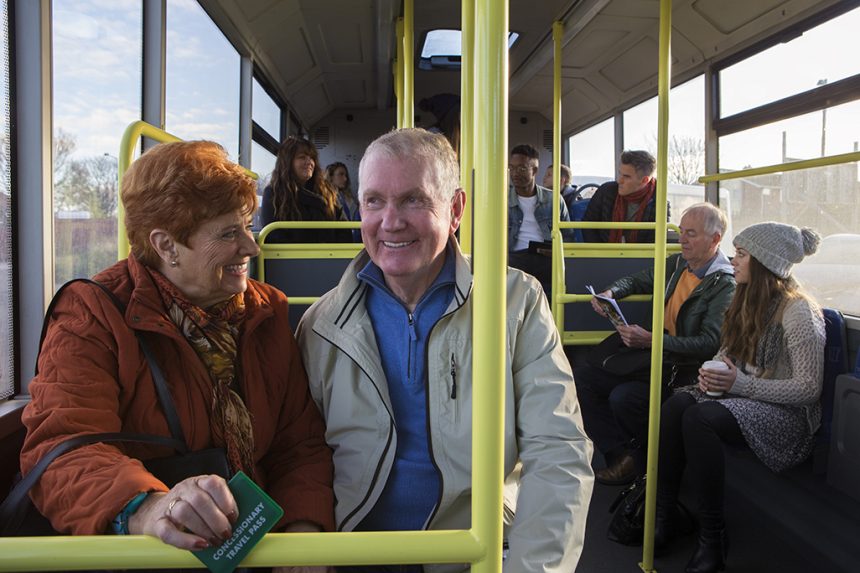
After MPs discussed a petition to give free bus travel to all over-60s in England, the industry has repeated the call for operators to be better compensated for concessionary journeys.
The Westminster Hall debate on 5 January was forced after a petition from the public reached 100,000 signatories.
Campaigners want all of England to be in alignment with London, Liverpool, Wales, Scotland and Northern Ireland in expanding the scope for a bus pass from state pension age down to 60.
This also follows a rise in older and disabled people’s concessionary journeys noted in the latest Department for Transport statistics in November 2025, coinciding with a stagnation in trips overall.
It means the percentage of journeys in Britain which were made via such passes rose from 18.2% to 18.6%, which will be bad news for operators believing they are not fairly reimbursed.
Among those is Peter Nathanail, Managing Director of Transport Made Simple, who has called for reform of the reimbursement formula.
“I am strongly supportive of the concept of providing free or discounted travel to people because we have very clear evidence that it generates increased travel demand,” he says.
“We speak to a lot of people – typically middle-class people – who say they have never used buses but now they’ve got their bus pass it’s made them use buses more regularly.
“It’s a really good tool for getting more people using the bus. The problem at the moment is the reimbursement level.”
That could be exacerbated if the trend from the latest DfT statistics continues in years to come.
The post-COVID rise in bus journeys in Britain stalled to just 1% for the 12 months to March 2025, with trips per capita showing a statistically non-significant change. However, journeys made by older persons and disabled concessionary passengers rose 4%.
Mr Nathanail adds: “Without a reform of the reimbursement arrangements, it presents a challenge because, if an increasing proportion of the passenger mix comes from concessions, then you’ll end up generating less revenue for the same or increased cost of running the network, so bus services will have to be cut because they won’t be viable.”
It should be added that reimbursements made to operators by Travel Concession Authorities over the same period rose by 8% – allowing for inflation – compared to 2023/2024.
Trade and passenger bodies respond
A statement from the Confederation of Passenger Transport (CPT) reads: “The Westminster Hall debate reflects the strength of public feeling around access to bus travel for older people, and the important role concessionary fares play in supporting independence, health and social connection.
“Free bus travel is a valued part of England’s public transport system, used by millions of older and disabled passengers every year.
“At the same time, any changes to eligibility or scope must be properly funded and fairly reimbursed and local authorities must have the resources needed to administer them effectively.
“It is for politicians to decide how concessionary travel is structured and who it covers.
“CPT’s priority is to work constructively with government and local authorities to ensure that, whatever decisions are taken, concessionary travel remains sustainable, delivers value for money, and supports reliable bus services for all passengers.”

That is echoed by Lydia Horbury, Chief Executive, Bus Users UK, even though she is supportive of expanding the scope of concessions. “From a passenger perspective, access to concessionary bus travel is currently a postcode lottery,” she says.
“Currently the over-60s can travel for free in places like London, Wales and Scotland, while others have to wait longer depending on where they live in England.
“Extending eligibility could help more people to stay independent, connected and confident using the bus, but it must be properly funded.
“If operators are not fairly reimbursed, passengers risk losing the reliable and frequent services they depend on. Any change must strengthen the bus network, not undermine it.”
No plans for change to bus concessions
A previous government response to the petition pointed out the cost to the Treasury of the scheme, which is £795 million according to the most recent figures, and added: “Any changes to the statutory scheme must be carefully considered for their impact on its financial sustainability.”
The government – including Minister for Roads and Buses Simon Lightwood in his response at Westminster Hall – has since given no indication it will accede to the petition.
The cost of the English National Concessionary Travel Scheme has also been cited when the government has been lobbied to make the bus pass usable 24 hours – although Mr Lightwood pointed out during the debate that 67% of local concession authorities offer an extension beyond the government-supported 0930-2300hrs.
Youth schemes better value?
Labour MP for Folkestone and Hythe, Tony Vaughan, who introduced the petition, added that local councils had claimed that a discounted scheme for young people and apprentices – already in place in some areas – may have better economic benefits than free travel for all over-60s.
However, Mr Nathanail, although conceding he can see a strong argument for trying to win over a younger generation “who may be considering buying a car”, does not agree such schemes are better than those for over-60s.
From a passenger perspective, access to concessionary bus travel is currently a postcode lottery – Lydia Horbury
Transport Made Simple operates – as Central Connect – in Cambridgeshire where the mayoral authority supports the £1 Tiger fare for under-25s, but it does not take part as it believes it would not be adequately reimbursed for the extra capacity it would have to provide.
More generally, he adds that subsidised discounts are causing issues commercially for operators.
“The problem is that bus operators are now in a place where 95% of our revenue is fixed,” he says.
“We’re fixed on the £3 fare scheme and the reimbursement is limited in terms of inflationary increases, concessions are fairly fixed and indeed, in many areas, local authorities have held their concessions from pre-COVID and are now looking to reduce them.
“And where we’ve got contracted services, most of those prices are fixed for several years as well.
“Our costs are going up, our revenue is going down there. So I’m looking at increasing costs of vehicle parts, vehicles, drivers quite rightly wanting pay increases, etc, and no real levers to pull to bring in additional revenue to cover those rising costs.”