




















Transport for London (TfL) has published details of the second phase of its Bus Safety Standard.
The document sets out requirement for buses entering service in London in 2027, 2030, and 2033 respectively.
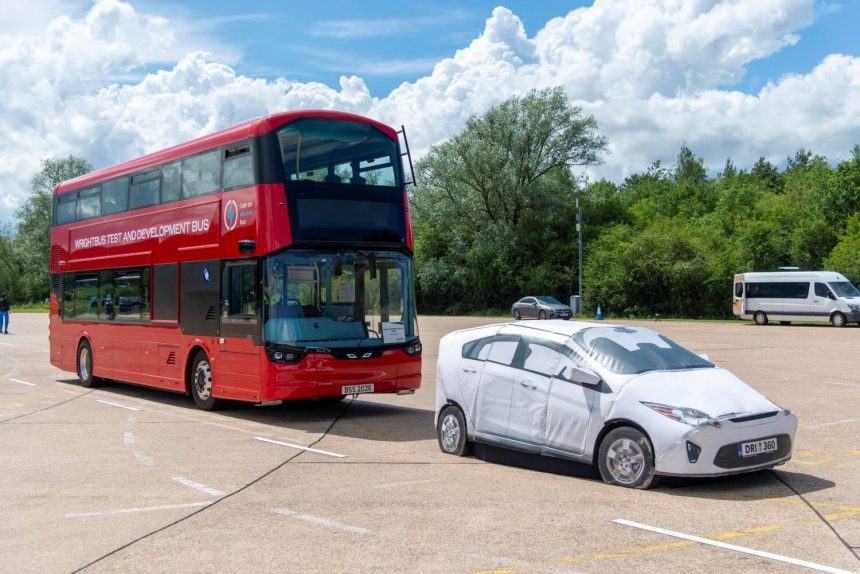
Some of those safety technologies will be demonstrated at a launch at Millbrook Proving Ground today.
The work builds on the introduction of the Bus Safety Standard in 2018 and is part of TfL’s “Vision Zero” target for no one to be killed on, or by, a bus by 2030, and to eliminate all deaths and serious injuries from the capital’s transport network by 2041.
The latest version of the Standard is based on four key principles: safe driving, crash avoidance, crash protection, and post-crash safety.
Technology to combat driver fatigue and distraction will be introduced for buses entering service in 2027. Already trialled on 400 buses, the system will provide visual, audio and touch alerts if it detects the driver is fatigued or distracted.
Also part of the first set of requirements to be introduced is a redesigned driver cab, which will enhance safety by improving comfort, inclusivity and security.
Pedal, layout and interface standardisation will be enacted by next year for new vehicles. In addition, part of the earliest set of enhancements are requirements pertaining to cab access and dimensions; seat construction, dimensions and adjustability; seat thermal comfort; storage provision; and lighting, glare and reflection.
By 2030, a new “Moving-Off Information System” will intervene to prevent the bus pulling away if a pedestrian or cyclist is immediately in front.
Also for roll-out that year, the Advanced Emergency Braking system will be enhanced to extend protection for turning scenarios. Meanwhile, new acceleration suppression technology is designed to help stop drivers accidentally pressing too hard on the accelerator pedal.
Improved lighting and clearer safety messaging will be required by 2030. Compulsory from that year, too, will be the introduction of tip seats, which automatically fold upright when not in use.
Buses entering service that year will also be required to have bridge-strike prevention measures.
Among other measures that will be introduced over time are enhancements to vehicle interiors that will reduce passenger slips, trips and falls.
Communication will be improved between wheelchair users and the driver, and there will be enhanced audio for ramp deployment.
According to TfL, these changes will be delivered by “continued collaboration with bus operators, drivers, customers manufacturers, trade unions and other stakeholders”.
Bus Safety Standard features brought in since 2018 have become standard elsewhere, including in Manchester and Northern Ireland, with Hong Kong and Singapore.
TfL highlights statistics showing the number of deaths involving buses on London’s roads in 2025 was, at 10, the lowest level since 2021 and that bus passenger injuries are the lowest on record – apart from the pandemic-affected 2020. The transport authority also claims a 28% reduction in the number of people killed or seriously injured in collisions involving a bus compared to the 2010-2014 baseline. In terms of passengers and drivers, the reduction is 40%.
Sadiq Khan, Mayor of London, says: “London’s bus network is one of the safest in the world, and I’m proud that we are making real progress in eliminating death and serious injury from the network. But we must go further and faster to eliminate this heartbreak across the capital.
“This new world-leading safety standard is an important part of our work towards achieving Vision Zero across the bus network. It will help protect passengers, the bus drivers who keep London moving, as well as other road users, while supporting innovation that can prevent collisions and save lives.
“I’d like to thank partners, manufacturers and operators for their help in developing this new standard, which is vital to building a safer, fairer, better London for everyone.”
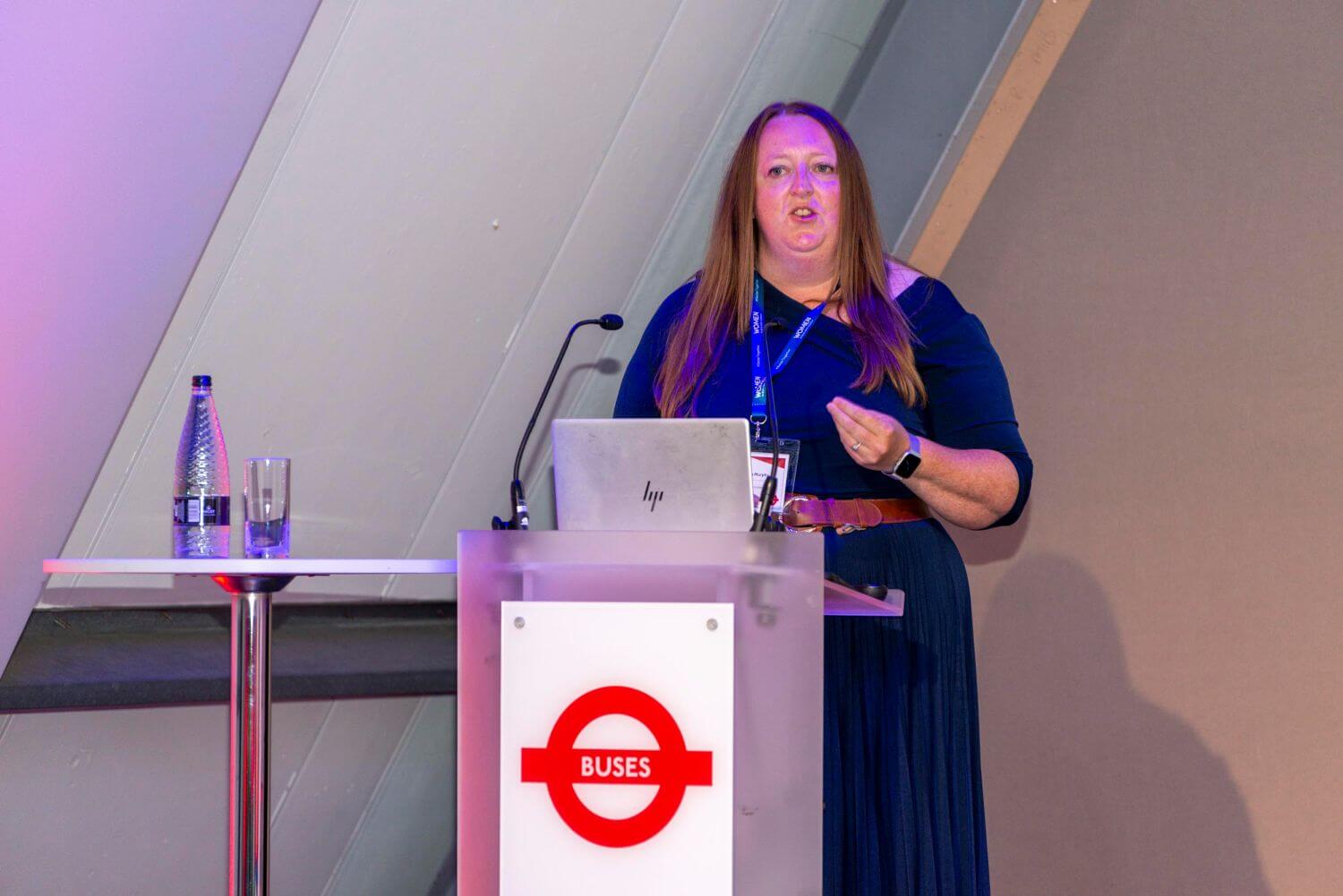
Lorna Murphy, TfL’s Director of Buses, adds: “We continue to put safety at the heart of everything we do on London’s bus network and are determined to meet our Vision Zero goal of eliminating death and serious injury across all forms of transport.
“The launch of the second phase of the Bus Safety Standard demonstrates the strength of our collaborative approach, working closely with operators, manufacturers and partners to improve safety across every aspect of the bus and deliver a safer network for everyone – including customers on and off the bus and our hard-working drivers.
“We know there is more to do and we will not stop until we achieve our Vision Zero goal.”