



















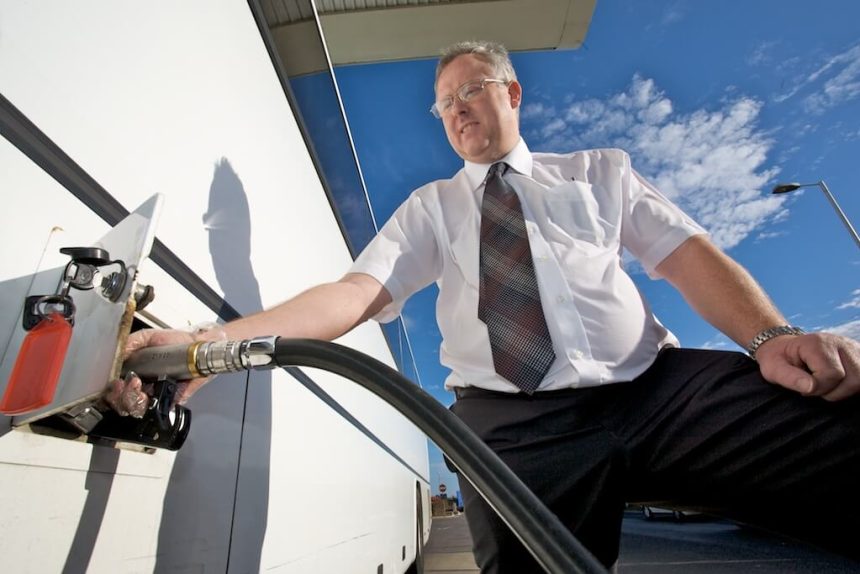
The UK Coach Operators Association (UKCOA) has written to government outlining a package of interventions that would help address the current fuel crisis.
Immediate interventions called for include a temporary targeted fuel duty rebate, a reduction in VAT on fuel to 10% for coach operators, and an extension of eligibility for the Bus Service Operators Grant to cover more coach activity, such as home-to-school and rail replacement work.
Longer-term, the trade body is also calling for reforms to public sector contracting to better reflect fuel price volatility, suggesting “more responsive and transparent fuel adjustment mechanisms” to ensure continuity of service delivery; greater oversight and transparency in how fuel is priced; and “clear and consistent policy on fuel duty” that would include avoiding further increases in the short term.
The proposals are included in a letter that has been sent to departments spanning transport, energy and education, and is addressed to figures that include members of the Transport Select Committee, Secretary of State for Energy Security and Net Zero Ed Miliband, Parliamentary Under-Secretary of State (Roads and Buses), Simon Lightwood, and Secretary of State for Transport Heidi Alexander, among others.
In it, UKCOA Managing Director Peter Bradley describes “a perfect storm” of rising costs, constrained revenues and limited flexibility to pass on price increases. It notes that fuel has risen as much as 30% or more against previous baselines, adding that that translates into weekly additional costs of several thousand pounds per operator, often without any route to cost recovery.
Highlighted is that a significant proportion of work for the UK coach market is under fixed-price contracts such as home-to-school transport and rail replacement. Such agreements are set well in advance and have left operators exposed to prolonged periods of elevated fuel costs. “Operators are being required to absorb significant fuel increases for extended periods, sometimes months, before any contractual adjustment can be realised, if at all,” the letter states.
It notes also that attempts to recover costs in the private hire market are also proving difficult, with UKCOA members reporting reduced demand when surcharges are introduced, particularly among schools and community groups.
The trade body warns the cumulative impact is beginning to affect businesses’ sustainability, with some operators already considering fleet reductions, job cuts, delayed investment in low-emission vehicles, or complete withdrawal from some work.
“We fully recognise the broader fiscal context and the competing demands on public finances. However, the measures outlined above are targeted, proportionate, and time sensitive,” Mr Bradley writes. “They would not only support the immediate sustainability of the coach sector but also help preserve the wider economic and social benefits it delivers.
“Without intervention, there is a real risk of contraction within the sector, leading to reduced service availability, increased costs for passengers, and diminished access to transport for communities and schools. Once lost, capacity in the coach industry is not easily or quickly replaced.”