





















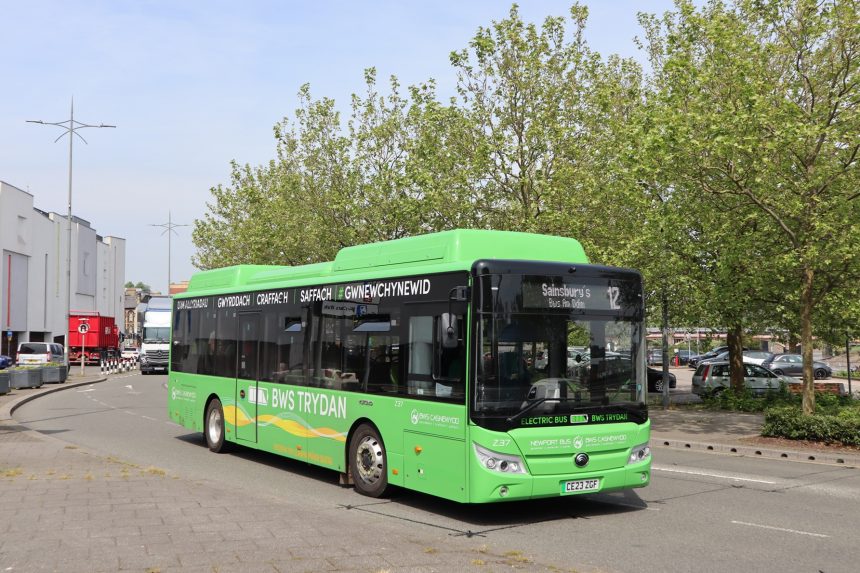
The forthcoming Bus Services (Wales) Bill provides challenges as well as an opportunity for the sector, writes CPT Cymru Director Aaron Hill
Ending a pivotal year for Welsh buses, the Bus Services (Wales) Bill was passed through the Senedd on 9 December, charting a new course for the bus network in Wales.
The ambition within the Bill reflects the appetite for change from across the political spectrum – for better, more frequent, and more connected bus networks.
At the Confederation of Passenger Transport Cymru, we share this ambition and believe it can be achieved, but only with bold, practical policies tailored to the diverse needs of Wales’ towns and rural communities, and the funding to match.
The Welsh Government’s flagship proposal is the shift towards a gross-cost franchising model, where Transport for Wales will take control of routes and timetables while operators run services on contracts for a set price.

This is a bold step, but it demands careful implementation. The experience of London and Greater Manchester, where franchising is sustained by significant levels of public subsidy, is a cautionary tale.
With public finances under strain, Wales must ensure that any model adopted is sustainable, delivers value for public money, and recognises the nuances of different areas.
Bus regulation is not “one size fits all”. Genuine partnership between local government and operators is vital. In England, we have seen growing passenger numbers and progress towards zero-emission fleets in places without franchising, such as Norfolk, Portsmouth and Leicester.
Measures such as bus priority lanes, better traffic signal coordination, and improved management of street works are essential to unlock the full potential of the network in Wales.
A 10% increase in bus speeds across Wales would translate to an extra 1.5 million bus journeys every year, saving money for operators and government under the new regulatory model, delivering higher revenues and the opportunity for reinvestment in greener, modern fleets.
Bus regulation is not ‘one size fits all’
Alongside the debate on the Bus Bill, fares and affordability have been central to the discussions on buses in Wales this year.
The Welsh Government’s new £1 bus fare scheme for young people was created out of political necessity – as part of a deal to pass a budget – but it has been a positive, strategic investment, encouraging young people to catch the bus, sowing the seeds for life-long habits and potentially shifting behaviour away from car ownership.
Done right, fares schemes can be both good politics and good policy, ensuring affordability for those who need it most. However, with uncertainty over the future of the £1 scheme beyond the one-year pilot, the Welsh Government must work hard to provide certainty and a soft landing for operators on the other side of the election.
As we look ahead to 2026, there is significant change on the horizon in Wales. The polls for next year’s Senedd election suggest a seismic political shift is on its way in Wales.
The Senedd is also expanding and will be elected through a more proportional electoral system. This will mean new faces and relationships for the industry to build.
As we look ahead to 2026, there is significant change on the horizon in Wales
Our recently launched manifesto, Driving Wales Forward, sets out practical steps for bus that politicians from any party can take if they’re elected to serve the people of Wales next year.
It calls for clear funding commitments, targeted fare support, recognition of coach services, and the bold goal of speeding up buses by 10% within the current parliamentary term.
Wales’ buses are a lifeline for its nearly 200,000 daily passengers. Investing wisely means cleaner air, less congestion, stronger local economies and more socially inclusive communities.
But achieving these outcomes requires more than good intentions. It demands political will, joined-up planning, and a commitment to empower local areas to choose the delivery models that work best for them.
Ultimately, the future of Wales’ buses depends on creating a virtuous cycle: faster journeys encourage more passengers; higher passenger numbers sustain viable services; stronger services attract investment in greener fleets – all leading to a better, more affordable public transport network that people can rely on.
Buses are a key part of Wales’ social fabric, and central to our green future. We all need to ensure the next Welsh Government recognises that and delivers lasting benefits for communities across the country.