



















The Department for Transport’s recently published Road Safety Strategy is a welcome and long-awaited document that finally commits us to achieving centrally-led targets. It contains a ‘call to action’: work together to reduce casualties and improve safety on roads in Great Britain. By making roads safer, everyone benefits.
The Strategy uses Vision Zero language in that is it “guided by a long-term ambition for nobody to be killed or seriously injured on roads in Great Britain”, and says that interventions should be underpinned by the Safe System approach.

The road passenger transport industry has a special and complex role in achieving this; we carry millions of passengers every day, supporting them in their daily lives.
As designer and operator of the transport system, we bear a greater responsibility to keep everyone safe.
Pages 23-24 of the Strategy refer specifically to bus safety, including the investment that government is making in local bus services.
Within that there is an inherent assumption that funding will also improve bus safety.
If we apply the Safe System approach to the problem of bus safety, bearing in mind our greater responsibility and how we can do things differently and better than before to get effective results, then we must begin with the bus itself.
The best place to start is with regulation and standards. But these have fallen behind the curve as safety for buses has been continually pushed into the ‘it’s a bit too hard’ category, closely followed by ‘we will look at it later’. However, we do have at our fingertips the Bus Safety Standard (BSS).
It is a collection of enhanced standards for safety technology and physical changes for buses, developed over the past 10 years by the Bus Safety Development Team at Transport for London (TfL) in collaboration with bus manufacturers, supported by London’s bus operators, and involving expertise in many fields including vehicle technology, standards and regulations, safe system thinking, human factors, engineering, and behavioural science.
BSS was developed for London but is designed for use by everyone. The research and the standards are both freely available. If you are investing in the bus network with government funding, then you have a responsibility to ensure that you are buying vehicles that meet the highest safety standards – and that may not be the basic offering.
If you don’t ask, you don’t get. Unfortunately, that proverb applies to safety, as most safety features (on many models of vehicles) do not include ‘safety as standard’.
Imagine you are a new franchising authority or part of an Enhanced Partnership model. You have just spent millions of pounds on a fleet of shiny new battery-electric or hydrogen buses.
Did you ask for the latest safety standards to be applied? Does your new fleet have enhanced vision technology like camera monitoring systems? Does it have technology to prevent runaway bus scenarios?
Does it have a stakeholder-led Acoustic Vehicle Alerting System with the urban bus sound so pedestrians can hear them? Does it have a front-end design that takes established knowledge and engineering from other industries to reduce the physical injuries to pedestrians and cyclists of they are hit by a bus?
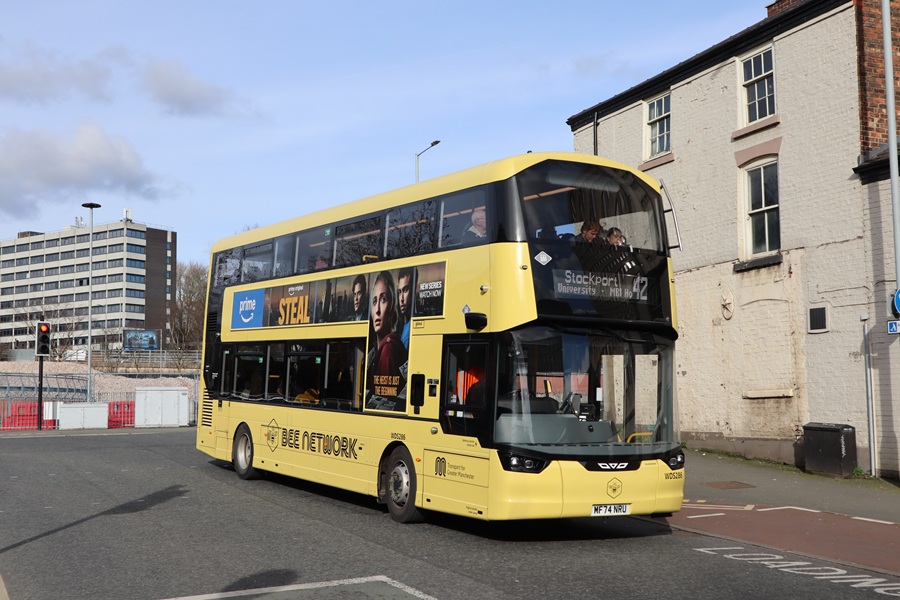
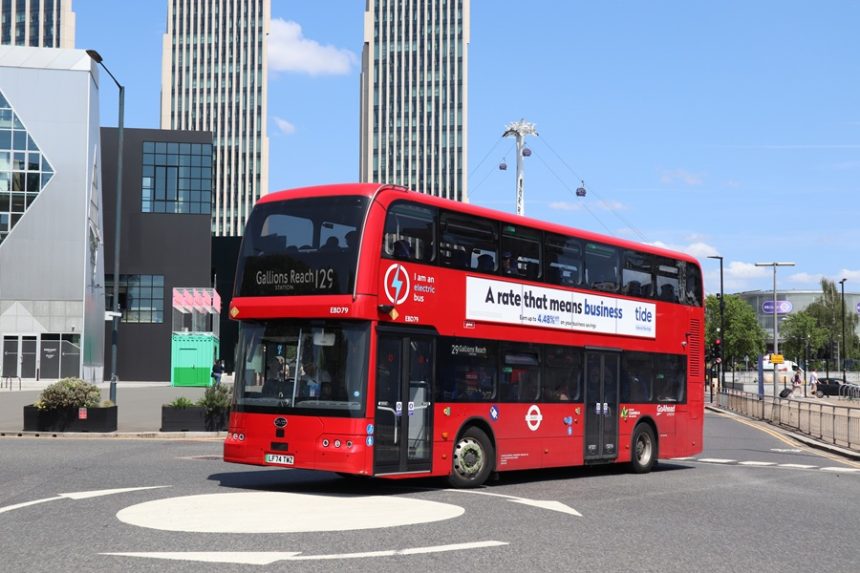
These features, and many more, are all available to you from nearly every domestic and international bus manufacturer that supplies the UK market, as they have all worked with TfL to develop and meet the Bus Safety Standard.
TfL has met with many franchising authorities and Enhanced Partnerships to explain BSS, including Greater Manchester, the Liverpool City Region and West Yorkshire Combined Authorities. All the research that underpins BSS is freely available on the TfL website.
Safety is best achieved through open collaboration and knowledge sharing. That is why, together with the Head of the Bus Centre of Excellence, I co-created the Bus Knowledge Sharing and Incident (KSI) Network.
It is a free-to-access network for anyone in the bus industry to share, learn, and develop their safety knowledge. A space for collaboration, where professionals from across the sector – and further afield – can join together in the furtherance of helping our industry to be at the forefront of safety rather than an afterthought.
The Bus KSI Network has members from manufacturers, operators, public transport authorities, government, industry organisations, and safety specialists.
In an industry investing in new buses and new technology with a view to the future like never before, ensuring that these fleets are also taking advantage of safety improvements should not be an afterthought. Demand better for our industry; demand safety as standard.
Join the Bus KSI Network for free by clicking here. View TfL’s bus safety research by following this link.