




















Simon Ingham, Commercial Manager at Edwards Coaches, considers what constitutes luxury in long-distance coach transport and whether the sector could make it work
I’ve recently been asked whether I think there is space for a high-specification, luxury product offering in the UK intercity coach market.
Coaches have developed a lot over the years of their existence. Most now feature reclining seats, footrests, tray tables, nets, individual air vents, reading lights, air conditioning, CCTV monitoring for safety and security, an onboard toilet and handwashing facilities, plug sockets (including USB ports) and onboard wi-fi.
What would, in the early days of intercity coach travel, have been considered luxury is now the standard offering.
That is before I have mentioned the advent of next-stop announcements, audio and visual displays, passenger lifts, and the various safety features which aid drivers that customers will often be unaware of, such as automated cruise control, adaptive braking, and reversing cameras.
With regard to what else could be offered on the intercity market, onboard beverage facilities, tea or coffee and chilled drinks may be welcomed. Onboard catering could be an option.
Access to ancillaries such as an eye mask, headphones or other items could be offered.
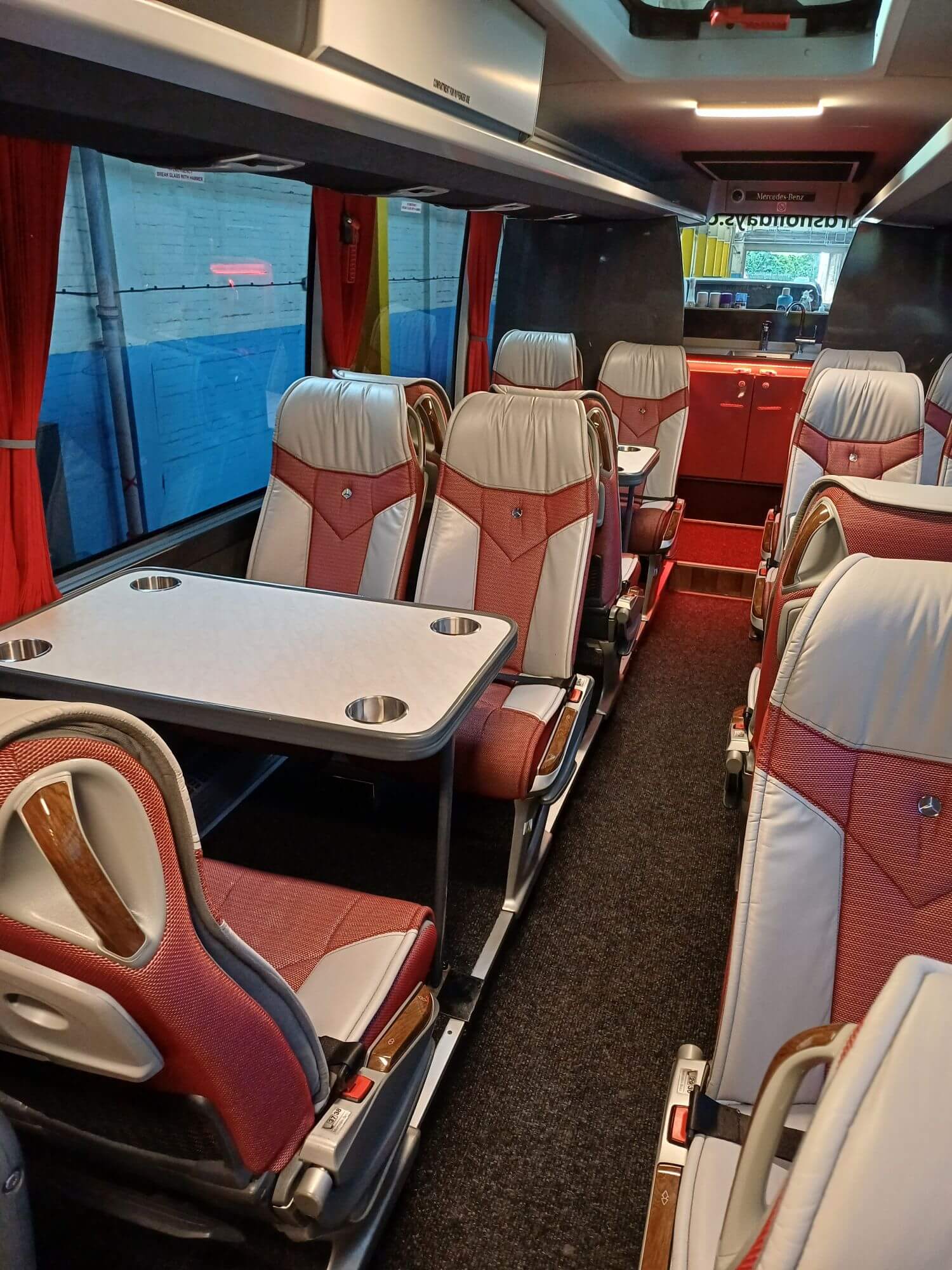
The addition of an even higher specification of seat could open the market to new customers – increased head cushioning and recline, lumbar supports, sideways moving seats to offer more space between passengers in a conventional 2×2 coach layout, and individual or social seating could be other options.
How about individual “rooms” on coaches, if that’s not going a little too far?
The addition of a premium intercity coach, whether it be a trial or otherwise, would be fantastic
Journey duration would often dictate the necessity of the offering of such an advanced product or elite service offering, in whatever form it may come.
Or would it? If people are willing to pay for it, does length of journey really matter?
How much people would be willing to pay for this increased specification is a vital consideration. Competition, whether it be with other coach operators or car or rail travel, would be a further important consideration.
The marketing of the product would be vital not only to make it a success upon launch but also to maintain its longevity to make the venture worthwhile.
For a vehicle enthusiast like me, the addition of a premium intercity coach, whether it be a trial or otherwise, would be fantastic. It would offer differentiation that is arguably lacking in the UK at present.
“Club-class” style departure lounges and priority boarding offerings haven’t been trialled extensively in the UK; perhaps this suggestion has potential for development, though it is also subject to the sensitivities mentioned above and investment.
In summary, there are plenty of ways that a premium-type product could be introduced to the UK intercity coach travel market.
However, does the departure of brands that have offered similar differentiation to the norm that I have mentioned above suggest that it doesn’t work, doesn’t pay or that the product isn’t what people want?
Thorough market research and modelling would be key to ascertain whether investment in product development and making the concept a reality is worthwhile in a low-margin and highly competitive market.