
In debates on net-zero, it is sometimes forgotten that key decisions on decarbonising road transport lie with the governments of Scotland, Wales and Northern Ireland, as well as Westminster.
These administrations generally have different powers, different emissions profiles, and their own net-zero targets and policies.
Policies relating to coach and bus services are also devolved to the Scottish and Welsh Governments. They largely have control over direction and funding for modal shift – encouraging movement from cars to more sustainable modes, including buses. Similarly, in North Ireland, policy responsibility for public transport is mostly devolved.
This matters, because coaches and buses will play a key role in reducing greenhouse gas emissions. In Scotland and Wales, coach and bus accounts for three-quarters of public transport journeys, but only a small fraction of road transport emissions.
The Climate Change Committee has shown that even modest shift from car use to public transport, cycling and walking could reduce emissions in the devolved nations by 11-15% by the mid-2030s.
Zemo Partnership’s Map of Missing Policies therefore considers not only the UK as a whole but Scotland, Wales and Northern Ireland.
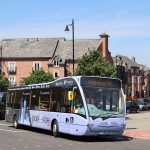
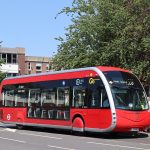
When it comes to increasing the uptake of zero-emission buses (ZEBs), there are some grounds for optimism. The Confederation of Passenger Transport estimates that around 25% of buses on Scotland’s roads will be zero-emission this year, up from 14% in 2024.
That progress is largely due to the support that has been available since 2022 from the Scottish Government’s Scottish Zero Emission Bus challenge fund. But it is not clear how the electric bus market will become self-sustaining, as the Scottish Government expects.
We recommend extending support and designing it to maintain stable demand and supply while ensuring that zero-emission buses are distributed evenly across the country.
In Wales it is a different story, with 8% of local bus operators in the country using electric buses. That is about the same figure as Great Britain, but there is a long way to go to meet the Welsh Government’s aim of a zero-emission bus fleet by 2035.
The shift to a franchising model in Wales by 2030, combining Transport for Wales and operator-owned buses, adds complexity. For 2024/25, £64 million was allocated to local bus support, including decarbonisation and preparation for franchising. Yet cost pressures have shifted the focus back to diesel buses rather than ZEBs. We recommend creating a residual funding mechanism to support ZEB purchases during the transition.
As for encouraging more bus travel, there is still a long way to go. In Wales, bus passenger journeys have been falling sharply since 2009. An expanded policy package is needed to make coach and bus travel more attractive.
In Northern Ireland, journeys are still below pre-pandemic levels. Its government needs to develop long-term strategies to promote modal shift to coach and bus and expand zero-emission bus services and infrastructure.
Decarbonising transport is a shared responsibility across the UK. Progress requires collaboration between the devolved administrations and the UK government, ensuring that policies deliver both emissions reductions and attractive alternatives to the car.
Zemo Partnership stands ready to support the four nations, facilitating dialogue, sharing experience, and developing effective, coordinated approaches to road transport decarbonisation.