


















CPT continues to deliver on its coach and bus mission statements from 2024, says CPT President Paul Lynch
In thinking about what the Confederation of Passenger Transport (CPT) has achieved in 2025, it occurred to me it would be useful to track how we are doing against the two manifestos – for coach and bus respectively – that we launched for the UK elections in 2024.
This seems apposite given the recent launches of new manifestos by both CPT Scotland and CPT Cymru in advance of local elections next year.
The coach manifesto, Access All Areas, included five key asks. There is some momentum building on the first, to include coaches in local transport planning.
The mode is starting to be seen in the plans and thinking of local authorities, the regional strategies of Peninsula Transport and Western Gateway being good examples.
The research CPT published on the Economic Impact of Coach Services, which garnered national press attention, has been helpful in this regard.
On getting coaches recognised in air quality policy, and a net-zero plan for coach, there has been continued lobbying for consistent treatment in clean air zones, while access for coach operators to government depot charging grants has been secured.
CPT has led the push to reform rules restricting the distance that can be driven by 18- and 19-year-old drivers
CPT is also now recognised as a key stakeholder in the forthcoming national charging infrastructure plan.
As regards support for an industry-led workforce strategy, CPT has led the push to reform rules restricting the distance that can be driven by 18- and 19-year-old drivers, supported by national media coverage.
And the case for an acceleration of driver training has been strengthened by evidence showing off-road modules can be completed at low risk.
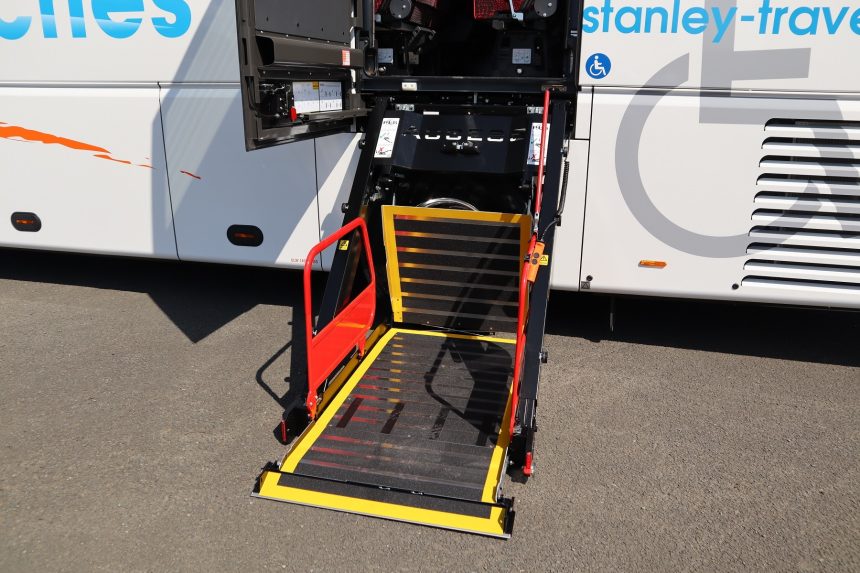
Work has also continued on accessible travel and PSVAR to improve clarity for disabled customers while keeping matters workable for operators, building on previous calls for evidence and urgently pursuing the issue with ministers and senior civil servants.
For bus, Driving Britain Forward had six key items. First, on long-term funding certainty, the government has agreed a three-year revenue settlement which includes the Bus Service Operators Grant Plus and the national fare cap in England.
CPT pushed through consultations, economic analysis and direct ministerial engagement via more than 50 meetings with the Department for Transport (DfT)!
We continue to work with DfT on an outcomes framework, so local authorities are accountable for how devolved budgets are used, as well as aiming to secure a full five-year settlement.
On the aim of keeping fares affordable after the national fare cap scheme ends, CPT helped shape the transition to the £3 cap, so it worked for operators and passengers, and then its extension to March 2027.
CPT’s research, alongside new operator evidence, is underpinning proposals for what replaces the cap after 2027, focusing on affordability and protection of fragile networks, especially in rural areas.
Securing targets to increase bus speeds is a tough nut to crack, but engagement continues to demonstrate its link to costs and excellent research in Scotland and Wales is now demonstrating the impact of slow buses and informing policy.
Success was seen in obtaining an acceptable statutory definition of essential bus services in the new Bus Services Act, with CPT securing changes to protect commercially sensitive information, maintain a level playing field between publicly owned and commercial operators, and continuing to allow price premiums for multi-operator tickets.
With regards to a partnership on zero-emission buses, CPT now represents operators on the government’s UK Bus Manufacturing Expert Panel where transition, supply chains and manufacturing are considered together in advance of the phasing out of new non-zero-emission buses.
Finally for bus, as described above for coach, engagement with DfT on a workforce strategy has accelerated and CPT is now part of a small group shaping next steps.
All this sits alongside other work too, of course, including – to give just two examples – strong influence on the Bus Services (Wales) Bill involving improvements on affordability, SME involvement and operator engagement, and the production of an invaluable toolkit to help English local authorities to decide on their best model for local bus regulation following the Bus Services Act 2025.
You can find out more about our overall impact, including other policy wins and our operational support for CPT members, in our Impact Statement 2025, published earlier this month.
There’s much to do as ever, but that’s a good base for 2026 and beyond.