




















The Transport Secretary’s recent speech leaves our political expert perplexed by the absence of mention of transport integration
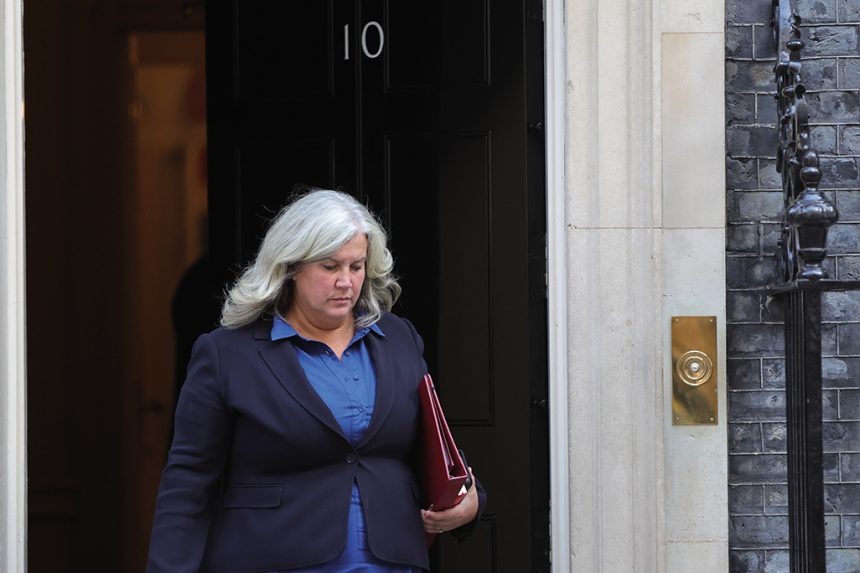
I was a touch confused by Secretary of State for Transport Heidi Alexander’s speech to the Labour Party Conference on 30 September.
It was only a short speech, given she had nothing new to announce, having already revealed that the West Midlands Railways, Chiltern and Govia Thameslink rail franchises would be renationalised next year. Why she didn’t hold that announcement back for her conference speech is a little beyond me.
No matter. But why am I confused? Because the vast majority of her speech was focused on public transport, while at the same time saying our roads are the backbone of the economy.
Yet she devoted just one short paragraph of her speech to roads.
I would have liked the Secretary of State to talk about integrated transport rather than mention the different transport modes in, frankly, isolation
Maritime and aviation together also had just one paragraph devoted to them, yet these are massively important industries.
As an island nation, we cannot exist without the ports and maritime industries, and aviation, despite its often controversial elements, is quite fundamental to our economy too.
The focus on public transport is far from a bad thing.
But the imbalance in the speech was just so stark, containing no reference to the importance of airport expansion despite the Chancellor giving her backing to a third runway at Heathrow; no acknowledgement of the environmental issues surrounding aviation or the considerable work being done to produce clean aviation fuel; and no acknowledgement of the fact that over 90% of all journeys are made by road. I could go on.
Perhaps Ms Alexander was under a strict time limit for her speech, and transport isn’t the biggest draw for conference audiences, so I need to be careful not to be overly critical.
Transport integration overlooked
The Department for Transport (DfT) is meant to be publishing a strategy for transport integration later this year, and I would have thought that the Secretary of State might have wanted to talk about that.
An integrated transport strategy is something that ministers have spoken of down the decades, but never truly delivered.
Integrated transport was even the subject of an early episode of Yes Minister, which perhaps is rather telling.
I would have liked the Secretary of State to talk about integrated transport rather than mention the different transport modes in, frankly, isolation.
And it felt like she referenced roads, maritime and aviation because she knew she had to, not because she had something serious to say about them.
The speech was a perfect platform to articulate what she envisaged an integrated transport strategy would actually look like, given that a strategy is to be published.
Her failure to do so has me wondering if this integrated transport strategy is going to be another of those worthy documents that make for an impressive read when published but change nothing and end up on shelves gathering dust. We shall soon find out!
Buses Services Bill heads to fruition
With conference season over and parliament returning from recess, Westminster life can return to normal.
Hopefully, this will mean the Bus Services (No 2) Bill can complete its final parliamentary stages and swiftly secure Royal Assent.
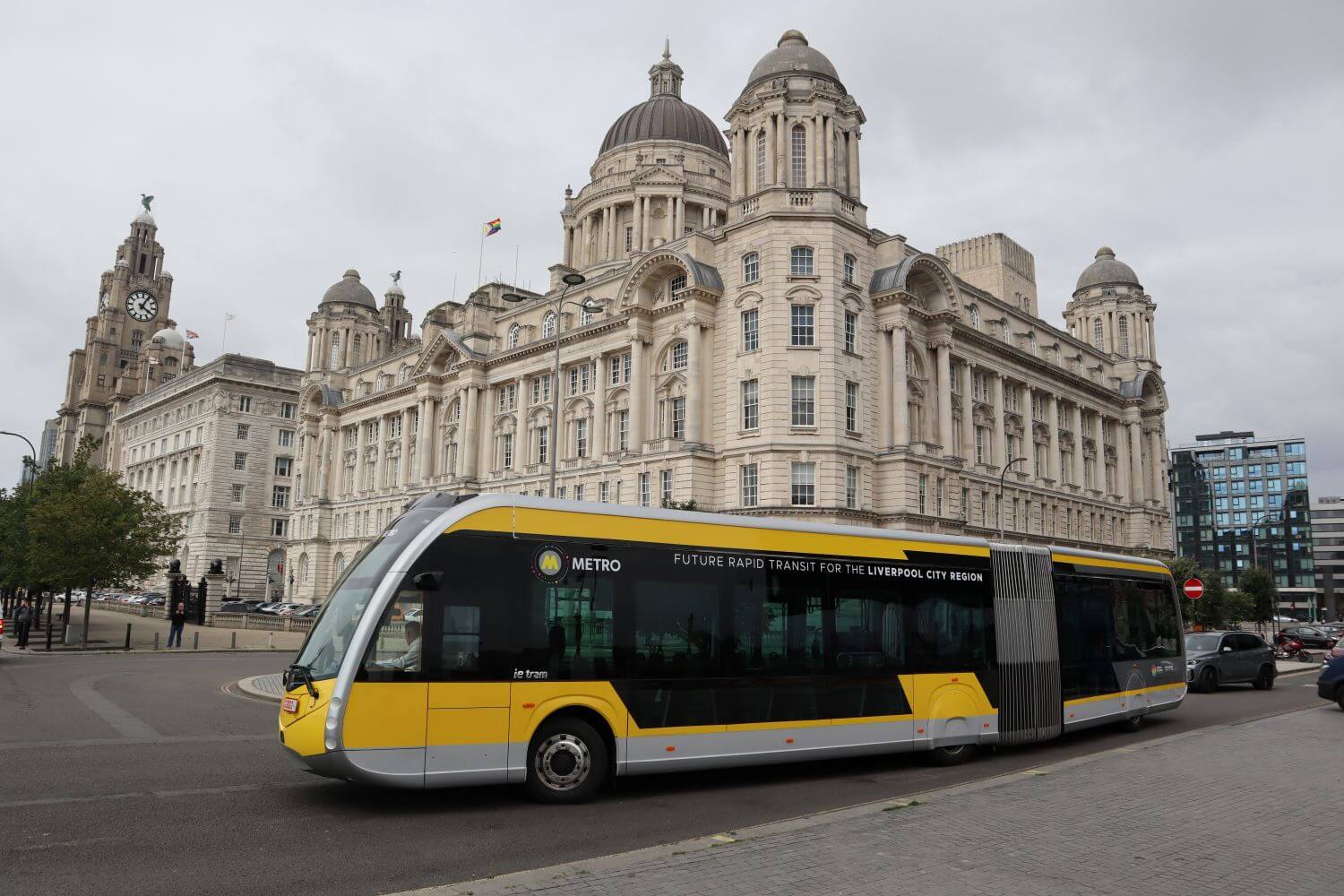
In her conference speech, the Secretary of State assured us that “better buses are on their way”. It’s a brave claim and, of course, we hope she’s right.
However, as I have said many times before, franchising is not the silver bullet that some believe. It hasn’t stopped strikes in Greater Manchester disrupting the Bee Network.
It’s the same with the railways. Renationalising the train operators and setting up Great British Railways will not stop delays and cancellations caused by signal and points failures or those ever-present engineering overruns.
Ultimately, the success of public transport is all down to cash and investment in infrastructure. I completely understand the complaint about rail privatisation setting up a “blame attribution” culture between the train operators and Network Rail – that was debilitating and costly, to say the least.
However, fundamentally, ownership is not really the core issue and my suspicion is that Labour’s obsession with ownership will prove to be an Achilles heel in its approach to public transport policy.
Musical chairs in Downing Street
Since my last column, we’ve had a ministerial reshuffle and some interesting political developments due to the resignation of Angela Rayner and the sacking of the UK’s ambassador to the US, Lord Mandelson.
Roads Minister Lilian Greenwood was moved to the Whips’ Office, and Aviation Minister Mike Kane was sacked and replaced by Keir Mather.
He has only been an MP for two years and I believe the 27-year-old lacks the necessary parliamentary and wider life experience to be a minister so early in his career. Still, good luck to him.
However, Ms Greenwood is said to have had a tantrum at being moved out of DfT so, to mollify her, she was returned to her position in the department while also remaining in the Whips’ Office. Why she wasn’t told just to shut up and get on with it is a little beyond me.
The odd thing is that Ms Greenwood now has the local transport brief, while Simon Lightwood retains responsibility for buses.
Since when were buses and local transport ever split between two ministers? Further, Ms Greenwood is responsible for road safety while Mr Lightwood is responsible for road policy. Isn’t road safety the most important element of road policy?
This splitting of responsibilities to keep Ms Greenwood happy is odd and, in my view, not sensible.
Nevertheless, I am looking forward to that integrated transport strategy, given that the allocation of policy responsibilities across DfT’s junior ministerial team is clearly far from integrated!