




















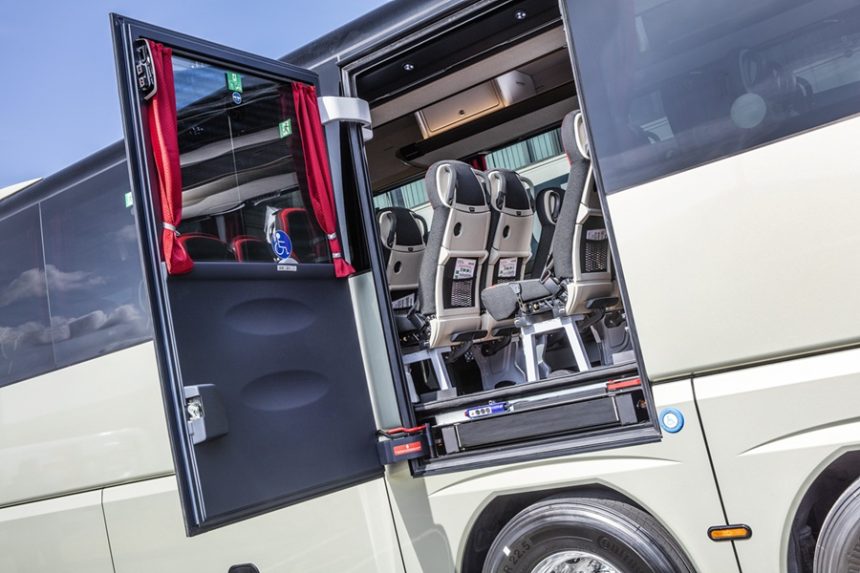
The safety of all our customers is paramount, and keeping them safe means different things for different people. For wheelchair users or passengers with very limited mobility, there are extra things to overcome if they are to have the good travelling experience that we want for all our customers.
Challenges vary depending on whether the vehicle is a coach or a bus, and where it operates. PSVAR has become much more prominent since 2015, but unfortunately that does not mean that wheelchair users now travel on our services with no issues.
Now don’t get me wrong: the road passenger transport industry is in a much better place than rail for customer accessibility, but creating an accessible journey only starts with providing an accessible coach or bus.
That is the minimum standard. Those working in the industry will know that there is so much more to delivering a good (or great!) customer experience than just the vehicle.
Let’s explore some of those. Before the coach even reaches the customer, can it stop where it needs to in the coach bay or station to deploy the passenger lift? Is the station designed to allow for that accessibility?
Is there enforcement to prevent use of the bay by other traffic, or anything making access difficult? Is there sufficient signage so customers know how to interchange and where to wait? How is the passenger lift space protected on the footway? Is it clear of street furniture and can it be kept safe from pedestrians walking under or near it while being deployed?
From the customer’s point of view, what are the factors that most induce anxiety? What does it feel like to sit on the passenger lift? Where is the driver standing on the lift, and does it take account of protecting the customer’s personal space? How easy is it for the lift to be used?
Do other customers need to be moved from the wheelchair user space or priority seating? When the wheelchair user is finally in the coach, how easy is it to use the restraints and are drivers trained for any difficulties (bearing in mind they may not use them frequently)? What if the restraints or the wheelchair lift fails – either at the start or end of the journey?
Safety equipment failure for wheelchair users on a coach was recently explored in a case referred to the Office of the Traffic Commissioner. The advice given is to enhance customer experience, so how do you disseminate these learnings to your teams?
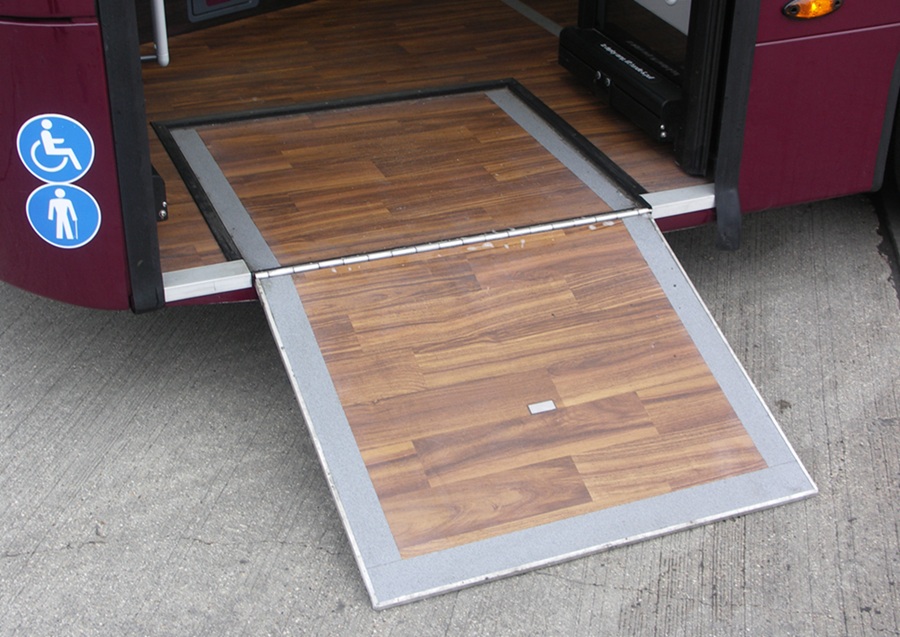
For buses, the accessibility ramp is the gateway to the vehicle. Some buses have manual ramps. Those are often at the front door with the driver operating it. I like this format as it adds a personal touch to the experience and allows the driver and customer to communicate about where they wish to alight.
In cities like London, though, the ramp is further back at the centre door to allow for quicker entry and exit for all customers and direct access to the wheelchair user bay, which may not be possible from the front door owing to the restricted width of the ‘throat’ in double-deck buses.
Rear ramps may be manual or automatic. Where expedient boarding time is required, the automatic ramp allows for shorter dwell times. At least when it works.
As with coaches, ramp deployment relies on the roadside environment being clear of street furniture, an accessible stop with a height to allow deployment, the driver being able to access the stop at the right point and parallel to the kerb (which is not always possible for multi-bus stops), as well as proper deployment and maintenance of the ramp.
A good service for our customers is often measured by what we do when things go wrong. For example, what if the ramp or lift cannot be deployed once a customer is already onboard the vehicle?
Contingency plans need to kick in quickly. Can the driver fix the issue, and do they have the right training to do so? If it cannot be fixed, how will the wheelchair user be moved – and how long will this take? Is a second vehicle required to fix the issue or deploy a manual ramp, or a taxi to provide an onward journey?
It is in these moments that our true customer service is really tested, and in the worst cases it can be found lacking.
From the vehicle, to the driver, the maintenance team, the traffic engineer designing the street, the planners working to reduce traffic, the driver training manager, the managers implementing policy, the service controllers, the incident support staff – customer service is something we all contribute to.
It takes a village – or in this case a lot of highly skilled and dedicated people – to deliver the best for our customers.