





















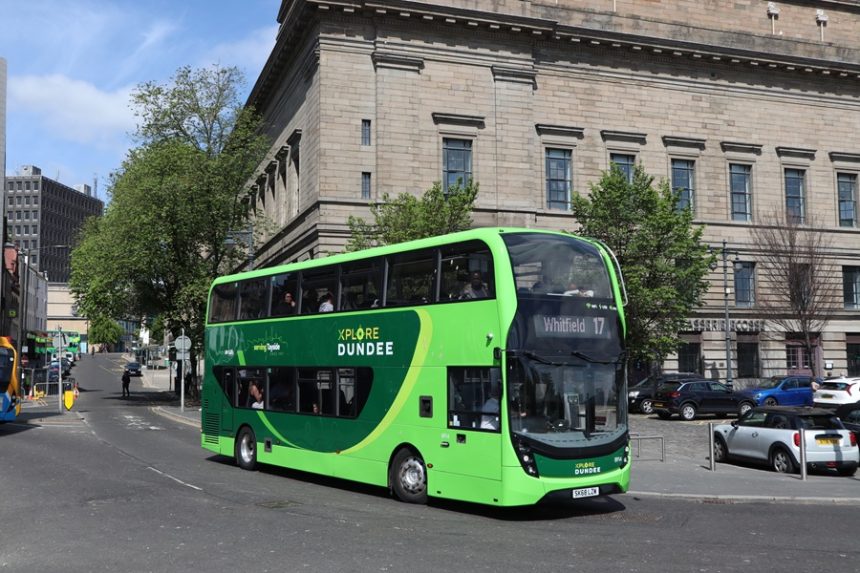
Some areas of coach and bus are moving rapidly towards zero-emission technologies. But others will continue to lean on internal combustion for a long time yet. Cummins has shared the path it expects the latter to follow as part of what General Manager, Europe On-Highway Felipe Rocha says will be “a broader mix of technologies” deployed by vehicle builders to deliver decarbonisation.
Advanced internal combustion engines are viewed as having a “critical role” to play in more demanding usage cycles such as those often serviced by coaches, he explains.
Diesel – potentially with hybridisation – along with renewable natural gas and hydrogen combustion are each seen as being viable pathways on the wider decarbonisation roadmap alongside electric-based power sources.
For urban buses, funding may pose the primary challenge to moving to zero-emission. Felipe thus points out how transitioning older diesel vehicles to the more efficient latest generation of internal combustion can deliver meaningful emission and CO2 reductions.
He believes that coaches and interurban buses are the parts of the industry where internal combustion will stay prominent for now. Electrification there “remains a significant challenge.” Felipe adds that Cummins continues to see a critical role for highly advanced engines, although the business’s Accelera by Cummins brand is also investing heavily in zero-emission technologies in recognition of a multi-pronged approach.
Clean sheet in readiness for Euro 7 arrival
For internal combustion, coming of Euro 7 will be a milestone. Felipe notes how it will introduce tighter limits on pollutants, including new species such as PN10, non-methane organic gases, and nitrous oxide. Compliance requirements will be extended to 875,000km or 15 years, with more demanding real-world testing across a broader range of operating conditions put in place.

Cummins’ next-generation HELM engine platforms will be purpose-built to meet the requirements of Euro 7 and deliver what he says is “a significant leap forward in combustion and emissions control technology.”
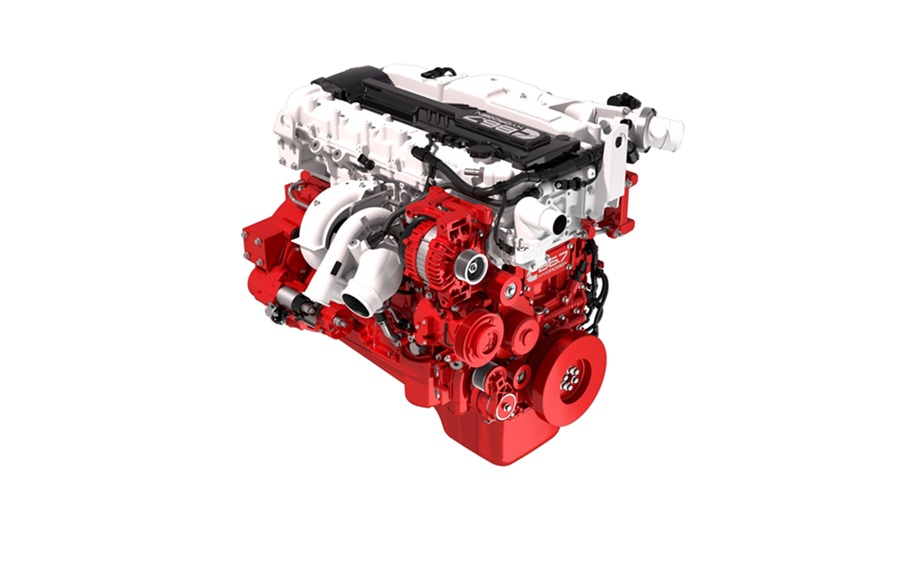
Such clean-sheet engine architecture starts with the 10-litre X10. It extends to a rating of 450bhp. The X10 is described by Felipe as being Euro 7 ready and optimised for highly efficient combustion. When announcing the X10 in 2023, Cummins noted how it will emit “75% less NOx… than required at launch in 2026.”
Complementing the X10 is its advanced U-module aftertreatment system with selective catalytic reduction. It is similarly efficient and has a robust urea dosing system. Felipe says that when those exhaust technologies are combined with a diesel particulate filter, they will deliver superior emissions control across the extended service life of Euro 7 while maintaining compatibility with HVO and biodiesel blends.
Cummins’ HELM architecture will see the introduction of engine variants that share core components but operate on fuels beyond diesel, including natural gas and, in the future, zero-carbon hydrogen, without compromising on performance.
Diesel development will continue for manufacturer
No exhaust gas recirculation is required by the X10, simplifying the system and reducing parasitic losses. The platform comes with a sculpted engine block for higher power density and lower weight. That will give a compact footprint without impacting output, which Felipe adds will make it easier for OEMs to integrate into existing vehicle designs.
Used in the X10 is a double overhead camshaft configuration to enhance airflow and combustion efficiency. Also deployed is a wastegate turbocharger to deliver what is described as responsive performance across a wide range of operating conditions. When all elements of the X10 are brought together, they will reduce fuel consumption and emissions and improve efficiency, he notes.
Cummins sees no cut-off date for its development of diesel engines. “Instead, we expect a mixed energy future where different power solutions – diesel, natural gas, battery and hydrogen – coexist,” Felipe continues. “Our role is to support OEMs and operators with the right technology for their specific needs, whether that is continuing with advanced diesel or transitioning to zero-emission power.”
Further investment will be made in internal combustion to improve performance and fuel economy and reduce emissions, he says.
Hydrogen combustion will suit coach, Cummins believes
Notably, Felipe believes that hydrogen combustion will be particularly well suited to coach applications in the future, where long ranges, short refuelling times and minimal disruption to vehicle architecture will be critical.
Hydrogen combustion “offers a driving experience and an operational profile similar to diesel, but with ultra-low tailpipe emissions and near-zero CO2, making it a practical and lower-cost alternative to battery-electric or fuel cell systems – especially in the near term.”
Via a fuel-agnostic approach, hydrogen combustion engines “are an important part of Cummins’ strategy to decarbonise transport while continuing to support customers that rely in internal combustion technology,” Felipe adds. But he is another industry figure who believes that extensive infrastructure development is critical for coaches to move away from diesel. Hydrogen combustion will not take wholesale flight otherwise.
“To realise its full potential, we need coordinated investment and policy support to accelerate hydrogen refuelling availability. Building this infrastructure now will also support the broader adoption of hydrogen fuel cell vehicles in the future.”