

















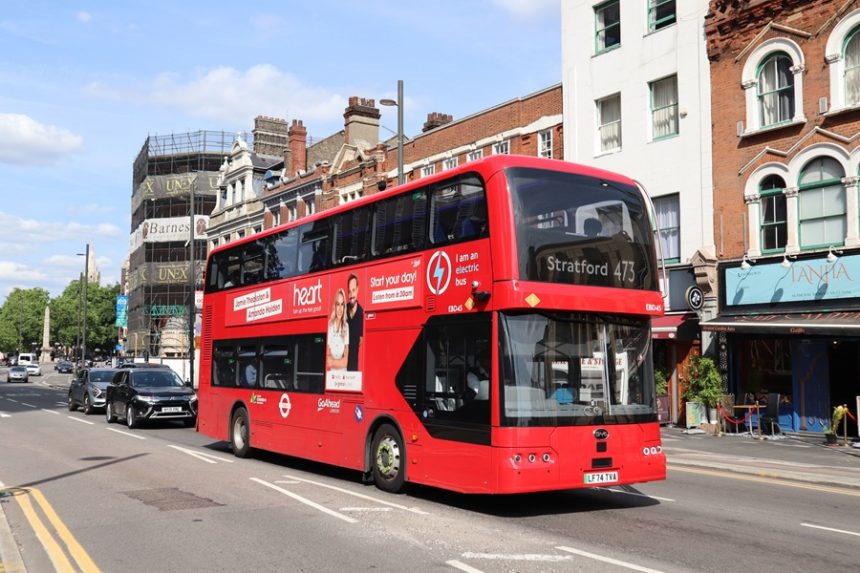
Early days of bus electrification saw small numbers deployed on a proof-of-concept basis that were managed relatively easily. But squadron rollout is now well underway, and cohesive planning and in-service oversight is imperative to successful operation.
BetterFleet specialises in that field, and CEO Dan Hilson advises how any electrification move – large or small – should be subject to granular planning. He believes that engaging with a specialist will leverage the benefit of any public subsidy, reduce costs, and ultimately put more zero-emission buses on the road sooner.
The supplier works with fleets globally and is prominent in the London bus market. Transport for West Midlands (TfWM) and the Welsh Government are customers as well as bus operators. BetterFleet is scalable and priced on a per-vehicle basis, making it as applicable to SMEs as large groups.
For electrification planning, BetterFleet’s capability majors a digital twin approach. That allows comprehensive modelling based on factors such as route characteristics and topography, and vehicle duties and mileages.
“A digital twin is a big physics model,” says Dan. In addition to primary considerations, BetterFleet uses various other modules, including for vehicle heating and cooling, and battery performance and degradation. Scheduling files are uploaded, and opportunity charging scope can be factored in.
Once those elements are present, scenarios are modelled to inform procurement decisions, grid connections, and how the maximum number of battery-electric buses can be put into service. Considering the most testing on-road conditions is vital. Once vehicles are introduced, the operational management side comes into play.

Good decision-making imperative, says BetterFleet
BetterFleet then optimises electric fleet operational costs and productivity. As with planning, data usage functions on a ‘more is good’ approach. Dan notes how artificial intelligence and machine learning will increasingly capture decision-making at a depot level as electric fleets and data volumes grow.
“The acceleration of electrification is very exciting. But a problem for operators is the difficulty of humans in coping with decision-making. It becomes very complicated to say which vehicles will go where when charging requirements are considered.”
Why is that critical? “Let’s say we ask when a vehicle will be charged and ready. Charging on a hot day can be different to a very cold day, or a charger might have a problem and take longer. Equally, a battery could have degraded.”
BetterFleet’s machine learning captures those instances and feeds its intelligence to dispatch decisions. “This is not something a person could calculate in their head,” Dan continues. “A lot of it is about instant management. Our system advises when a bus will be ready. Energy and grid management is all automated.”
Driver behaviour can be built in as a further illustration of data being king in electric bus operation, and vehicle telematics are invaluable. “A lot of our job is to take operators on a journey and show what we can do with datasets,” he adds.
Enormous scope to optimise planning and deployment
To draw data, BetterFleet integrates with all other systems within electric bus operation, including chargers. It is either entirely cloud-based or comes with an on-site Internet of Things device when older hardware is present. The latter also has a resilience benefit should a communications network be lost, unlikely as that is.
Optimising power draw to minimise the necessary grid connection relies on various factors. Scheduling data is important. When a bus will cover a low daily mileage, it will be charged to suit and not necessarily to 100%. Leveraging tariffs is another avenue, and so too is on-site energy storage.
Stationary batteries give various options, but an example highlighted by Dan surrounds the charging peak. If a battery can introduce power then, the peak call upon the grid is reduced. Solar panels also play a part and are compatible with BetterFleet.
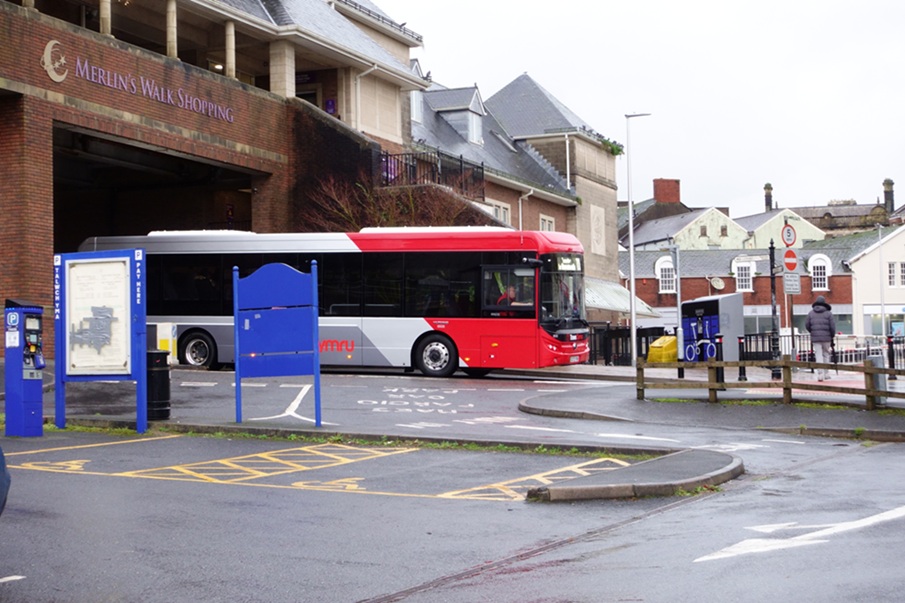
An increasingly relevant consideration is the operational landscape under franchising. TfWM already uses BetterFleet to collect data and understand electric buses in its region. Dan says that where a franchising authority has such oversight, it can make electrification readiness and rollout easier and more cost-effective.
“A benefit of regional planning is being able to ask if electrification is being done in the most efficient way,” he adds. For example, where opportunity charging infrastructure is deployed, it could be used more than one operator. Benefits of moving routes between contractors can also be identified.
Subsidy will not last forever, BetterFleet chief notes
BetterFleet’s strategy is to minimise costs and optimise vehicle utilisation. Dan points out how the lower operational expense of electric versus diesel is best leveraged by working zero-emission buses as hard as possible while utilising data to influence infrastructure set-up within depots.
“We encourage operators to use a system like ours to get savings. In the future it will be an economic imperative,” he adds, noting how when electrification takes root with small operators in both coach and bus, getting operating costs as low as possible will have a competitive benefit. Arguably, that is here already in some cases.
“Subsidy will not last forever,” Dan continues. Taking and deploying funding as efficiently as possible is the key for now; doing so can minimise costs and electrify more buses faster.
He points to London as an example of that in practice. While regulated, the capital’s bus market is competitive on a contract basis between individual operators, and that broad approach will spread more widely as further franchising schemes are rolled out in other areas. As with so much else in the sector, data is king.