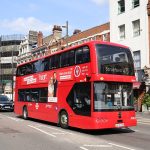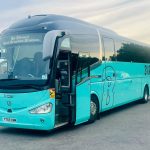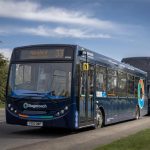





















The sharing of best practice between coach and bus operators regarding the bridge strike issue is to be encouraged, says Simon Ingham, Edwards Coaches Commercial Manager
We all dread receiving calls to inform us one of our vehicles has been involved in a road traffic incident. While it could be argued accidents are inevitable considering the nature of our business and the mileage that we cover, we must keep on top of our game to avoid, as much as we possibly can, causing harm to people or damage to property.
Bridge strikes have received a lot of media attention recently. Around 1,500-2,000 strikes occur annually, each incident costing an average of £13,000. The PSV industry accounts for around a mere 50 strikes, but this is 50 too many.
Although Edwards Coaches has not been subject to an impact with a bridge for a while, we don’t have a fully clean record over our 100 years of operations. We no longer operate double-deckers in large numbers, which eliminates an element of the risk, but many bridges across the UK are unsuitable for standard coaches.
In the spirit of Senior Traffic Commissioner Kevin Rooney’s plea that coach and bus operators should share best practice, I thought I’d mention some bridge strike-prevention measures that we take within Edwards Coaches.
At Edwards, bridge strikes receive attention in classroom-based driver inductions. Real-life case studies (including video footage) are presented to drivers new to our business, and we delve into the circumstances around them, trying to analyse the mindset of the driver. We discuss the reputational impact of bridge strikes and associated disruption. We are considering simulation-based training to further develop awareness for both new and experienced drivers.
Our private hire bookings team assess route suitability and digitally scan ingress and egress routes for low bridges – particularly so when the pick-up location or destination is unfamiliar to us. Our Abercynon depot, where there is a known low bridge in the vicinity, houses only lower-height vehicles, removing the risk of danger in that region.
Is there more that we can do collectively to prevent collisions? The answer is, of course, yes; none of us can afford to be complacent – Simon Ingham
We teach drivers about the importance of risk-assessing routes “live” and in an agile way. This is important when going off-route is necessary due to diversions. We talk about staying alert and the dangers of “autopiloting”, which may occur when drivers are subject to driving the same vehicle and/or routes regularly.
We encourage drivers to stop to check if they are unsure of the route suitability, and they are frequently reminded to call our control team if they need route guidance or support. Incidentally, we only condone the use of approved, fixed navigation devices to mitigate risk.
We include bridge strike messaging on drivers’ charts and work tickets. In our experience, drip-feeding warnings works in keeping safety topics such as bridge strikes at the forefront of drivers’ minds. I’ve frequently heard drivers talking about safety messaging on their work documentation – this can only be a good thing. We also have bridge strike posters in driver areas to reinforce awareness.
We are developing our resource pack which includes not only information on frequent diversions but uncommon route variations and deviations from diversions. All drivers have access to this digital pack and can use it as a resource when route-planning. Within the folders, the height and length of each vehicle is noted in a pictorial form as a useful point of reference for drivers. Each coach has a vehicle information sticker which includes height, and it is a checkpoint on drivers’ walk-round check documentation. These vehicle information stickers are featured in vehicle type familiarisation sessions through which sign-offs are recorded.
We’ve explored using advanced technology that can alert drivers on the approach of low bridges, ether through GPS or AI-based landscape scanning to detect and warn of impending dangers. We are aware of false positives which impact efficacy as well as the fact that drivers may just ignore warning symbols, audible alarms and seat vibrations if on autopilot.
While coach and bus operators must not take their foot off the gas when it comes to bridge strike awareness, they should also not ignore other safety incidents which may be more prevalent though less impactful and media-worthy – tail swing collisions, for example.
Is there more that we can do collectively to prevent collisions? The answer is, of course, yes; none of us can afford to be complacent.