



















Bus patronage in England outside London saw solid growth in 2024, National Travel Survey results for that year have shown. According to that data, average bus journeys per person, per year rose to 28, up from 25 in 2023.
That return has been welcomed, but it was influenced by the £2 national bus fare cap in force across 2024. While multiple locally funded schemes have sustained that maximum, most areas saw the cap lift to £3 on 1 January.
Feedback from some parties where the cap is now £3 suggests that the rise has contributed to stagnation of patronage growth.
Other sources say that ridership has fallen, although it is stressed by one operator that many urban journeys have not been subject to the full 50% uplift and remain under £3. Meanwhile, more recent data from the Department for Transport shows that in a third group of areas, patronage has continued to lift unhindered by the fare cap rise.
Good value day, week or longer-duration tickets where average journey cost is sub-£2 are also cited by an operator in the Midlands as showing that the headline fare cap often means little to regular passengers who use services for work or education.
Perceived service quality is a factor in acceptance of the rise, while a provider in a largely rural county adds that £3 is still seen as good value on longer-distance services. Drawing any conclusion from the uplift is thus difficult.
Variety of impact from national bus fare cap uplift
Furthering that position, daily local bus passenger journey data for England outside London for the first quarter of the £3 cap to 31 March painted a mixed picture. Confidence in that data varies, and it captures all journeys regardless of them being made by farepayers or under a concessionary travel scheme.
Comparison is made to “a similar week” in the previous year, with 90 local transport authority (LTA) areas in England captured. On 31 March this year – with the national fare cap in England at £3 – 47 of those recorded patronage equal to or above the day in 2024 that is used as the comparison, while 43 of them reported a decrease.
Where data confidence is high or very high, the worst result saw patronage on 31 March at 85% of the comparable day in 2024, when the fare cap was £2. Where ridership has increased over the same period and there is high confidence in data, the best return was 111%.
Many other areas saw much less notable movement from the 2024 comparator. Indeed, 47 of the 90 LTA areas saw usage within a ±3% range.
Bus market price sensitivity highlighted by change
One larger operator that has participated in the national fare cap since introduction has seen a fall of 3% in overall usage in 2025, but a representative notes how anecdotal evidence from others suggests an up to 10% drop since the move to £3.
Broken down more granularly, volumes of bus users paying a fare in Leicester in Q1 FY2025/26 are down by over 12% from the same period a year earlier according to data collated by Leicester City Council, although the overall fall is less thanks to a strong concessionary performance and a very small drop in the use of multi-operator tickets.
Supply-side statistics are positive for each like-for-like period, although city centre footfall fell slightly. Nevertheless, an individual familiar with the Leicester bus market notes that the result demonstrates great price sensitivity to fare levels.
National Travel Attitudes Study results published in June 2024 explored bus fare caps. While 59% of respondents said they would be willing to pay £2.50 for capped fares, only 17% said so for £3.
Nuanced approach cushions national bus fare cap change
In an anecdotal observation, it has been suggested that where operators have never participated in the national fare cap, patronage stability or growth has been seen in 2025.
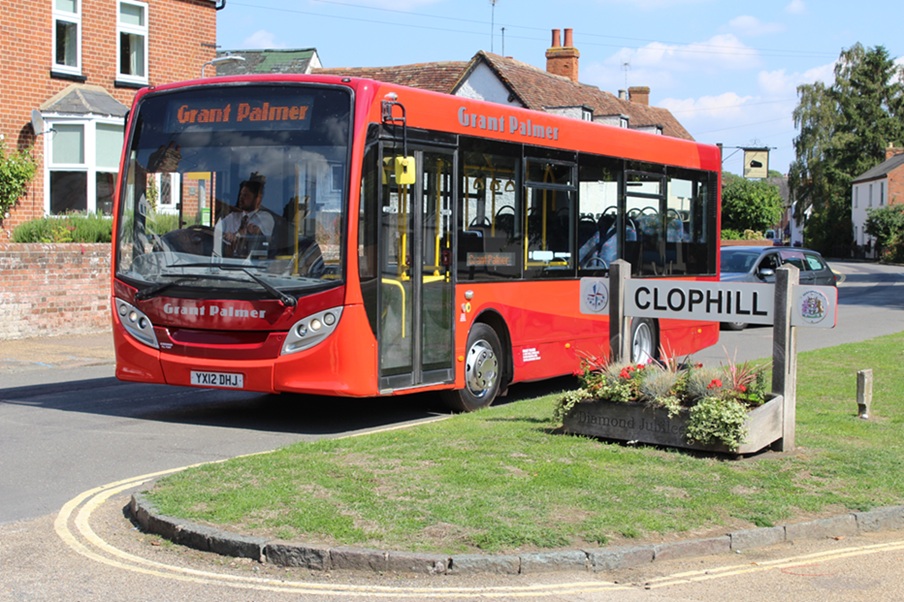
One that was not initially part of the national fare cap but joined later is Grant Palmer. Director Dave Shelley says that it has maintained overall ridership since the shift to £3, but that is based on a nuanced position.
A combination of a growing network and lower fares has helped to drive patronage at the Bedfordshire business, but Mr Shelley adds that service quality and acceptance on longer services that £3 remains good value are further influences.
Engagement with other parties where possible to maintain the £2 maximum into 2025 on some routes has been useful.
“On many services, developer and business partnerships have allowed us to hold at £2. We have also held some fares for longer on routes where we had changed or introduced new services so as not to confuse customers, and we have the £1 young person’s scheme in Central Bedfordshire,” he explains.
A lower-priced weekly ticket has also been of benefit, where a 30% reduction on the previous price was introduced to encourage regular customers to remain with the business during the transition.